

Archive position — measured, not model output
0 likes on Devpost
2,263 of the 7,850 archived projects have more likes, and 5,587 share exactly 0 — so this project's #7,778 place in the like-ranked listing is a tie-break inside that group, not a ranking.
Projects (log scale)
Likes on Devpost. ▲ marks this project's group.
Show the figures
| Likes | Projects | Share of archive |
|---|---|---|
| 0 | 5,587 | 71.2% |
| 1 | 1,758 | 22.4% |
| 2 | 284 | 3.6% |
| 3–4 | 132 | 1.7% |
| 5–9 | 75 | 1.0% |
| 10+ | 14 | 0.2% |
 User Stories BotA demo video on every pull request
Get a demo video on every new feature
GitHub App that watches your pull requests and records a narrated, captioned demo.
Save time on demo prep and make informed decisions faster with a video walkthrough of every new feature.
Executive Summary
What the company appears to be
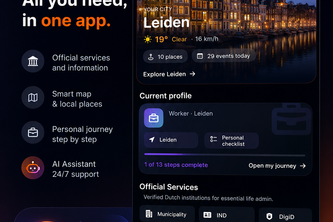
YouNew is a self-reported project by one developer (Ivan Chernikov) that aims to create a governed ecosystem for newcomers in the Netherlands. It provides practical journeys, city guidance and explainable next steps based on official Dutch sources. The product includes a public web interface and an iOS app, with AI-assisted content creation and governance workflows.
What changed
The author describes a progression from prototype to a more structured platform, emphasizing operational design, content governance, and traceability over rapid feature development or polished UIs. It evolved from a hackathon idea into a system that separates availability from governance readiness.
Single most important open question
Is there evidence of traction, user feedback, or real-world adoption beyond the author’s own claims?
Note: This analysis is based solely on the self-reported description provided by the author. No external verification, revenue data, customer names, or usage metrics are available. All statements reflect the author's own account and should be treated as claims, not facts.
What The Product Actually Is
- The description states that YouNew is a governed ecosystem for newcomers in the Netherlands.
- It includes:
- A public web product at https://younew.nl
- An iOS app with public distribution status
- Source-backed guides, search, saved items, maps, cities and organizations
- AI-assisted guide that keeps source links and human-review boundaries visible
- Internal admin workspace for content health, review, coverage and traceable publication
- It uses Supabase/PostgreSQL for operational data, GitHub for versioned delivery, and structured content with explicit source provenance.
- The system is described as separating operational availability from governance readiness.
Not evidenced: No information on actual product functionality beyond what the author describes; no screenshots, live demos or user testing results provided.
Positioning & Claim Evolution
- The author positions YouNew as a "calmer first step for newcomers" — one place connecting practical guidance to official sources without replacing authorities.
- It is described as turning a newcomer’s situation and location into “practical journeys, city-specific guidance and clear next actions.”
- The evolution from prototype to governed platform shows an emphasis on reliability, governance, and transparency over speed or polish.
- AI is used as a collaborator rather than a substitute for human judgment.
Inferred: The positioning appears to be focused on trustworthiness and clarity in navigating complex government services. However, the claim of being “governed” lacks evidence of formal processes or third-party validation.
Target Customer & ICP
- The target customer is described as newcomers to the Netherlands.
- Specific user groups include those seeking information about:
- Municipalities
- Healthcare
- Housing
- Transport
- Education
- Government services
- The product is localized and profile-aware, suggesting personalization based on location and situation.
Not evidenced: No data or segmentation details on the actual user base, demographics, or how many users exist. No mention of feedback loops or user personas beyond the author’s experience.
Business Model & Pricing Evidence
- The description does not provide any information about pricing models, monetization strategies, or business model assumptions.
- It is implied that the service may be free to access, but this is not stated explicitly.
- There is no mention of subscriptions, paid features, or partnerships with institutions.
Not evidenced: No evidence of revenue streams, pricing tiers, or commercial arrangements.
Technical & Delivery Signals
- Built using:
- Swift and SwiftUI for iOS
- TypeScript and web components for the public experience and admin workspace
- Supabase/PostgreSQL for operational state
- GitHub for versioned delivery
- Structured content with explicit source provenance
- AI tools like ChatGPT and Codex were used as collaborators.
- The system includes:
- Privacy-conscious telemetry
- Protected business/feedback workflows
- Operational data separation between staging and production
- A macOS workspace for oversight
Inferred: Technical architecture suggests a modern, open-source stack with emphasis on privacy and traceability. However, no performance benchmarks or scalability details are given.
Traction & Maturity Signals
- The current public product exposes 86 published records across 5 city guides and 10 guide categories.
- Status page keeps product availability separate from governance readiness.
- Public website is live and independently health-checked.
- iOS app has public distribution status.
- Admin workflows separate drafting, review and publication.
- Production activation is explicit and traceable.
Not evidenced: No data on user engagement, retention, or adoption rates. No evidence of customer acquisition or feedback loops beyond the author’s own account.
Competitive Context
- The description does not mention competitors or market positioning relative to existing platforms for newcomer support in the Netherlands.
- It is implied that there is fragmentation in official Dutch government information sources, which YouNew aims to address.
- No direct comparison with other tools or services is made.
Not evidenced: No competitive analysis, benchmarking, or awareness of existing solutions in this space.
Open Questions & Risks
- The entire team consists of one person (Ivan Chernikov), raising questions about scalability and long-term maintenance.
- The product is described as self-reported and unverified — no third-party audits or user studies are referenced.
- Heavy reliance on AI for content creation raises concerns around accuracy, bias, and accountability without clear human oversight mechanisms.
- Lack of revenue, customers, or traction data makes it difficult to assess viability or commercial potential.
Inferred: Risk of technical debt, lack of operational maturity, and limited ability to scale due to single-person operation.
Questions the description leaves open
- What specific feedback have you received from users or community members?
- How do you plan to expand beyond the current 5 city guides and 10 categories?
- Are there any formal partnerships with Dutch municipalities or government bodies?
- How is content reviewed, validated, and updated in practice?
- What are your plans for monetization or sustainability beyond the initial prototype?
- Can you demonstrate how the AI-assisted guide maintains source link visibility and human review boundaries?
- What evidence supports your claim that the system prevents high scores or polished interfaces from hiding missing evidence?
Overall Assessment
- The project is presented as a self-initiated effort with strong emphasis on governance, privacy, and operational design.
- It shows early signs of product-market fit in addressing a real pain point for newcomers to the Netherlands.
- However, there is no evidence of traction, revenue, or user adoption beyond the author’s own claims.
- The single-person team raises concerns about scalability and long-term viability.
- The focus on trustworthiness and transparency could be valuable, but without measurable outcomes or external validation, its commercial potential remains unclear.
Assessment: Not ready for investment or partnership at this stage. Requires further demonstration of user engagement, traction, and operational maturity before serious consideration.
User Stories BotA demo video on every pull request
Get a demo video on every new feature
GitHub App that watches your pull requests and records a narrated, captioned demo.
Save time on demo prep and make informed decisions faster with a video walkthrough of every new feature.
Source
Submitted to the OpenAI 2026 hackathon on Devpost. Project home on Devpost. Back to the full gallery on Devpost.
This competitive analysis was produced by top-founders.com (opens in a new tab)
Generated by a language model from this project's public Devpost page — its tagline, the author's own write-up and any built-with tags listed there — as captured in August 2026. Short quotations are the author's words. It is an opinion on the idea as a business, not on the people behind it, and it reflects the description as published then. If the project has moved on, request a correction below. The analysis is not independent research and contains no verified traction, revenue or customer data.
An independent guide by KFG International LLC — not affiliated with, endorsed by, or connected to Devpost or OpenAI.