

Archive position — measured, not model output
0 likes on Devpost
2,263 of the 7,850 archived projects have more likes, and 5,587 share exactly 0 — so this project's #7,780 place in the like-ranked listing is a tie-break inside that group, not a ranking.
Projects (log scale)
Likes on Devpost. ▲ marks this project's group.
Show the figures
| Likes | Projects | Share of archive |
|---|---|---|
| 0 | 5,587 | 71.2% |
| 1 | 1,758 | 22.4% |
| 2 | 284 | 3.6% |
| 3–4 | 132 | 1.7% |
| 5–9 | 75 | 1.0% |
| 10+ | 14 | 0.2% |
 User Stories BotA demo video on every pull request
Get a demo video on every new feature
GitHub App that watches your pull requests and records a narrated, captioned demo.
Save time on demo prep and make informed decisions faster with a video walkthrough of every new feature.
Executive Summary
What the company appears to be: A freelance assistant tool built as a local-first web application that helps freelancers evaluate projects and generate proposals using AI, with an emphasis on explainability, human control, and risk detection.
What changed: The project is described as a self-contained Node.js application with SQLite persistence, integrating OpenAI APIs for proposal generation. It was submitted to the OpenAI 2026 hackathon and includes deterministic safety modes for demo purposes.
The single most important open question: Is there evidence of real-world usage or feedback from freelancers beyond the author’s own development and testing?
What The Product Actually Is
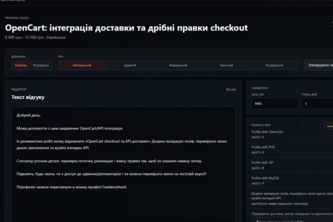
The description states that Proposal Copilot is a local-first Node.js web application with SQLite persistence, built using technologies including JavaScript, HTML, CSS, Playwright, and OpenAI Responses API. It integrates GPT-5.6 model support and uses Codex for development tasks.
It includes:
- Structured OpenAI integration with runtime validation
- Safe error handling and bounded retries
- Backend-only secrets management
- Deterministic Local AI mode for public demo
The author describes it as a decision workspace that filters projects, scores fit across visible factors, detects risks, recommends actions (Apply, Clarify, Save, or Skip), and generates editable proposals in the client's language.
It is not evidenced whether this tool has been used by anyone beyond its creator or if there are any live users or customers.
Positioning & Claim Evolution
The author positions Proposal Copilot as a safer alternative to mass auto-applying, aiming to reduce spam, underpricing, and account risk. It emphasizes:
- Explainability
- Evidence-grounded claims
- Human-controlled actions
- Risk detection
- Client-language drafts
It is claimed that the tool improves decisions before improving wording — suggesting a shift from generic AI writing to decision-making support.
The positioning implies a move away from traditional freelance proposal tools toward one focused on trust, transparency, and human oversight. However, no evidence of market traction or adoption exists beyond the author’s own claims.
Target Customer & ICP
The description states that Proposal Copilot is designed for freelancers, particularly those who:
- Spend time scanning projects
- Guess what clients need
- Rewrite similar proposals
- Are at risk from spam, underpricing, or account bans
It targets freelancers using platforms like Freelancehunt and other marketplaces.
There is no evidence of a defined Ideal Customer Profile (ICP) beyond this general category. No segmentation or persona details are provided.
Business Model & Pricing Evidence
The description does not include any information about:
- Revenue streams
- Pricing models
- Monetization strategy
- Paid features or subscriptions
It only mentions that the next step includes “live GPT-5.6 evaluation when API billing is available,” implying future monetization through API usage, but no current business model is described.
Technical & Delivery Signals
The author reports:
- Built as a local-first Node.js web application
- Uses SQLite for persistence
- Integrates with OpenAI Responses API
- Includes runtime validation, safe error handling, and bounded retries
- Employs backend-only secrets management
- Features a deterministic Local AI mode for demo purposes
It also includes:
- 50 automated tests
- 28 visual checks passing
- Use of Codex for architecture, implementation, UX, security review, testing, documentation, and regression fixes
No evidence exists regarding scalability, performance metrics, or production deployment beyond the developer’s own environment.
Traction & Maturity Signals
There is no evidence of:
- Revenue
- Customers
- User engagement
- Product adoption
- Market feedback
- Product iteration history
The project is described as a hackathon submission, with plans for a small private beta and outcome tracking. The author notes that the demo includes three scenarios but does not report actual usage or impact.
Competitive Context
The description does not mention:
- Competitors
- Market landscape
- Existing tools in the freelance proposal space
- Differentiation from similar offerings
It is unclear how Proposal Copilot compares to other freelance platforms, AI writing tools, or marketplace connectors.
Open Questions & Risks
- No traction or revenue: The tool has not yet been used by real freelancers or monetized.
- Self-reported only: All claims are unverified and based solely on the author’s own account.
- Limited scope: Only one developer is involved, with no team or external validation.
- Unproven market fit: No evidence of demand or feedback from target users.
- Unclear path to monetization: Future monetization depends on API billing availability, which is not confirmed.
Questions the description leaves open
- What specific problems do freelancers face that this tool solves?
- Have you tested the tool with real freelancers yet? If so, what feedback did you get?
- How will you scale beyond a single developer and local-first architecture?
- What is your plan for monetization, and when can we expect API billing to be available?
- Are there any marketplace connectors already in place or planned?
- How do you intend to track outcomes (e.g., successful applications, client feedback)?
- What are the key assumptions behind your risk detection logic?
Overall Assessment
Not evidenced.
The project is described as a hackathon submission with no evidence of traction, revenue, or customer usage. The author has not yet launched a product for real users and has not demonstrated any market validation or business model. While the idea shows potential in addressing freelancer pain points, there is insufficient evidence to assess viability or readiness for investment or partnership.
The tool’s emphasis on explainability and human control may be valuable, but without real-world testing or adoption, it remains a concept rather than a product.
User Stories BotA demo video on every pull request
Get a demo video on every new feature
GitHub App that watches your pull requests and records a narrated, captioned demo.
Save time on demo prep and make informed decisions faster with a video walkthrough of every new feature.
Source
Submitted to the OpenAI 2026 hackathon on Devpost. Project home on Devpost. Back to the full gallery on Devpost.
This competitive analysis was produced by top-founders.com (opens in a new tab)
Generated by a language model from this project's public Devpost page — its tagline, the author's own write-up and any built-with tags listed there — as captured in August 2026. Short quotations are the author's words. It is an opinion on the idea as a business, not on the people behind it, and it reflects the description as published then. If the project has moved on, request a correction below. The analysis is not independent research and contains no verified traction, revenue or customer data.
An independent guide by KFG International LLC — not affiliated with, endorsed by, or connected to Devpost or OpenAI.