

Archive position — measured, not model output
0 likes on Devpost
2,263 of the 7,850 archived projects have more likes, and 5,587 share exactly 0 — so this project's #3,069 place in the like-ranked listing is a tie-break inside that group, not a ranking.
Projects (log scale)
Likes on Devpost. ▲ marks this project's group.
Show the figures
| Likes | Projects | Share of archive |
|---|---|---|
| 0 | 5,587 | 71.2% |
| 1 | 1,758 | 22.4% |
| 2 | 284 | 3.6% |
| 3–4 | 132 | 1.7% |
| 5–9 | 75 | 1.0% |
| 10+ | 14 | 0.2% |
 User Stories BotA demo video on every pull request
Get a demo video on every new feature
GitHub App that watches your pull requests and records a narrated, captioned demo.
Save time on demo prep and make informed decisions faster with a video walkthrough of every new feature.
Executive Summary
What the company appears to be
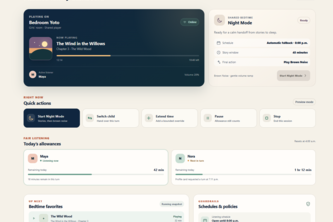
Byotoa is a self-reported family listening automation tool that connects to Yoto Players via secure OAuth and enables parents to manage queues, bedtime flows, and nighttime routines through a web interface. It is described as a vertical slice built with SvelteKit and Cloudflare Workers.
What changed
The project started as a personal solution to a family problem (managing bedtime stories) and evolved into a broader vision of a "calm, family-first control surface" for Yoto Players. The author states it is currently a working vertical slice but not yet fully implemented with all planned features.
Single most important open question
Is there any evidence of real-world usage or customer feedback beyond the author's own account?
Analysis basis
This report is based entirely on the self-reported, unverified description provided by the project author. No third-party verification, traction data, revenue figures, or customer information are available.
What The Product Actually Is
The description states that Byotoa is a tool that:
- Connects securely to a family’s Yoto account.
- Turns a shared Yoto Player into a more flexible listening system.
- Allows adults to:
- See connected players and live playback information.
- Search and browse their Family Library.
- Build persistent, player-specific queues from individual stories and tracks.
- Start a queue that advances automatically, even after the browser closes.
- Configure and manually start Free Play Night Mode with a story-time allowance.
- Keep the nighttime ending in place until a configured morning time.
The current version is described as a working vertical slice. The author notes that more advanced features like household policies and child profiles are represented in the product direction but not yet enforced.
Inference Byotoa appears to be an automation layer for Yoto Players, designed to give parents more control over how stories play and when bedtime transitions occur. It is not a replacement for the physical device or its interface, but rather an extension of it through a web-based UI.
Positioning & Claim Evolution
The author states that Byotoa began with a simple family problem — managing bedtime flows on Yoto Players — and evolved into a broader vision:
- A "calm, family-first control surface"
- Designed to give adults useful structure without taking away the physical cards and simple controls that make Yoto special
- A tool that "feels understandable" and avoids guessing or unexpected behavior
The product is positioned as an extension of the existing Yoto ecosystem rather than a competitor.
Inference The positioning has evolved from solving a narrow personal problem to offering a more general-purpose family listening automation system. It emphasizes usability, clarity, and respect for physical device interaction over raw functionality.
Target Customer & ICP
The description states that Byotoa is intended for:
- Parents or caregivers managing bedtime routines with Yoto Players.
- Families who want structure in their listening but still value the simplicity of physical cards.
- Users seeking a way to automate transitions between stories and sleep sounds.
There is no mention of specific demographics, age ranges, or other segmentation beyond "families" and "parents."
Inference The primary ICP appears to be parents or caregivers with young children who use Yoto Players for bedtime storytelling. The product targets those looking for flexibility without sacrificing the tactile experience of the device.
Business Model & Pricing Evidence
No evidence is provided about pricing, monetization, or business model. The description does not mention any revenue streams, subscription plans, or paid features.
Finding
Not evidenced.
Technical & Delivery Signals
The author reports:
- Built with SvelteKit, Svelte 5, and TypeScript.
- Deployed on Cloudflare Workers.
- Uses Cloudflare D1 and Drizzle for data storage.
- Better Auth for authentication.
- Yoto connected via confidential OAuth flow.
- Tokens encrypted with AES-GCM before storage.
- Live playback uses MQTT-over-WebSocket interface.
- Each player has its own Cloudflare Durable Object acting as an always-on coordinator.
- Handles event duplication, idempotency, and serverless restarts.
Inference The technical stack suggests a modern, serverless architecture with strong emphasis on reliability and security. The use of Durable Objects indicates a deliberate approach to managing persistent state in a distributed environment.
Traction & Maturity Signals
The description states:
- Current version is a working vertical slice.
- More advanced features are represented in the product direction but not yet enforced.
- The team consists of one member (Samuel Hernandez).
- Submitted to the OpenAI 2026 hackathon on Devpost.
There is no evidence of revenue, customers, or adoption beyond the author's own account.
Finding
Not evidenced.
Competitive Context
The description does not mention any competitors. It focuses solely on how Byotoa improves upon the existing Yoto Player experience rather than comparing itself to other tools.
Finding
Not evidenced.
Open Questions & Risks
- The project is described as a single-person effort, which raises questions about scalability and long-term maintenance.
- No evidence of real-world usage or customer feedback beyond the author’s own account.
- The product is still in early development (vertical slice), with many features not yet implemented.
- The lack of pricing or monetization strategy suggests no clear business model has been defined.
- Dependency on a specific hardware ecosystem (Yoto Players) limits potential market reach.
Inference The risk of failure is high due to limited team size, unproven traction, and unclear path to monetization. The narrow focus on one hardware platform may also limit growth opportunities.
Questions the description leaves open
- What specific user feedback or data do you have about real-world usage beyond your own?
- How many families are currently using this tool, if any?
- Are there any plans to expand beyond Yoto Players or support other devices?
- What is the intended pricing model or monetization strategy?
- How do you plan to scale from a single developer to a sustainable product team?
- Have you considered how to handle edge cases in real-world device behavior?
- What are your thoughts on integrating with third-party services or APIs beyond Yoto?
Overall Assessment
The project is described as a working vertical slice of a family automation tool for Yoto Players. It shows technical sophistication and attention to detail, particularly around reliability and security in a serverless environment.
However, there is no evidence of traction, revenue, or customer adoption beyond the author's own account. The single-person team raises concerns about scalability and long-term viability. There is also no indication of a clear business model or monetization strategy.
Assessment Early-stage prototype with strong technical execution but unproven market fit and commercial potential. Not ready for investment or partnership without further validation of usage, demand, and scalability.
User Stories BotA demo video on every pull request
Get a demo video on every new feature
GitHub App that watches your pull requests and records a narrated, captioned demo.
Save time on demo prep and make informed decisions faster with a video walkthrough of every new feature.
Source
Submitted to the OpenAI 2026 hackathon on Devpost. Project home on Devpost. Back to the full gallery on Devpost.
This competitive analysis was produced by top-founders.com (opens in a new tab)
Generated by a language model from this project's public Devpost page — its tagline, the author's own write-up and any built-with tags listed there — as captured in August 2026. Short quotations are the author's words. It is an opinion on the idea as a business, not on the people behind it, and it reflects the description as published then. If the project has moved on, request a correction below. The analysis is not independent research and contains no verified traction, revenue or customer data.
An independent guide by KFG International LLC — not affiliated with, endorsed by, or connected to Devpost or OpenAI.