

Archive position — measured, not model output
1 like on Devpost
505 of the 7,850 archived projects have more likes, and 1,758 share exactly 1 — so this project's #2,250 place in the like-ranked listing is a tie-break inside that group, not a ranking.
Projects (log scale)
Likes on Devpost. ▲ marks this project's group.
Show the figures
| Likes | Projects | Share of archive |
|---|---|---|
| 0 | 5,587 | 71.2% |
| 1 | 1,758 | 22.4% |
| 2 | 284 | 3.6% |
| 3–4 | 132 | 1.7% |
| 5–9 | 75 | 1.0% |
| 10+ | 14 | 0.2% |
 User Stories BotA demo video on every pull request
Get a demo video on every new feature
GitHub App that watches your pull requests and records a narrated, captioned demo.
Save time on demo prep and make informed decisions faster with a video walkthrough of every new feature.
Executive Summary
What the company appears to be
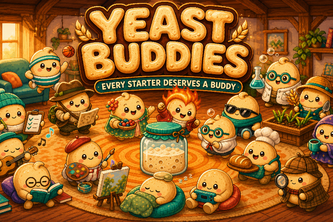
Yeast Buddies is a self-reported project that aims to turn a real sourdough starter into a digital pet using IoT hardware and software. The author states it guides beginners through making their first sourdough starter, translating biological activity into moods, evolution stages, and personality traits for the user’s digital pet.
What changed
The project is described as a full-stack prototype built by one person (Phuree Thongpaitoon), combining biotechnology knowledge with IoT hardware and AI-assisted development. It evolved from an idea to raise a sourdough starter like a pet into a functional app that interprets sensor data and user input.
Single most important open question
Is there any evidence of real-world usage or user feedback beyond the author’s own account? The description does not indicate whether anyone else has used the product, tested it, or provided feedback — only that the author built it for personal learning and submission to a hackathon.
What The Product Actually Is
The description states that Yeast Buddies is an app that turns a real sourdough starter into a digital pet. It uses IoT hardware (ESP32-based sensors) to collect data on temperature, sound activity, and visual growth of the starter. This data is then interpreted by the app to determine the pet’s mood, evolution stage, and personality.
The app also includes features such as:
- Daily feeding instructions
- Height tracking via user input
- Evolution stages
- Personality development
- Guidance for first baking
It is described as a full-stack project built with JavaScript, React, Node.js, Supabase, Vercel, and IoT components including DS18B20 temperature probes, microphone sensors, and OLED displays.
Evidence
- The author states that the app uses sensor data from hardware to interpret starter behavior.
- It includes a guide for beginners through the sourdough-making process.
- The app is described as turning biological activity into moods and personality traits.
Inference The product is not yet confirmed to be in production or used by others beyond the author's own testing.
Positioning & Claim Evolution
The project positions itself as a beginner-friendly tool for sourdough making, using gamification (digital pet) to make the process more intuitive and engaging. The author’s claim evolution shows:
- Initial idea: “What if taking care of a sourdough starter felt more like raising a pet?”
- Development: A full-stack prototype that translates real-world fermentation into digital pet behavior.
- Final positioning: A tool that helps users understand their starter through moods, growth stages, and personality.
Evidence
- The author explicitly states the inspiration was to make sourdough easier for beginners.
- The app is described as guiding users one task at a time, avoiding scientific jargon.
- It uses visual and emotional cues (mood, evolution) instead of raw data.
Inference The positioning is centered on accessibility and emotional engagement rather than technical depth or scalability.
Target Customer & ICP
The author states that Yeast Buddies is for beginners who are trying to make their first sourdough starter. It targets people who:
- Are new to sourdough
- Want a pet-like experience without the commitment of a real animal
- Prefer simple, guided instructions over complex data
It also mentions different care routines based on baking frequency (e.g., Everyday Buddy, Sleepy Fridge Buddy), suggesting that it may be adaptable for varying levels of engagement.
Evidence
- The app is designed to guide beginners through the process.
- It includes different care routines depending on how often users bake.
- The author notes that the app avoids scientific details and focuses on actions.
Inference The ICP appears to be early-stage sourdough enthusiasts or hobbyists, not commercial bakers or large-scale producers.
Business Model & Pricing Evidence
Not evidenced. The description does not mention any pricing model, monetization strategy, or business model.
Evidence
- No information on how the app would be sold or used commercially.
- No mention of subscriptions, in-app purchases, or paid features.
- No indication of revenue streams or customer acquisition costs.
Technical & Delivery Signals
The project is described as a full-stack prototype built by one person using:
- Hardware: ESP32 with DS18B20 temperature sensors, microphone, OLED display
- Software: React, Next.js, Node.js, Supabase, Vercel
- AI tools: ChatGPT and Codex for development assistance
The author notes that the project was built from scratch, including learning electronics and software, and used AI to break down complex tasks into manageable parts.
Evidence
- The app uses sensor data from hardware to inform digital pet behavior.
- It includes a user interface with temperature, sound, and visual growth inputs.
- The author mentions using AI tools like ChatGPT and Codex for development.
Inference The technical delivery is self-reported as a prototype built by one developer, not yet validated in production or at scale.
Traction & Maturity Signals
Not evidenced. There is no mention of:
- Users
- Adoption
- Revenue
- Customer feedback
- Product usage metrics
- Market traction
Evidence
- The project was submitted to a hackathon.
- It is described as a personal learning effort and prototype.
- No data on real-world usage or user engagement.
Competitive Context
Not evidenced. The description does not mention:
- Competitors
- Similar products
- Market positioning relative to others
Evidence
- No reference to existing sourdough apps, IoT pet tools, or fermentation guides.
- No comparison with other platforms or tools in the space.
Open Questions & Risks
- Unverified product usage: The app is described only as a prototype built by one person; no evidence of real-world adoption or user feedback.
- Technical complexity mismatch: The author notes significant challenges in hardware and software integration, including sensor accuracy and debugging issues.
- AI dependency: Heavy reliance on AI tools for development may indicate lack of deep technical control or scalability.
- No monetization strategy: No indication of how the product would generate revenue or be commercialized.
- Single-person team: The project is built by one person, raising questions about long-term maintenance and growth.
Evidence
- Author states it was a personal learning effort.
- No mention of users, feedback, or market testing.
- Technical challenges are explicitly noted.
Questions the description leaves open
- Have you tested the product with real users beyond yourself?
- What is your plan for scaling beyond a single prototype?
- How do you intend to monetize this product?
- What are the limitations of the hardware sensors in real-world conditions?
- Do you have any plans to integrate with existing sourdough or baking communities?
- How do you plan to validate that the digital pet behavior accurately reflects biological activity?
Overall Assessment
Not evidenced. The description does not provide information on:
- Financials
- Market opportunity
- Team traction
- Strategic fit for investors or partners
Evidence
- No financial data, funding history, or valuation.
- No indication of market demand or competitive advantage.
- No mention of strategic partnerships or use cases beyond the prototype.
Inference This is a personal project with no evidence of commercial viability or traction. It may be an early-stage idea or proof-of-concept, not yet ready for investment or partnership consideration.
User Stories BotA demo video on every pull request
Get a demo video on every new feature
GitHub App that watches your pull requests and records a narrated, captioned demo.
Save time on demo prep and make informed decisions faster with a video walkthrough of every new feature.
Source
Submitted to the OpenAI 2026 hackathon on Devpost. Project home on Devpost. Back to the full gallery on Devpost.
This competitive analysis was produced by top-founders.com (opens in a new tab)
Generated by a language model from this project's public Devpost page — its tagline, the author's own write-up and any built-with tags listed there — as captured in August 2026. Short quotations are the author's words. It is an opinion on the idea as a business, not on the people behind it, and it reflects the description as published then. If the project has moved on, request a correction below. The analysis is not independent research and contains no verified traction, revenue or customer data.
An independent guide by KFG International LLC — not affiliated with, endorsed by, or connected to Devpost or OpenAI.