

Archive position — measured, not model output
0 likes on Devpost
2,263 of the 7,850 archived projects have more likes, and 5,587 share exactly 0 — so this project's #7,734 place in the like-ranked listing is a tie-break inside that group, not a ranking.
Projects (log scale)
Likes on Devpost. ▲ marks this project's group.
Show the figures
| Likes | Projects | Share of archive |
|---|---|---|
| 0 | 5,587 | 71.2% |
| 1 | 1,758 | 22.4% |
| 2 | 284 | 3.6% |
| 3–4 | 132 | 1.7% |
| 5–9 | 75 | 1.0% |
| 10+ | 14 | 0.2% |
 User Stories BotA demo video on every pull request
Get a demo video on every new feature
GitHub App that watches your pull requests and records a narrated, captioned demo.
Save time on demo prep and make informed decisions faster with a video walkthrough of every new feature.
Executive Summary
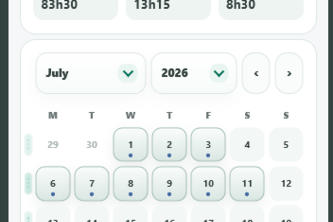
The company appears to be a solo project named WorthHours, built as part of an OpenAI hackathon. The author states it is a shift calendar app that uses GPT-5.6 for natural language input into structured work entries, with the goal of simplifying tracking of shifts, breaks, overtime, pay expectations, appointments, and notes.
The key change described is the integration of AI (GPT-5.6) to convert natural language into structured calendar data, while maintaining app logic for business-critical calculations like pay.
The single most important open question is: what is the actual commercial viability or traction potential of this tool?
The description provides no evidence of revenue, customers, usage metrics, or market adoption beyond the author's own claims. The project is self-reported and unverified, with no third-party corroboration of its functionality or business model.
What The Product Actually Is
- The description states that WorthHours is a shift calendar app.
- It allows users to track work shifts, breaks, overtime, expected pay, appointments, and notes.
- Data entry occurs via two methods:
- Direct calendar input (choosing date and adding shift, template, or note)
- AI Quick Add: natural language input processed by GPT-5.6 into structured calendar drafts
- The app uses Codex for development and is deployed on Vercel
- A serverless endpoint calls the OpenAI API, using GPT-5.6 to return structured data (not final calculations)
- After AI processing, the app applies its own logic for calculations, warnings, and saved calendar data
Positioning & Claim Evolution
- The description states that WorthHours was inspired by a problem: shift workers know when they worked but struggle to track hours, breaks, overtime, pay expectations, appointments, and notes in one clean place.
- The app is positioned as a small, practical shift calendar that feels fast on a phone and keeps important numbers visible.
- The key claim evolution is the use of AI Quick Add to convert natural language into structured entries.
- The author states that AI is useful for understanding flexible human input, but the app remains responsible for business logic (pay rules, warnings, calculations).
- This positioning suggests a focus on usability and simplicity, with AI as an enhancement rather than core functionality.
Target Customer & ICP
- The description states that WorthHours targets shift workers.
- It is designed to help people track work shifts, breaks, overtime, expected pay, appointments, and notes in one clean place.
- No specific customer segments or personas are identified beyond "shift workers."
- There is no evidence of market research, user interviews, or segmentation beyond the stated problem.
Business Model & Pricing Evidence
- The description does not provide any information about pricing models, monetization strategies, or business model details.
- It mentions that "the AI layer can become the foundation for a future premium version", suggesting potential paid features.
- There is no evidence of current revenue streams, pricing tiers, or customer acquisition costs.
Technical & Delivery Signals
- The app is built with:
- Codex (for development and testing)
- React
- TypeScript
- JavaScript
- CSS
- Vercel (deployment platform)
- Serverless endpoint calling the OpenAI API
- The app uses GPT-5.6 to return structured data, not final calculations
- The author notes that Codex helped build and test:
- The serverless endpoint
- Structured output schema
- Preview flow
- Warning logic
- README
- Submission materials
- No evidence of scalability, infrastructure robustness, or technical architecture beyond the development stack.
Traction & Maturity Signals
- The project was submitted to the OpenAI 2026 hackathon.
- It is described as a "small, practical shift calendar" built during a short timeframe (Build Week).
- There is no evidence of:
- Revenue
- Customers
- Usage metrics
- Product-market fit
- Market traction
- User feedback or adoption data
Competitive Context
- The description does not mention any direct competitors.
- It implies that the app addresses a gap in existing shift tracking tools, particularly for shift workers who struggle to manage multiple aspects of their work schedule.
- No evidence of market analysis, competitive landscape, or differentiation from existing solutions.
Open Questions & Risks
- Solo founder: The team size is listed as 1, which may indicate limited capacity for execution or scaling.
- Unverified technology claims: The use of "GPT-5.6" is self-reported; there's no verification that such a model exists or is being used.
- No commercial viability evidence: No revenue, customers, or traction data provided.
- Unclear monetization strategy: While the AI layer may support future premium features, there's no current business model described.
- Limited scope: The app is described as small and practical, which may limit its appeal or scalability.
Questions the description leaves open
- What specific problems do shift workers face that this tool solves?
- How does the AI Quick Add feature currently work in practice? Can you show an example of input/output?
- Are there any existing competitors in this space, and how is WorthHours differentiated from them?
- What is the plan for monetization beyond the potential premium version?
- How do you intend to scale or grow the user base?
- What are the technical limitations or constraints of using GPT-5.6 for this purpose?
- Is there any feedback from early users or potential customers?
Overall Assessment
- Not evidenced: There is no evidence of revenue, customers, traction, or commercial viability.
- The project appears to be a proof-of-concept or prototype built during a hackathon.
- It lacks clear business model, pricing strategy, or market validation.
- The solo founder structure raises concerns about execution capacity.
- The use of "GPT-5.6" is self-reported and unverified; no evidence that such a model exists or is being used.
- Without further information on traction, market demand, or monetization plans, it's difficult to assess investment potential.
Confidence Level: Low
This analysis is based entirely on the author’s own description, which is unverified and self-reported. No external corroboration exists for any claims made about the product, its functionality, or its business model.
User Stories BotA demo video on every pull request
Get a demo video on every new feature
GitHub App that watches your pull requests and records a narrated, captioned demo.
Save time on demo prep and make informed decisions faster with a video walkthrough of every new feature.
Source
Submitted to the OpenAI 2026 hackathon on Devpost. Project home on Devpost. Back to the full gallery on Devpost.
This competitive analysis was produced by top-founders.com (opens in a new tab)
Generated by a language model from this project's public Devpost page — its tagline, the author's own write-up and any built-with tags listed there — as captured in August 2026. Short quotations are the author's words. It is an opinion on the idea as a business, not on the people behind it, and it reflects the description as published then. If the project has moved on, request a correction below. The analysis is not independent research and contains no verified traction, revenue or customer data.
An independent guide by KFG International LLC — not affiliated with, endorsed by, or connected to Devpost or OpenAI.