

Archive position — measured, not model output
0 likes on Devpost
2,263 of the 7,850 archived projects have more likes, and 5,587 share exactly 0 — so this project's #7,713 place in the like-ranked listing is a tie-break inside that group, not a ranking.
Projects (log scale)
Likes on Devpost. ▲ marks this project's group.
Show the figures
| Likes | Projects | Share of archive |
|---|---|---|
| 0 | 5,587 | 71.2% |
| 1 | 1,758 | 22.4% |
| 2 | 284 | 3.6% |
| 3–4 | 132 | 1.7% |
| 5–9 | 75 | 1.0% |
| 10+ | 14 | 0.2% |
 User Stories BotA demo video on every pull request
Get a demo video on every new feature
GitHub App that watches your pull requests and records a narrated, captioned demo.
Save time on demo prep and make informed decisions faster with a video walkthrough of every new feature.
Executive Summary
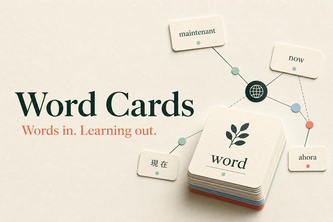
The company appears to be a solo-developer project named Word Cardzy, built as a personal tool for vocabulary learning using AI-assisted development. The author states that the product allows users to import word lists and study them with AI-generated translations, explanations, and pronunciation audio — without an opaque scheduling algorithm. It is described as a minimalistic, user-controlled system with no hidden mechanisms.
What changed: The project was built entirely using AI agents, with the developer emphasizing control over learning flow, simplicity, and transparency in how the tool works. The author also notes that this was submitted to the OpenAI 2026 hackathon.
The single most important open question: Is there any evidence of user adoption or engagement beyond the author’s own use? The description contains no data on actual users, revenue, or product-market fit.
What The Product Actually Is
- The description states that Word Cardzy is a vocabulary learning tool.
- Users can import a plain list of words and choose a target language and an explanation language.
- It preserves the original list and allows users to control their own study flow, including how words are grouped and which parts of each card are visible.
- AI-generated translations and explanations are used.
- TTS-generated pronunciation audio is included.
- The current MVP focuses on importing wordbooks, browsing all imported words or a specific wordbook, and studying cards without a hidden scheduling algorithm.
- AI translation and production TTS are designed as replaceable future services behind the existing interfaces.
Not evidenced: No details about how the product functions beyond these high-level claims. No technical architecture, data models, or UI mockups are described.
Positioning & Claim Evolution
- The author states that Word Cardzy was created around a “minimalist philosophy.”
- It aims to give control over vocabulary learning to the learner instead of relying on opaque algorithms.
- The product is positioned as simple and understandable — with the claim that anyone can understand how it works within three minutes.
- The project is described as being built entirely with AI agents, which may be a key differentiator in its development approach.
Inferred: The positioning implies a contrast to existing vocabulary apps that use complex scheduling algorithms. However, this is not substantiated by any evidence of competitor comparison or user feedback.
Target Customer & ICP
- The description states that the tool was inspired by the author’s own experience learning a new language.
- It targets individuals who want to learn vocabulary in a controlled way, without algorithmic scheduling.
- Users are likely language learners who prefer transparency and control over their study process.
Not evidenced: No explicit customer personas, segments, or user types are defined. The target is inferred from the author’s personal motivation.
Business Model & Pricing Evidence
- The description does not mention any pricing model or monetization strategy.
- There is no indication of whether the tool will be free, paid, or offered through a freemium model.
- No evidence of revenue streams, subscriptions, or in-app purchases is provided.
Not evidenced: No business model or pricing information is stated.
Technical & Delivery Signals
- The project was built using AI agents, with the developer noting that AI-assisted development still requires careful human ownership of product intent and architecture.
- The system is divided into three development lines: frontend, backend, and algorithms.
- A development-log system was designed to record AI agent decisions, verification results, dependencies, and next steps.
- The author notes that AI translation and TTS are designed as replaceable future services.
- Built with technologies including Cloudflare, Codex, D1, Next.js, Node.js, OpenAI, React, SQLite, TypeScript, Vite, and Workers.
Inferred: The use of AI agents and modular architecture suggests a developer-focused approach to product development. However, no evidence of scalability or production deployment is provided.
Traction & Maturity Signals
- The project was submitted to the OpenAI 2026 hackathon.
- It is described as an MVP (minimum viable product).
- The author states that the tool was built entirely by one person (Mark Dong).
- No evidence of user adoption, retention, or usage metrics is provided.
Not evidenced: No data on users, engagement, or product maturity beyond MVP status.
Competitive Context
- The description mentions that most vocabulary apps rely on complicated, opaque review algorithms.
- It contrasts with such tools by offering a controlled, transparent learning experience.
- No specific competitors are named or compared.
- No market size or competitive landscape data is provided.
Inferred: Word Cardzy positions itself as an alternative to algorithm-driven vocabulary apps. However, no evidence of existing competition or market positioning is available.
Open Questions & Risks
- The product was built by a single developer (team size: 1), which raises questions about scalability and long-term maintenance.
- It is described as an MVP with no revenue or traction data, suggesting early-stage development.
- The use of AI agents in development may introduce risks related to consistency, control, and reproducibility.
- No pricing model or monetization strategy is evident, which could be a risk for sustainability.
Inferred: Risks include lack of product-market fit, scalability concerns, and unclear path to monetization.
Questions the description leaves open
- What are the actual user needs that this tool addresses, and how did you validate them?
- How do you plan to scale beyond a single developer?
- Are there any specific competitors or similar tools in the market?
- What is your roadmap for monetization and long-term sustainability?
- Can you provide more details on how AI agents are used in development and how decisions are tracked?
- What is the expected timeline for integrating production AI translation and TTS services?
Overall Assessment
- The project is described as a solo-developer MVP with no evidence of traction, revenue, or user engagement.
- It is positioned as a tool for language learners who want control over their vocabulary study process.
- No clear business model or monetization strategy is evident.
- The use of AI agents in development is novel but lacks validation in terms of product success or scalability.
Not evidenced: No data on commercial viability, market demand, or return on investment. This is a very early-stage project with no demonstrated commercial traction.
User Stories BotA demo video on every pull request
Get a demo video on every new feature
GitHub App that watches your pull requests and records a narrated, captioned demo.
Save time on demo prep and make informed decisions faster with a video walkthrough of every new feature.
Source
Submitted to the OpenAI 2026 hackathon on Devpost. Project home on Devpost. Back to the full gallery on Devpost.
This competitive analysis was produced by top-founders.com (opens in a new tab)
Generated by a language model from this project's public Devpost page — its tagline, the author's own write-up and any built-with tags listed there — as captured in August 2026. Short quotations are the author's words. It is an opinion on the idea as a business, not on the people behind it, and it reflects the description as published then. If the project has moved on, request a correction below. The analysis is not independent research and contains no verified traction, revenue or customer data.
An independent guide by KFG International LLC — not affiliated with, endorsed by, or connected to Devpost or OpenAI.