

Archive position — measured, not model output
2 likes on Devpost
221 of the 7,850 archived projects have more likes, and 284 share exactly 2 — so this project's #499 place in the like-ranked listing is a tie-break inside that group, not a ranking.
Projects (log scale)
Likes on Devpost. ▲ marks this project's group.
Show the figures
| Likes | Projects | Share of archive |
|---|---|---|
| 0 | 5,587 | 71.2% |
| 1 | 1,758 | 22.4% |
| 2 | 284 | 3.6% |
| 3–4 | 132 | 1.7% |
| 5–9 | 75 | 1.0% |
| 10+ | 14 | 0.2% |
 User Stories BotA demo video on every pull request
Get a demo video on every new feature
GitHub App that watches your pull requests and records a narrated, captioned demo.
Save time on demo prep and make informed decisions faster with a video walkthrough of every new feature.
Executive Summary
Company: Wolter White
Self-reported basis: The description is entirely self-reported and unverified; it originates from a Devpost submission for the OpenAI 2026 hackathon. No independent verification, revenue, customer data or traction evidence exists beyond what is stated by the authors.
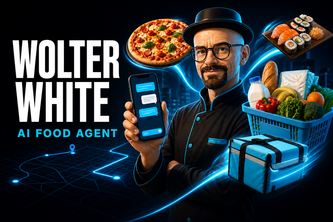
What it appears to be: A Telegram bot that integrates with Wolt (a food delivery service) to assist users in ordering meals based on personal preferences, dietary needs, and taste history. It uses AI and semantic search to suggest dishes and manage orders within the Telegram environment.
What changed: The project was submitted as a hackathon entry. No indication of prior development or commercial activity is evident.
Single most important open question: Is there any evidence that Wolter White has moved beyond a prototype or proof-of-concept stage, or whether it has begun to attract users or customers?
What The Product Actually Is
The description states:
- Wolter White is an AI food assistant integrated with Telegram and Wolt.
- It learns user tastes, finds favorite dishes, respects dietary needs, and finds one Wolt store for a full grocery list—all within Telegram.
- It operates in “Managed Mode” or allows users to “I'm feeling lucky” from top 10 most common dishes.
- It includes personalized allergy/diet restriction semantic search and feedback mechanisms.
Inference: The product is a bot that uses AI to interpret user preferences and integrates with Wolt’s API to place orders. It is not a standalone app but a Telegram-based interface for food ordering.
Not evidenced: No details on how the AI learns, what data it collects, or whether it has a backend or database beyond what is described in the hackathon submission.
Positioning & Claim Evolution
The description states:
- Wolter White is an “AI food assistant that learns your tastes, finds favorite dishes, respects dietary needs, and finds one Wolt store for your whole grocery list—all in Telegram.”
- It is described as a “Food Context Protocol” (FCP), suggesting it may be positioned as a protocol or framework for food ordering.
Inference: The product is positioned as an intelligent assistant that simplifies food ordering by leveraging AI and semantic search, with a focus on personalization and integration into messaging platforms like Telegram.
Not evidenced: No evidence of prior positioning, branding, or marketing claims beyond the hackathon submission. No indication of how it differentiates from existing food delivery tools or whether it has evolved in its messaging since the hackathon.
Target Customer & ICP
The description states:
- The product is for people who find ordering food difficult, often get the same disliked dish, don’t know which dishes suit their diet best, and struggle with decision-making.
Inference: The target customer is a consumer who uses Wolt or similar delivery services and wants personalized, effortless meal ordering. It may appeal to users with dietary restrictions or those seeking convenience.
Not evidenced: No evidence of specific user personas, segmentation, or whether the team has identified a clear ICP beyond general consumer pain points.
Business Model & Pricing Evidence
The description states:
- The product is described as an assistant that connects Wolt and Telegram.
- It does not mention pricing, monetization, or any business model.
Inference: There is no evidence of how the product would generate revenue. It appears to be a prototype or proof-of-concept with no indication of a monetization strategy.
Not evidenced: No pricing structure, subscription model, or revenue streams are described.
Technical & Delivery Signals
The description states:
- Built with Codex and ChatGPT Sol for reverse-engineering the Wolt API using SDK.
- Technologies used include Python, Docker, Telegram Bot API, SQLite, pytest, httpx, multilingual support, OpenStreetMap, HMAC, and more.
Inference: The product is built on a technical stack that supports AI integration, API interaction, and messaging platform connectivity. It uses tools like Python, Docker, and Telegram bots.
Not evidenced: No evidence of scalability, performance, or production deployment beyond the hackathon prototype.
Traction & Maturity Signals
The description states:
- The project was submitted to a hackathon (OpenAI 2026).
- It includes accomplishments like “Actually working product and semantic layer.”
- The team is small (3 members).
Inference: The product is at the prototype or proof-of-concept stage. There is no evidence of user adoption, revenue, or growth.
Not evidenced: No data on users, customers, usage metrics, or product maturity beyond the hackathon submission.
Competitive Context
The description states:
- Wolter White aims to be an assistant for food ordering that integrates with Wolt and Telegram.
- It is described as a “Food Context Protocol,” suggesting it may be positioned as a framework or standard.
Inference: The product competes in the space of AI-driven personalization and convenience in food delivery, potentially overlapping with services like Wolt’s own app or other meal ordering tools.
Not evidenced: No evidence of competitive analysis, market positioning, or awareness of existing players in the space.
Open Questions & Risks
- Prototype only: The product is described as a hackathon submission with no evidence of further development or traction.
- No monetization strategy: There is no indication of how the product would generate revenue.
- Limited team size: A team of three may not be sufficient to scale or mature the product beyond a prototype.
- API dependency: Reliance on Wolt’s API (reverse-engineered) introduces risk of instability or deprecation.
- No user data or feedback: No evidence of real-world testing, user feedback, or adoption.
Questions the description leaves open
- What is the current status of Wolter White beyond the hackathon prototype?
- Has it been tested with users or deployed in any real-world setting?
- How does it plan to monetize or scale beyond a Telegram bot?
- What are the technical risks associated with relying on Wolt’s API (especially if reverse-engineered)?
- Are there any plans to expand beyond Wolt to other food delivery platforms?
- How is user data handled, and what privacy measures are in place?
Overall Assessment
Not evidenced: No evidence of traction, revenue, or commercial viability exists beyond the hackathon submission.
Inference: Based on the self-reported description, Wolter White appears to be a prototype or proof-of-concept with no clear path to market or monetization. It is not yet a product with demonstrated value or customer demand.
Confidence level: Low — this analysis is based entirely on a hackathon submission and lacks any evidence of real-world use, adoption, or commercial activity.
User Stories BotA demo video on every pull request
Get a demo video on every new feature
GitHub App that watches your pull requests and records a narrated, captioned demo.
Save time on demo prep and make informed decisions faster with a video walkthrough of every new feature.
Source
Submitted to the OpenAI 2026 hackathon on Devpost. Project home on Devpost. Back to the full gallery on Devpost.
This competitive analysis was produced by top-founders.com (opens in a new tab)
Generated by a language model from this project's public Devpost page — its tagline, the author's own write-up and any built-with tags listed there — as captured in August 2026. Short quotations are the author's words. It is an opinion on the idea as a business, not on the people behind it, and it reflects the description as published then. If the project has moved on, request a correction below. The analysis is not independent research and contains no verified traction, revenue or customer data.
An independent guide by KFG International LLC — not affiliated with, endorsed by, or connected to Devpost or OpenAI.