

Archive position — measured, not model output
0 likes on Devpost
2,263 of the 7,850 archived projects have more likes, and 5,587 share exactly 0 — so this project's #7,669 place in the like-ranked listing is a tie-break inside that group, not a ranking.
Projects (log scale)
Likes on Devpost. ▲ marks this project's group.
Show the figures
| Likes | Projects | Share of archive |
|---|---|---|
| 0 | 5,587 | 71.2% |
| 1 | 1,758 | 22.4% |
| 2 | 284 | 3.6% |
| 3–4 | 132 | 1.7% |
| 5–9 | 75 | 1.0% |
| 10+ | 14 | 0.2% |
 User Stories BotA demo video on every pull request
Get a demo video on every new feature
GitHub App that watches your pull requests and records a narrated, captioned demo.
Save time on demo prep and make informed decisions faster with a video walkthrough of every new feature.
Executive Summary
What the company appears to be
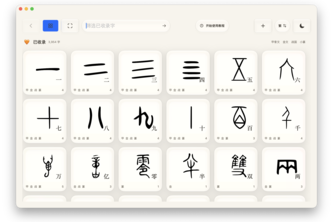
WenGuCha is a self-reported desktop application for macOS and Windows that allows users to search and recognize ancient Chinese characters, including oracle bone script, bronze inscriptions, Warring States script, and small seal script. It includes local OCR functionality with confidence scores, structured character metadata, and offline use capabilities.
What changed
The project was submitted as part of the OpenAI 2026 hackathon. The author describes it as a transformation from an experimental OCR project into a complete desktop research tool, with native support for macOS and Windows platforms.
Single most important open question
Is there any evidence of user adoption or commercial traction beyond the author’s own use case?
What The Product Actually Is
The description states that WenGuCha is an ancient character query and recognition app designed for macOS and Windows. It allows users to search with simplified, traditional, or variant Chinese characters and view their historical forms grouped by period (oracle bone script, bronze inscriptions, etc.). The app supports image uploads for OCR recognition, returning top-five candidates with confidence scores.
It includes:
- A searchable catalog of more than 5,000 character records and 6,000 glyph records.
- Local data storage for offline use.
- Support for both simplified and traditional Chinese interfaces.
- Native UI development using Swift/SwiftUI on macOS and C#/.NET/Avalonia on Windows.
- OCR pipeline using ONNX models for inference across platforms.
Inference The app appears to be built as a research tool for scholars or enthusiasts working with ancient Chinese characters, rather than a commercial product targeting end-users. It is not evident whether it has been released publicly or used beyond the developer's own workflow.
Positioning & Claim Evolution
The author claims that WenGuCha was developed from a real research need during oracle bone script studies. The tagline positions it as a browsing and recognition tool for ancient character shapes, emphasizing its utility in academic or historical contexts.
It is described as:
- A faster and more organized way to compare ancient glyph forms.
- An application that avoids presenting uncertain OCR results as definitive answers.
- A tool combining structured data, search capabilities, local image recognition, and cross-platform support.
Inference The positioning reflects a niche academic or hobbyist audience. There is no indication of broader commercial intent or market expansion beyond the developer’s personal use case.
Target Customer & ICP
The description does not explicitly define target customers or an ideal customer profile (ICP). However, it implies that users are likely:
- Researchers or scholars studying ancient Chinese characters.
- Enthusiasts interested in paleography or historical linguistics.
- Individuals who work with historical scripts and require offline access to character databases.
Inference The ICP is not clearly defined beyond the author’s own research needs. No evidence suggests a formal customer segmentation, user personas, or market targeting strategy.
Business Model & Pricing Evidence
There is no evidence of pricing, monetization, or business model in the description. The app is described as a desktop tool built for personal use and academic research, with no mention of paid features, subscriptions, or sales channels.
Inference No commercial business model is evident from the self-reported description. It appears to be a hobbyist or experimental project without any indication of monetization plans.
Technical & Delivery Signals
The app was built using:
- macOS: Swift and SwiftUI.
- Windows: C#, .NET, Avalonia UI.
- OCR pipeline using PyTorch models converted to ONNX for inference.
- SQLite for local data storage.
- Cross-platform packaging and runtime support (including ARM64).
Key technical features include:
- Local-only processing with no cloud dependencies.
- Confidence-aware OCR results.
- Structured character metadata and search normalization.
- Separation of interface, database, and OCR components for maintainability.
Inference The app shows strong engineering discipline in terms of modularity, cross-platform support, and offline-first design. However, this does not imply commercial viability or scalability beyond the developer’s own use case.
Traction & Maturity Signals
The project was submitted to a hackathon (OpenAI 2026), indicating early-stage development and experimental nature. The description mentions:
- More than 5,000 character records and 6,000 glyph records.
- Native installers for macOS, Windows x64, and Windows ARM64.
- A functional OCR system with confidence scores.
There is no evidence of:
- User adoption or feedback.
- Revenue or customer base.
- Product-market fit or growth metrics.
- Public release or distribution beyond the developer’s own environment.
Inference The project is at a very early stage, likely experimental or personal-use only. No signs of traction or maturity as a product or business.
Competitive Context
The description does not mention any competitors or existing tools in this space. It is unclear whether similar tools exist for ancient Chinese character research or OCR recognition, nor how WenGuCha would differentiate itself in the market.
Inference There is no evidence of competitive landscape analysis or differentiation strategy. The project appears to be unique within the author’s own context but lacks broader market positioning.
Open Questions & Risks
- No commercial traction or revenue: The app is described as a personal research tool with no evidence of user adoption.
- Limited audience: The niche focus on ancient Chinese characters may restrict scalability.
- Self-reported only: All claims are unverified and based solely on the author’s own account.
- No monetization strategy: No indication of how the product might generate value or revenue.
- Developer-only team: Only one member is listed, suggesting limited capacity for scaling or growth.
Inference The lack of any commercial dimension raises questions about long-term viability or intent to build a sustainable business.
Questions the description leaves open
- What specific research needs drove the creation of this tool?
- Have you tested it with other users, and what feedback did you receive?
- Are there plans to expand beyond the current set of 5,000+ characters or add new historical periods?
- How do you plan to monetize or scale this product if at all?
- What is your long-term vision for WenGuCha beyond personal use?
Overall Assessment
There is no evidence of commercial traction, revenue, or customer adoption. The project is described as a self-developed academic tool with no indication of market demand or business intent.
Inference At this stage, WenGuCha does not appear to be a viable investment or partnership opportunity. It lacks the foundational signals of product-market fit, scalability, or commercial viability required for due-diligence consideration in a growth-equity or M&A context.
User Stories BotA demo video on every pull request
Get a demo video on every new feature
GitHub App that watches your pull requests and records a narrated, captioned demo.
Save time on demo prep and make informed decisions faster with a video walkthrough of every new feature.
Source
Submitted to the OpenAI 2026 hackathon on Devpost. Project home on Devpost. Back to the full gallery on Devpost.
This competitive analysis was produced by top-founders.com (opens in a new tab)
Generated by a language model from this project's public Devpost page — its tagline, the author's own write-up and any built-with tags listed there — as captured in August 2026. Short quotations are the author's words. It is an opinion on the idea as a business, not on the people behind it, and it reflects the description as published then. If the project has moved on, request a correction below. The analysis is not independent research and contains no verified traction, revenue or customer data.
An independent guide by KFG International LLC — not affiliated with, endorsed by, or connected to Devpost or OpenAI.