

Archive position — measured, not model output
0 likes on Devpost
2,263 of the 7,850 archived projects have more likes, and 5,587 share exactly 0 — so this project's #7,668 place in the like-ranked listing is a tie-break inside that group, not a ranking.
Projects (log scale)
Likes on Devpost. ▲ marks this project's group.
Show the figures
| Likes | Projects | Share of archive |
|---|---|---|
| 0 | 5,587 | 71.2% |
| 1 | 1,758 | 22.4% |
| 2 | 284 | 3.6% |
| 3–4 | 132 | 1.7% |
| 5–9 | 75 | 1.0% |
| 10+ | 14 | 0.2% |
 User Stories BotA demo video on every pull request
Get a demo video on every new feature
GitHub App that watches your pull requests and records a narrated, captioned demo.
Save time on demo prep and make informed decisions faster with a video walkthrough of every new feature.
Executive Summary
Company: Wellspent Health
Self-reported basis: The description is entirely from the project author’s own submission to a hackathon, unverified and without independent corroboration.
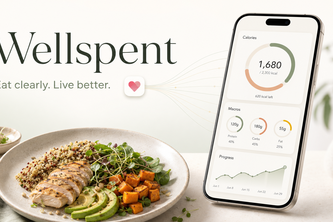
Commercial due-diligence read: This appears to be an early-stage prototype for a calorie-tracking app that integrates with Apple Health. It claims to use AI for meal estimation and has limited evidence of product-market fit or commercial traction. The most important open question is whether the team can scale beyond a hackathon-level MVP.
What The Product Actually Is
The description states:
- Wellspent Health is an app that allows users to photograph or describe a meal.
- It estimates nutrition using AI (specifically Codex with GPT-5.6).
- It connects to Apple Health to compare calories eaten with activity data.
- It offers editable meal estimates, HealthKit syncing, and progress insights.
Inference: The product is an AI-powered calorie tracker that integrates with Apple Health for a unified view of nutrition and activity.
Not evidenced: No details on how the AI works beyond “Codex with GPT-5.6”, no pricing, no monetization model, no customer data or usage metrics.
Positioning & Claim Evolution
The description states:
- The app aims to simplify calorie tracking by combining food and activity data in one place.
- It positions itself as a solution to the fragmentation of health data across apps.
- The team claims to have built an end-to-end experience with editable estimates, HealthKit syncing, and progress insights.
Inference: The positioning is that of a consumer health app focused on simplifying personal nutrition tracking through AI and integration.
Not evidenced: No evidence of market research, user feedback, or competitive differentiation beyond self-description.
Target Customer & ICP
The description states:
- The app targets users who want to track calories and activity.
- It integrates with Apple Health, suggesting a focus on iOS users.
Inference: The target customer is likely health-conscious individuals using iOS devices.
Not evidenced: No segmentation data, no user personas, no evidence of customer interviews or feedback.
Business Model & Pricing Evidence
The description states:
- No explicit mention of pricing.
- No indication of monetization strategy (e.g., freemium, subscriptions, ads).
- The app is described as a prototype built for a hackathon.
Inference: No business model is evident.
Not evidenced: No revenue streams, no pricing tiers, no commercial strategy.
Technical & Delivery Signals
The description states:
- Built with Expo React Native.
- Uses TypeScript and Node.js.
- AI meal analysis powered by Codex with GPT-5.6.
- Integrates with HealthKit.
- Includes editable meal estimates and progress insights.
Inference: The team has technical capability to build a mobile app with AI and health data integration.
Not evidenced: No evidence of scalability, performance metrics, or production deployment.
Traction & Maturity Signals
The description states:
- This is a hackathon project.
- It includes an end-to-end experience.
- The team has built editable estimates, HealthKit syncing, and activity views.
- They plan to improve portion accuracy and add Android support.
Inference: The product is at MVP stage, likely not yet released to users.
Not evidenced: No user base, no adoption metrics, no real-world testing or feedback.
Competitive Context
The description states:
- No mention of competitors.
- No analysis of existing calorie-tracking apps or health platforms.
Inference: The team does not appear to have done competitive research.
Not evidenced: No evidence of market positioning, competitive advantages, or differentiation from existing tools.
Open Questions & Risks
The description states:
- Challenges included portion estimation from photos and HealthKit permissions.
- The AI estimates are described as needing transparency and user control.
- The app is a hackathon prototype with no commercial traction.
Inference: Risks include technical limitations in AI accuracy, integration issues with Apple Health, and lack of product-market fit.
Not evidenced: No evidence of risk mitigation plans or team experience in scaling health apps.
Questions the description leaves open
- What is the current accuracy of the AI meal estimation, and how do you measure it?
- How do you plan to monetize this product beyond a hackathon prototype?
- Have you tested the app with real users or conducted any user research?
- What are your plans for Android support and cross-platform scalability?
- How do you intend to compete with existing calorie-tracking apps?
Overall Assessment
The description states:
- This is a hackathon project.
- It has no revenue, customers, or traction.
- The team is small (2 members).
Inference: At this stage, the project is not ready for investment or partnership.
Not evidenced: No evidence of commercial viability, market demand, or scalability.
User Stories BotA demo video on every pull request
Get a demo video on every new feature
GitHub App that watches your pull requests and records a narrated, captioned demo.
Save time on demo prep and make informed decisions faster with a video walkthrough of every new feature.
Source
Submitted to the OpenAI 2026 hackathon on Devpost. Project home on Devpost. Back to the full gallery on Devpost.
This competitive analysis was produced by top-founders.com (opens in a new tab)
Generated by a language model from this project's public Devpost page — its tagline, the author's own write-up and any built-with tags listed there — as captured in August 2026. Short quotations are the author's words. It is an opinion on the idea as a business, not on the people behind it, and it reflects the description as published then. If the project has moved on, request a correction below. The analysis is not independent research and contains no verified traction, revenue or customer data.
An independent guide by KFG International LLC — not affiliated with, endorsed by, or connected to Devpost or OpenAI.