

Archive position — measured, not model output
0 likes on Devpost
2,263 of the 7,850 archived projects have more likes, and 5,587 share exactly 0 — so this project's #7,621 place in the like-ranked listing is a tie-break inside that group, not a ranking.
Projects (log scale)
Likes on Devpost. ▲ marks this project's group.
Show the figures
| Likes | Projects | Share of archive |
|---|---|---|
| 0 | 5,587 | 71.2% |
| 1 | 1,758 | 22.4% |
| 2 | 284 | 3.6% |
| 3–4 | 132 | 1.7% |
| 5–9 | 75 | 1.0% |
| 10+ | 14 | 0.2% |
 User Stories BotA demo video on every pull request
Get a demo video on every new feature
GitHub App that watches your pull requests and records a narrated, captioned demo.
Save time on demo prep and make informed decisions faster with a video walkthrough of every new feature.
Executive Summary
What the company appears to be
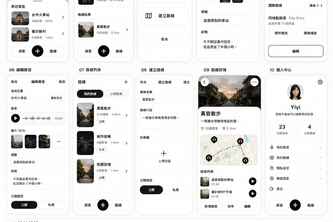
WakeTale is a self-reported mobile-first, map-based audio storytelling platform built as a Progressive Web App (PWA). The description states it allows users to record or upload sounds and attach them to real-world locations, organizing multiple sounds into custom routes. It was developed by one person using AI tools including ChatGPT and Codex.
What changed
The author reports that this is the first version of WakeTale, with plans for future features such as AI-powered audio guides, smarter location recommendations, and richer community tools. The project was submitted to the OpenAI 2026 hackathon.
Single most important open question — the commercial due-diligence read
Is there evidence of user adoption or product-market fit beyond the single developer's personal experience? There is no evidence of revenue, customers, or usage metrics.
What The Product Actually Is
The description states that WakeTale is a mobile-first, map-based audio storytelling platform. It allows users to:
- Record or upload sounds
- Attach those sounds to real-world locations
- Organize multiple sounds into custom routes
- Explore places through audio on a map
It is built as a Progressive Web App (PWA), designed for lightweight use directly on mobile devices without installation.
Evidence
- “WalkTale is a mobile-first, map-based audio storytelling platform.”
- “Users can record or upload sounds, attach them to real-world locations, and organize multiple sounds into custom routes.”
- “The application is built as a Progressive Web App (PWA), making it lightweight and easy to use directly on mobile devices without installing a native app.”
Inference It appears to be a location-based audio platform where users can leave and discover sound memories at specific places.
Positioning & Claim Evolution
The author states that WakeTale was inspired by the idea of preserving memories through sound instead of photos, aiming to offer an alternative to traditional map applications that focus on navigation, reviews, and images.
Key claims
- “What if the memories of a place could be preserved through sound instead of photos?”
- “Most map applications focus on navigation, reviews, and images. However, many of our strongest memories come from sound.”
- “I wanted to create a platform where people could leave sounds on a map, allowing others to discover places through listening rather than simply looking.”
Evidence These are self-reported claims about intent and positioning.
Inference The product positions itself as a novel way to experience places via audio, differentiating from visual-based platforms like Google Maps or Instagram.
Target Customer & ICP
The description does not explicitly define target customers or ideal customer profiles (ICP). It only mentions that users can:
- Record or upload sounds
- Attach them to real-world locations
- Explore these locations on the map
Evidence
- No stated user personas, demographics, or use cases beyond general “users” and “others.”
Inference The product likely targets individuals interested in audio storytelling, memory preservation, travel, or local exploration. However, no evidence supports a defined ICP.
Business Model & Pricing Evidence
There is no evidence of any business model or pricing structure in the provided description.
Evidence
- No mention of monetization strategies
- No indication of paid features or subscriptions
- No revenue data or pricing tiers
Inference The product appears to be a prototype or MVP with no commercial framework described.
Technical & Delivery Signals
The project was built using:
- AI tools: ChatGPT, Codex
- Technologies: Next.js, React, TypeScript, Supabase, Mapbox, Vercel, Tailwind CSS, PWA, HTML/CSS/JS
Evidence
- “Built with (author-declared): chatgpt, codex, css, html, javascript, mapbox, next.js, openai, pwa, react, supabase, tailwind, typescript, vercel”
- “I first used ChatGPT to brainstorm product ideas, design user flows, create wireframes, and generate UI designs...”
- “Codex then implemented the application step by step, building the frontend, interactions, and application logic.”
Inference The development process involved significant AI-assisted ideation and implementation. The use of PWA indicates a lightweight, accessible delivery method.
Traction & Maturity Signals
There is no evidence of traction or maturity beyond the single developer’s account.
Evidence
- “This is only the first version of WalkTale.”
- “I plan to introduce AI-powered audio guides, smarter location recommendations, richer community features...”
- No mention of users, downloads, engagement, or retention metrics
Inference The product is at an early stage—possibly a hackathon submission with no external validation or user base.
Competitive Context
There is no evidence of competitive analysis or market positioning against existing players.
Evidence
- No mention of competitors
- No discussion of how WakeTale differs from other mapping or audio platforms
Inference The author does not reference existing solutions in the space, such as SoundCloud for audio, Google Maps for location, or other audio-based storytelling tools.
Open Questions & Risks
Several open questions emerge from the lack of evidence:
- No revenue or customer data: The product is described only as a prototype.
- Single developer team: No indication of scaling or team structure beyond one person.
- Unverified claims: All descriptions are self-reported and unverified.
- AI dependency: Heavy reliance on AI tools raises questions about sustainability and scalability.
- No monetization strategy: No evidence of how the platform will generate value or revenue.
Inference This appears to be a personal project with limited commercial viability or traction at this time.
Questions the description leaves open
- What is the current user engagement or adoption rate, if any?
- Are there any plans for monetization or revenue generation?
- How do you intend to scale beyond one developer?
- What are your long-term goals for community building and content curation?
- Have you tested the platform with real users outside of development?
- What is the plan for data privacy, especially around user-generated audio content?
Overall Assessment
Not evidenced.
The description provides no information on:
- Revenue or financials
- Customer base or usage metrics
- Market traction or validation
- Commercial strategy or go-to-market approach
This is a self-reported prototype, likely built during a hackathon, with no evidence of product-market fit, user adoption, or commercial viability.
Confidence level Low
Reasoning
The entire description is self-reported and unverified. No third-party data, revenue, customers, or traction are present. All claims should be treated as stated by the author, not proven facts.
User Stories BotA demo video on every pull request
Get a demo video on every new feature
GitHub App that watches your pull requests and records a narrated, captioned demo.
Save time on demo prep and make informed decisions faster with a video walkthrough of every new feature.
Source
Submitted to the OpenAI 2026 hackathon on Devpost. Project home on Devpost. Back to the full gallery on Devpost.
This competitive analysis was produced by top-founders.com (opens in a new tab)
Generated by a language model from this project's public Devpost page — its tagline, the author's own write-up and any built-with tags listed there — as captured in August 2026. Short quotations are the author's words. It is an opinion on the idea as a business, not on the people behind it, and it reflects the description as published then. If the project has moved on, request a correction below. The analysis is not independent research and contains no verified traction, revenue or customer data.
An independent guide by KFG International LLC — not affiliated with, endorsed by, or connected to Devpost or OpenAI.