

Archive position — measured, not model output
1 like on Devpost
505 of the 7,850 archived projects have more likes, and 1,758 share exactly 1 — so this project's #2,190 place in the like-ranked listing is a tie-break inside that group, not a ranking.
Projects (log scale)
Likes on Devpost. ▲ marks this project's group.
Show the figures
| Likes | Projects | Share of archive |
|---|---|---|
| 0 | 5,587 | 71.2% |
| 1 | 1,758 | 22.4% |
| 2 | 284 | 3.6% |
| 3–4 | 132 | 1.7% |
| 5–9 | 75 | 1.0% |
| 10+ | 14 | 0.2% |
 User Stories BotA demo video on every pull request
Get a demo video on every new feature
GitHub App that watches your pull requests and records a narrated, captioned demo.
Save time on demo prep and make informed decisions faster with a video walkthrough of every new feature.
Executive Summary
What the company appears to be
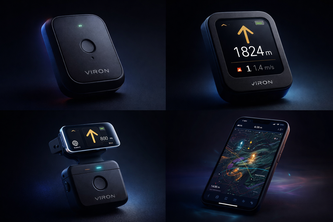
VIRON Horizon is a self-reported audio-first flight-awareness instrument for paragliding pilots. The author states it aims to reduce screen attention by delivering critical flight information through sound, with a focus on altitude, climb/sink, navigation, and safety cues.
What changed
During OpenAI Build Week, the author transformed the companion app into a deterministic digital twin (Flight Lab) that simulates real-world flight scenarios. This includes weather awareness, traffic warnings, crash detection, and SOS workflows — all without requiring physical hardware.
Single most important open question
Is there any evidence of actual pilot adoption or testing with real users beyond the author’s own development and simulation?
The description is self-reported and unverified. Treat every statement in it as “the author states X”, never as “X is true”.
What The Product Actually Is
- The description states that VIRON Horizon is a compact, audio-first flight-awareness system for paragliding pilots.
- It combines:
- Precise barometric altitude and vertical-speed measurement
- GNSS position, speed, and flight logging
- Audio-vario feedback and spoken status cues
- A high-visibility landscape display
- Physical controls suitable for gloves and turbulent conditions
- Internal microSD black-box storage
- Bluetooth connectivity to the VIRON companion app
- Dual microphones for experimental airflow and wind research
- Provision for a future Horizon XC traffic-awareness module
- The physical instrument is built around a custom four-layer PCB integrating:
- ESP32-S3
- MS5611 pressure sensor
- QMI8658 IMU
- GNSS
- Audio amplifier
- Digital microphones
- Battery charging and power control
- Physical buttons
- MicroSD storage
- Debugging points
- Provision for the Horizon XC traffic module
- The companion application extends functionality with:
- Live BLE telemetry
- A 3D flight map
- Track and thermal visualisation
- Black-box recording and replay
- Preflight weather, wind, and airspace-awareness architecture
- Simulated Horizon XC traffic warnings
- Emergency/crash workflow simulation
- Voice alerts
- A deterministic Flight Lab digital twin
This is a self-reported product description. No independent verification or evidence of actual deployment or usage exists.
Positioning & Claim Evolution
- The description states that the goal is not to give pilots more data, but to reduce distraction and turn complex information into useful awareness.
- It positions itself as behaving like a calm co-pilot rather than another screen demanding attention.
- The author emphasizes clarity, calmness, and reduced visual load over dense menus or screen-based interfaces.
- There is no mention of competing products or market positioning beyond its own stated intent.
These are claims made by the author. No evidence of market traction, customer feedback, or competitive differentiation exists.
Target Customer & ICP
- The description states that VIRON Horizon is intended for paragliding pilots.
- It targets users who want to avoid constant screen attention while maintaining situational awareness.
- The product is described as a flight-awareness instrument, not a replacement for certified avionics.
No evidence of specific customer segments, user personas, or pilot demographics beyond the author’s own experience.
Business Model & Pricing Evidence
- Not evidenced.
- No pricing information, subscription models, or monetization strategy is mentioned.
- No indication of whether this will be sold as a hardware product, software add-on, or part of a larger ecosystem.
No business model or pricing evidence provided.
Technical & Delivery Signals
- Hardware:
- Custom four-layer PCB designed in KiCad
- Uses ESP32-S3 microcontroller
- Integrates MS5611 pressure sensor and QMI8658 IMU
- Includes GNSS, audio amplifier, microSD, Bluetooth, and physical controls
- First five prototype boards ordered for production
- Software:
- Companion app built with Flutter
- Uses BLE telemetry and integrates Mapbox 3D map
- Features a deterministic Flight Lab digital twin
- Supports simulated flights including preflight, takeoff, landing, crash detection, SOS workflows
- Includes automated regression tests and architecture validation
The project is described as an experimental prototype. No evidence of commercial delivery or production readiness.
Traction & Maturity Signals
- Not evidenced.
- No revenue, ARR, customers, or user adoption data provided.
- The author states that VIRON Horizon was already an active hardware and firmware project before Build Week, but no external validation or traction is reported.
- Prototype boards have been ordered, but no evidence of actual use or testing with real pilots.
No traction or maturity signals are evident.
Competitive Context
- Not evidenced.
- No mention of existing competitors in the paragliding flight-awareness space.
- No reference to similar products or technologies used by other pilots or manufacturers.
No competitive landscape information is provided.
Open Questions & Risks
- Prototype-only status: The product is described as an experimental prototype, not yet deployed for real-world use.
- Unverified safety claims: Simulated emergency features are clearly marked as simulations and cannot trigger real services. This raises questions about how safety-critical functionality will be validated in real use.
- Single-founder project: Only one team member (Blaz Kos) is listed, which may limit development capacity or scalability.
- AI-assisted development without external validation: While AI tools were used to accelerate development, no evidence exists that the final product has been verified through independent testing or safety audits.
These are inferred risks based on the self-reported nature of the project and lack of external validation.
Questions the description leaves open
- What specific feedback have you received from actual paragliding pilots during development?
- How do you plan to validate the safety-critical features (e.g., crash detection, SOS) in real-world conditions?
- Are there any regulatory or certification requirements that VIRON Horizon must meet for use in flight?
- What is your roadmap for transitioning from prototype to commercial product?
- Have you conducted any field tests with the actual hardware and software components?
- How do you intend to scale beyond a single developer?
These questions aim to probe the gap between self-reported claims and real-world validation.
Overall Assessment
- Not evidenced.
- No financials, customer data, or commercial traction are available.
- The project is described as an experimental prototype with no indication of market readiness or scalability.
- The author has not yet demonstrated any revenue-generating activities or product-market fit.
This is a self-reported prototype. No basis exists for investment or partnership consideration at this stage.
User Stories BotA demo video on every pull request
Get a demo video on every new feature
GitHub App that watches your pull requests and records a narrated, captioned demo.
Save time on demo prep and make informed decisions faster with a video walkthrough of every new feature.
Source
Submitted to the OpenAI 2026 hackathon on Devpost. Project home on Devpost. Back to the full gallery on Devpost.
This competitive analysis was produced by top-founders.com (opens in a new tab)
Generated by a language model from this project's public Devpost page — its tagline, the author's own write-up and any built-with tags listed there — as captured in August 2026. Short quotations are the author's words. It is an opinion on the idea as a business, not on the people behind it, and it reflects the description as published then. If the project has moved on, request a correction below. The analysis is not independent research and contains no verified traction, revenue or customer data.
An independent guide by KFG International LLC — not affiliated with, endorsed by, or connected to Devpost or OpenAI.