

Archive position — measured, not model output
1 like on Devpost
505 of the 7,850 archived projects have more likes, and 1,758 share exactly 1 — so this project's #2,187 place in the like-ranked listing is a tie-break inside that group, not a ranking.
Projects (log scale)
Likes on Devpost. ▲ marks this project's group.
Show the figures
| Likes | Projects | Share of archive |
|---|---|---|
| 0 | 5,587 | 71.2% |
| 1 | 1,758 | 22.4% |
| 2 | 284 | 3.6% |
| 3–4 | 132 | 1.7% |
| 5–9 | 75 | 1.0% |
| 10+ | 14 | 0.2% |
 User Stories BotA demo video on every pull request
Get a demo video on every new feature
GitHub App that watches your pull requests and records a narrated, captioned demo.
Save time on demo prep and make informed decisions faster with a video walkthrough of every new feature.
Executive Summary
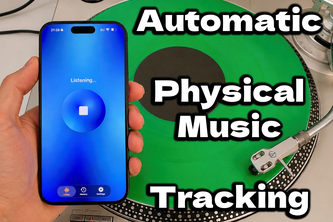
The company appears to be a solo project — Vinyl Scrobbler — built by one developer (Maksim Kuzlin) as part of an OpenAI 2026 hackathon submission. The product is described as a macOS and iOS app that automatically scrobbles physical music listening sessions to Last.fm using Apple’s ShazamKit, AI tools (Codex, GPT-5.6 Sol), and Swift/SwiftUI.
The key change appears to be the introduction of an automated, background listening feature for physical media — a niche but real problem for music collectors who use Last.fm.
The single most important open question is: What is the actual user base or adoption rate for this app, if any? The description does not state whether it has been released beyond the hackathon context, nor whether there are users or revenue.
What The Product Actually Is
- The description states that Vinyl Scrobbler is a macOS and iOS app.
- It listens to music playing through speakers using Apple’s ShazamKit.
- It automatically sends recognized songs to a user's Last.fm account.
- It supports background listening, with one-tap session initiation.
- It was built using Swift, SwiftUI, ShazamKit, Last.fm API, and AI tools (Codex, GPT-5.6 Sol).
- The app is described as native for iPhone and macOS.
Inference: The product is a lightweight utility app, not a platform or marketplace. It integrates with an existing service (Last.fm) rather than operating independently.
Positioning & Claim Evolution
- The description states that the app was built to solve a personal problem: the lack of automatic scrobbling for physical music formats.
- The tagline is “Keep Every Physical Music Listening Session.”
- The author claims it works in the background, requires no manual input, and makes physical music listening feel seamless like streaming services.
Inference: The positioning is niche — targeting collectors or enthusiasts who use Last.fm and listen to vinyl/CDs/cassettes. It positions itself as a convenience tool for an underserved segment.
Target Customer & ICP
- The description states that the app targets “a large but niche community of music collectors” who use Last.fm.
- It is implied that these users are already familiar with scrobbling and want to automate it for physical media.
- No explicit customer segmentation beyond this is provided.
Inference: The ICP is likely a subset of Last.fm users who own or frequently play physical music formats. There is no evidence of broader market targeting or user personas.
Business Model & Pricing Evidence
- The description does not mention any pricing, monetization, or business model.
- It is implied that the app is free to use (as it's a hackathon submission and no paid features are described).
- No indication of subscription, in-app purchases, or freemium structure.
Inference: There is no evidence of a business model. The app appears to be a personal tool or prototype, not a commercial product.
Technical & Delivery Signals
- Built with Swift, SwiftUI, ShazamKit, Last.fm API.
- AI tools (Codex, GPT-5.6 Sol) were used in development.
- The app supports both iPhone and macOS.
- It is described as having a polished UI and background listening functionality.
- The author mentions that it was built quickly using AI assistance.
Inference: The technical stack is standard for Apple platforms. The use of AI tools suggests rapid prototyping, but there is no evidence of scalability or enterprise-grade infrastructure.
Traction & Maturity Signals
- The app was submitted to a hackathon (OpenAI 2026).
- No evidence of user adoption, downloads, or usage metrics.
- No mention of revenue, customers, or product-market fit.
- The author states that it was built in a couple of days.
Inference: There is no traction or maturity evidence. It is likely a prototype or proof-of-concept, not a product with users or market validation.
Competitive Context
- The description does not mention competitors.
- It is implied that the app addresses a gap in Last.fm’s existing functionality for physical media listeners.
- No direct comparison to other scrobbling tools or music tracking apps is made.
Inference: The competitive landscape is unclear. The app may be unique in its approach, but there is no evidence of similar products or market saturation.
Open Questions & Risks
- The app was built as a hackathon submission — no indication it has been released or marketed.
- No revenue, customer data, or traction is reported.
- The author is not a professional iOS developer; the use of AI tools may indicate limited technical depth or scalability.
- The app’s niche appeal may limit its potential for growth or monetization.
Inference: The risk is high that this is a prototype with no commercial viability or user base. It lacks evidence of product-market fit or sustainable business model.
Questions the description leaves open
- Has the app been released beyond the hackathon? If so, how many users does it have?
- Is there any revenue or monetization strategy in place?
- What is the long-term vision for the product — is it intended to be a commercial tool or a personal project?
- How does the app handle edge cases (e.g., low audio quality, silence, overlapping tracks)?
- Are there plans to expand beyond Last.fm or support other platforms?
Overall Assessment
- Not evidenced.
Inference: There is no evidence of a viable business, traction, or commercial potential. The project appears to be a personal tool or hackathon prototype with no indication of monetization or user adoption. It does not meet the criteria for investment or partnership at this stage.
User Stories BotA demo video on every pull request
Get a demo video on every new feature
GitHub App that watches your pull requests and records a narrated, captioned demo.
Save time on demo prep and make informed decisions faster with a video walkthrough of every new feature.
Source
Submitted to the OpenAI 2026 hackathon on Devpost. Project home on Devpost. Back to the full gallery on Devpost.
This competitive analysis was produced by top-founders.com (opens in a new tab)
Generated by a language model from this project's public Devpost page — its tagline, the author's own write-up and any built-with tags listed there — as captured in August 2026. Short quotations are the author's words. It is an opinion on the idea as a business, not on the people behind it, and it reflects the description as published then. If the project has moved on, request a correction below. The analysis is not independent research and contains no verified traction, revenue or customer data.
An independent guide by KFG International LLC — not affiliated with, endorsed by, or connected to Devpost or OpenAI.