

Archive position — measured, not model output
1 like on Devpost
505 of the 7,850 archived projects have more likes, and 1,758 share exactly 1 — so this project's #2,160 place in the like-ranked listing is a tie-break inside that group, not a ranking.
Projects (log scale)
Likes on Devpost. ▲ marks this project's group.
Show the figures
| Likes | Projects | Share of archive |
|---|---|---|
| 0 | 5,587 | 71.2% |
| 1 | 1,758 | 22.4% |
| 2 | 284 | 3.6% |
| 3–4 | 132 | 1.7% |
| 5–9 | 75 | 1.0% |
| 10+ | 14 | 0.2% |
 User Stories BotA demo video on every pull request
Get a demo video on every new feature
GitHub App that watches your pull requests and records a narrated, captioned demo.
Save time on demo prep and make informed decisions faster with a video walkthrough of every new feature.
Executive Summary
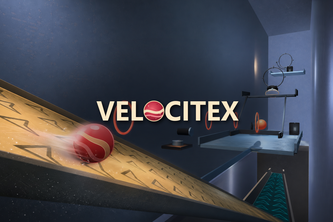
Velocitex is a self-reported 3D momentum-puzzle game built by a single developer using Godot 4.7, .NET, and C#. The author describes it as a downloadable Windows game where players navigate a candy through a machine world using physics-based mechanics such as slopes, bounce, grip, braking, rails, pressure plates, moving platforms, cannons, magnets, and timing.
The project was submitted to the OpenAI 2026 hackathon on Devpost. The description is self-reported and unverified; no evidence of revenue, customers, or traction exists beyond the author's claims.
Key commercial due-diligence read
The author states Velocitex is a complete game but provides no evidence of market validation, user adoption, or monetization strategy. The use of AI tools like Codex and GPT-5.6 is noted, but there is no indication of how these were integrated into a business model or whether they represent a scalable approach.
Most important open question
Is there any evidence that the author has begun to build a user base or explore monetization strategies beyond the prototype stage?
What The Product Actually Is
The description states that Velocitex is a downloadable Windows 3D momentum-puzzle game. Players guide a candy through a handcrafted machine world using various physics-based mechanics including slopes, bounce, grip, braking, rails, pressure plates, moving platforms, cannons, magnets, and timing.
It includes features such as:
- Skin customization
- Achievements
- Room-start saves
- Room selection
- Remappable controls
- Subtitles
- First person/third person camera change
Evidence The author's own write-up describes the game’s mechanics and features in detail. However, no independent verification or demonstration of these elements exists.
Positioning & Claim Evolution
The author positions Velocitex as a puzzle game where "movement itself is the puzzle", emphasizing that "slopes, surfaces, timing, and direction matter more than a large list of player abilities."
They also state:
- The candy-machine setting makes physics readable.
- Every movement decision becomes part of the solution.
- The goal was to create a playful way to make physics understandable.
Inference This suggests an educational or accessibility-oriented positioning around physics learning through gameplay, though this is not explicitly validated in the description.
Evidence All claims are self-reported by the author and lack external corroboration.
Target Customer & ICP
The description does not specify a defined target customer segment or ideal customer profile (ICP). It only mentions that the game is for players who enjoy puzzle games with physics-based mechanics.
Inference Based on genre, it may appeal to fans of puzzle-platformers or indie game enthusiasts, but no explicit targeting is stated.
Evidence Not evidenced. No mention of demographics, psychographics, or specific user personas.
Business Model & Pricing Evidence
There is no evidence in the description of a business model or pricing strategy for Velocitex. The author does not describe how the game will be monetized, whether it’s free-to-play, paid, or supported by ads.
The project appears to be a prototype submitted for a hackathon and lacks any indication of commercial intent beyond personal development.
Evidence No data on revenue streams, pricing tiers, subscriptions, in-app purchases, or monetization plans.
Technical & Delivery Signals
The game was built using:
- Godot 4.7
- .NET
- C#
Tools used include:
- Codex
- GPT-5.6 Sol & Terra (via Codex)
- Git
- PowerShell
- Physics engine
The author notes challenges with Codex, particularly when requiring complex multi-step tasks, which led to compromises in implementation.
They also mention:
- Repeatable build, export, and smoke-test workflows
- Use of GPT for reasoning through physics behavior, collision issues, save states, and test coverage
Evidence Technical details are self-reported. No evidence of scalability or production-grade infrastructure.
Traction & Maturity Signals
The author claims that Velocitex is a complete, downloadable game, not just a prototype. They express pride in its completeness and functionality.
However:
- There is no evidence of user engagement, downloads, reviews, or feedback.
- No mention of sales figures, active users, or retention metrics.
- The project was submitted to a hackathon — suggesting early-stage development.
Evidence Only self-reported maturity claims. No third-party validation or traction data provided.
Competitive Context
The description does not provide information about competitors or the broader market for 3D momentum-puzzle games. It does not reference similar products, their features, or market share.
Inference Given the genre, potential competition could include titles like Portal, Braid, A Hat in Time, or indie puzzle-platformers, but no comparison is made.
Evidence Not evidenced.
Open Questions & Risks
Key risks and open questions based on the self-reported description:
- Single Developer: The entire project was built by one person (Alon Tzur), raising concerns about scalability, maintenance, and long-term support.
- AI Dependency: Heavy reliance on Codex and GPT-5.6 for development raises questions about reproducibility, cost, and sustainability if access to these tools becomes limited or expensive.
- No Commercial Strategy: No evidence of monetization, distribution plans, or marketing efforts beyond the hackathon submission.
- Prototype Stage: While described as complete, it was submitted to a hackathon — indicating an early-stage product with no proven market demand.
Evidence These are inferences drawn from the self-reported description and lack external corroboration.
Questions the description leaves open
- What is your plan for monetizing Velocitex beyond the current prototype?
- How do you intend to distribute the game, and what channels have you explored?
- Have you received any feedback from players or testers outside of yourself?
- Can you explain how the AI tools (Codex, GPT-5.6) were used in development and whether this approach is scalable?
- What are your plans for ongoing updates, bug fixes, and feature additions post-hackathon?
- Are there any legal or intellectual property considerations related to using AI tools like Codex in the development process?
Overall Assessment
There is no evidence of a viable business model, revenue generation, or customer traction for Velocitex.
The project appears to be a personal prototype, submitted to a hackathon, with no indication of commercial viability or market readiness. The author has not demonstrated any path toward monetization, user acquisition, or product-market fit.
Assessment Not ready for investment or partnership at this stage. Further evidence of traction, monetization strategy, and team expansion would be required before considering deeper due diligence.
User Stories BotA demo video on every pull request
Get a demo video on every new feature
GitHub App that watches your pull requests and records a narrated, captioned demo.
Save time on demo prep and make informed decisions faster with a video walkthrough of every new feature.
Source
Submitted to the OpenAI 2026 hackathon on Devpost. Project home on Devpost. Back to the full gallery on Devpost.
This competitive analysis was produced by top-founders.com (opens in a new tab)
Generated by a language model from this project's public Devpost page — its tagline, the author's own write-up and any built-with tags listed there — as captured in August 2026. Short quotations are the author's words. It is an opinion on the idea as a business, not on the people behind it, and it reflects the description as published then. If the project has moved on, request a correction below. The analysis is not independent research and contains no verified traction, revenue or customer data.
An independent guide by KFG International LLC — not affiliated with, endorsed by, or connected to Devpost or OpenAI.