

Archive position — measured, not model output
0 likes on Devpost
2,263 of the 7,850 archived projects have more likes, and 5,587 share exactly 0 — so this project's #7,475 place in the like-ranked listing is a tie-break inside that group, not a ranking.
Projects (log scale)
Likes on Devpost. ▲ marks this project's group.
Show the figures
| Likes | Projects | Share of archive |
|---|---|---|
| 0 | 5,587 | 71.2% |
| 1 | 1,758 | 22.4% |
| 2 | 284 | 3.6% |
| 3–4 | 132 | 1.7% |
| 5–9 | 75 | 1.0% |
| 10+ | 14 | 0.2% |
 User Stories BotA demo video on every pull request
Get a demo video on every new feature
GitHub App that watches your pull requests and records a narrated, captioned demo.
Save time on demo prep and make informed decisions faster with a video walkthrough of every new feature.
Executive Summary
What the company appears to be
A solo developer project that builds a decision-support tool for U.S. transport fleets to model fuel-price risk and compare hedging strategies. The tool is self-described as an educational prototype, not financial advice.
What changed
The author reports building a working MVP using AI tools (GPT-5.6, Codex) and Python, integrating external data sources, Monte Carlo simulations, and risk metrics like VaR/CVaR. It was deployed to Streamlit Community Cloud.
Single most important open question
Is there any evidence of actual fleet users or commercial adoption beyond the prototype? The description states no revenue, customers, or traction data exist.
Analysis basis: Self-reported only. No archived history, third-party verification, or independent sources. All claims are from the author's own account and unverified.
What The Product Actually Is
- The description states this is a "decision-support tool" for fleet operators.
- It models fuel-price risk and compares five hedging strategies:
- Remaining unhedged
- Fixed-price supplier contract
- Futures hedging
- Call options
- Collar strategy
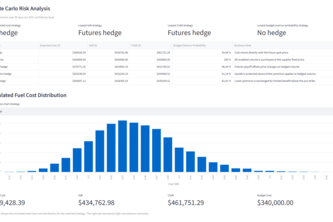
- It calculates costs under various scenarios including Monte Carlo simulations.
- The application uses Python, Streamlit for UI, integrates EIA and Yahoo Finance data.
- It includes risk metrics like Value at Risk (VaR) and Conditional Value at Risk (CVaR).
- The tool is described as a "publicly available analytical and educational prototype".
- AI tools (GPT-5.6, GPT-4.1-mini) are used for logic definition, explanation generation, and code assistance.
- It was built in a modular structure separating financial calculations from UI.
Note: The author states this is an MVP, not a commercial product. No revenue or customer data is provided.
Positioning & Claim Evolution
- The description states the tool helps "fleet operators" understand fuel-price risk and compare hedging strategies.
- It aims to make complex financial concepts accessible without requiring deep financial knowledge.
- The author claims it was built using advanced AI tools (GPT-5.6, Codex) to turn a business idea into a working product.
- The tool is positioned as an educational prototype for small/medium-sized transport companies that cannot afford dedicated risk management teams.
- It evolved from a personal interest in investing and trading, specifically inspired by Southwest Airlines' hedging practices.
Inference: The positioning suggests this is a niche B2B SaaS or consulting tool for fleet operators, but the author does not claim any commercial traction or adoption.
Target Customer & ICP
- The description states the target users are "transport companies" and "fleet operators".
- It specifically mentions "small and medium-sized transport companies" that depend heavily on fuel prices.
- These companies are described as unable to hire their own team of traders, risk managers, or derivatives specialists.
- The tool is aimed at business managers who need to understand fuel cost impacts and budget implications.
Not evidenced: No specific customer segments, personas, or use cases beyond general fleet operators. No evidence of actual customers or user feedback.
Business Model & Pricing Evidence
- The description states the application is a "publicly available analytical and educational prototype".
- It does not mention any pricing model, subscription plans, or monetization strategy.
- There is no indication of whether this will be sold as a SaaS product, a one-time license, or offered for free.
- No evidence of revenue streams, customer acquisition costs, or gross margins.
Inference: If commercialized, it would likely be a SaaS tool with usage-based or tiered pricing, but no such model is described.
Technical & Delivery Signals
- Built using Python with modular structure separating financial logic from UI.
- Uses Streamlit for the user interface and deployment to Streamlit Community Cloud.
- Integrates external data sources (EIA, Yahoo Finance) for fuel prices and futures.
- Implements Monte Carlo simulations and risk metrics (VaR, CVaR).
- Uses Codex through VS Code extension for code development.
- Uses GPT-5.6 for logic definition and review; GPT-4.1-mini for management explanations.
- Includes automated testing and Git-based version control.
- The author reports building the application step-by-step with clear architecture decisions.
Inference: The technical stack suggests a modern, scalable approach suitable for future commercialization, but no production deployment or scalability data is provided.
Traction & Maturity Signals
- The tool is described as a "publicly available" prototype.
- It was submitted to the OpenAI 2026 hackathon on Devpost.
- No evidence of revenue, customers, or user adoption beyond the prototype.
- The author reports building it alone over time, with no mention of team growth or external investment.
- There is no data on usage frequency, retention, or feature adoption.
Absence of evidence: No traction signals (users, downloads, engagement) are provided. The tool remains in prototype form.
Competitive Context
- The description does not name specific competitors.
- It references Southwest Airlines' hedging practices as inspiration.
- The author notes that small/medium-sized companies lack access to dedicated risk management teams.
- This implies a gap in the market for accessible fuel-risk modeling tools.
- No evidence of existing solutions or competitive positioning is provided.
Inference: The tool addresses a potential niche in fleet risk management, but no competitive landscape is described.
Open Questions & Risks
- The tool is described as an "educational prototype", not a commercial product.
- No evidence of revenue, customers, or traction exists.
- The author is the sole developer (1-person team).
- AI tools are used for development, which may limit scalability or control over output quality.
- Risk metrics and financial logic require validation; no third-party verification is mentioned.
- The tool's accuracy depends on external data sources that may be unreliable or unavailable.
- No evidence of product-market fit or user feedback.
Inference: The lack of commercial traction, revenue, or customer data raises questions about viability as a business.
Questions the description leaves open
- What is the actual market demand for this type of tool among fleet operators?
- Have you conducted any user research or interviews with potential customers?
- How do you plan to monetize this tool if it's currently just a prototype?
- What are the risks associated with relying on external data sources like EIA and Yahoo Finance?
- Are there any legal or regulatory considerations for providing financial risk modeling tools?
- What is your roadmap for scaling beyond the current prototype?
- How do you plan to validate the accuracy of the financial models used in the simulator?
- Have you considered how this tool might be integrated into existing fleet management systems?
Overall Assessment
- Not evidenced: No commercial traction, revenue, or customer data exists.
- The project is described as a solo developer prototype with no evidence of market adoption or product-market fit.
- It shows technical capability and domain knowledge but lacks business validation.
- The author's experience in transport operations and financial analysis is valuable, but the tool remains unproven in a commercial context.
Assessment: This is an early-stage prototype with potential for development. However, due to lack of evidence for traction, revenue, or customer adoption, it does not meet criteria for investment or partnership at this stage. Further validation and commercialization efforts are needed before considering deeper due diligence.
User Stories BotA demo video on every pull request
Get a demo video on every new feature
GitHub App that watches your pull requests and records a narrated, captioned demo.
Save time on demo prep and make informed decisions faster with a video walkthrough of every new feature.
Source
Submitted to the OpenAI 2026 hackathon on Devpost. Project home on Devpost. Back to the full gallery on Devpost.
This competitive analysis was produced by top-founders.com (opens in a new tab)
Generated by a language model from this project's public Devpost page — its tagline, the author's own write-up and any built-with tags listed there — as captured in August 2026. Short quotations are the author's words. It is an opinion on the idea as a business, not on the people behind it, and it reflects the description as published then. If the project has moved on, request a correction below. The analysis is not independent research and contains no verified traction, revenue or customer data.
An independent guide by KFG International LLC — not affiliated with, endorsed by, or connected to Devpost or OpenAI.