

Archive position — measured, not model output
0 likes on Devpost
2,263 of the 7,850 archived projects have more likes, and 5,587 share exactly 0 — so this project's #7,437 place in the like-ranked listing is a tie-break inside that group, not a ranking.
Projects (log scale)
Likes on Devpost. ▲ marks this project's group.
Show the figures
| Likes | Projects | Share of archive |
|---|---|---|
| 0 | 5,587 | 71.2% |
| 1 | 1,758 | 22.4% |
| 2 | 284 | 3.6% |
| 3–4 | 132 | 1.7% |
| 5–9 | 75 | 1.0% |
| 10+ | 14 | 0.2% |
 User Stories BotA demo video on every pull request
Get a demo video on every new feature
GitHub App that watches your pull requests and records a narrated, captioned demo.
Save time on demo prep and make informed decisions faster with a video walkthrough of every new feature.
Executive Summary
The company appears to be a solo project named "ue-shed", self-described as an open-source Unreal Engine tooling suite. The author states it aims to provide headless tools that connect to Unreal Engine via remote control, addressing perceived coupling issues in AAA game tooling and lack of open-source ecosystems. The project is built with a mix of technologies including C++, Rust, TypeScript, Electron, and Unreal Engine.
What changed
The project was submitted to the OpenAI 2026 hackathon, indicating an early-stage development effort focused on prototyping and initial tooling exploration.
Single most important open question
Is there evidence of traction, revenue, or customer adoption beyond the author's own development work?
The description is entirely self-reported and unverified. No data on revenue, customers, partnerships, or actual usage exists in the provided information. The project appears to be a proof-of-concept or early-stage prototype with no demonstrated commercial activity.
What The Product Actually Is
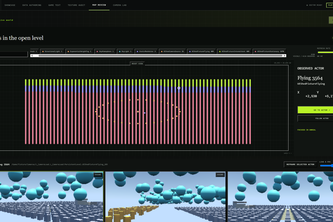
- The description states that ue-shed is "an open source suite of headless tools that game studios can adopt to their project"
- It connects to Unreal Engine via "unreal remote control (and later mcp)"
- The author mentions it uses "electron" in the showcase
- It is described as a tooling solution for Unreal Engine projects, specifically addressing issues around coupling and ad-hoc tooling practices in AAA studios
Evidence strength This is self-reported by the author. No independent verification or demonstration of actual product functionality exists.
Positioning & Claim Evolution
- The author claims that "unreal engine tooling is usually very coupled to the project itself"
- They state that "unreal toolshed leverages unreal remote control (and later mcp) for more freedom"
- The project addresses two main problems: lack of open-source ecosystem and coupling issues in AAA game tooling
- The author positions it as a solution that allows "editor tooling that connects to unreal" and can theoretically connect "anywhere"
- They describe the approach as using AI (Codex) to explore external editor tooling ideas, then building around a "north star" document
Evidence strength Claims are self-reported. No evidence of actual market positioning or customer feedback.
Target Customer & ICP
- The description states that the target is "game studios"
- Specifically mentions "AAA game tooling" as the problem area
- The author notes that "most studios just have their own tooling and their own ways of doing things completely adhoc"
- No specific studio size, budget, or technical requirements are mentioned
Evidence strength This is a self-described target. No evidence of actual customer interviews, market research, or customer validation.
Business Model & Pricing Evidence
- The description states that it's "an open source suite"
- No pricing information is provided
- No commercial model (subscription, licensing, freemium) is described
- The author mentions "headless tools that game studios can adopt to their project" but doesn't elaborate on how adoption would be monetized
Evidence strength Not evidenced. The business model remains undefined.
Technical & Delivery Signals
- Built with: codex, cpp, electron, rust, typescript, unreal-engine
- The author states they "ran a lot of ideas for external editor tooling by codex"
- They mention creating a "north star type document about what the ideal version of these tooling look like"
- The showcase uses electron
- Performance challenges were encountered with real-time tooling, but Codex was used to explore optimizations
Evidence strength Some technical details provided. No evidence of actual delivery or production-ready code.
Traction & Maturity Signals
- The project is described as a "hackathon submission"
- The author states they "just scratched the surface" and need to "polish some of the tooling"
- They mention having "some tool setup in less than a minute" with good agent onboarding
- No evidence of customers, revenue, or adoption beyond the author's own work
Evidence strength Not evidenced. No traction data provided.
Competitive Context
- The description states there are "two major problem[s] with AAA game tooling"
- One is lack of open-source ecosystem
- Second is coupling issues in Unreal Engine tooling
- No specific competitors or market positioning mentioned
- The author mentions that "most studios just have their own tooling and their own ways of doing things completely adhoc"
Evidence strength Not evidenced. No competitive analysis or market positioning data provided.
Open Questions & Risks
- Solo team (1 member) with no evidence of additional contributors or support
- Project is described as a hackathon submission, suggesting early-stage development
- No revenue, customer, or traction data available
- The author states they "just scratched the surface" and need to polish tooling
- Open-source nature may limit monetization potential
- Heavy reliance on AI (Codex) for development raises questions about scalability and reproducibility
Evidence strength Inferences based on self-reported information. No independent validation of risks.
Questions the description leaves open
- What specific problems in Unreal Engine tooling are you solving, and how do you know these are real pain points?
- How many game studios have expressed interest in adopting this tooling?
- What is your plan for monetization given the open-source nature of the project?
- Can you demonstrate actual functionality beyond the hackathon prototype?
- What are the specific performance limitations that need to be addressed?
- How do you plan to scale beyond a solo developer?
- What are the key technical challenges in integrating with existing Unreal projects?
Overall Assessment
Not evidenced.
The description provides no evidence of revenue, customers, traction, or commercial viability. The project is described as a hackathon submission by a solo developer with no demonstrated market validation or business model. The author states they "just scratched the surface" and need to polish tooling, indicating an early-stage prototype.
Confidence level Very low
The project appears to be an experimental idea with no commercial evidence. Any investment or partnership decision would require substantial additional due diligence beyond what is provided in this description.
User Stories BotA demo video on every pull request
Get a demo video on every new feature
GitHub App that watches your pull requests and records a narrated, captioned demo.
Save time on demo prep and make informed decisions faster with a video walkthrough of every new feature.
Source
Submitted to the OpenAI 2026 hackathon on Devpost. Project home on Devpost. Back to the full gallery on Devpost.
This competitive analysis was produced by top-founders.com (opens in a new tab)
Generated by a language model from this project's public Devpost page — its tagline, the author's own write-up and any built-with tags listed there — as captured in August 2026. Short quotations are the author's words. It is an opinion on the idea as a business, not on the people behind it, and it reflects the description as published then. If the project has moved on, request a correction below. The analysis is not independent research and contains no verified traction, revenue or customer data.
An independent guide by KFG International LLC — not affiliated with, endorsed by, or connected to Devpost or OpenAI.