

Archive position — measured, not model output
0 likes on Devpost
2,263 of the 7,850 archived projects have more likes, and 5,587 share exactly 0 — so this project's #7,450 place in the like-ranked listing is a tie-break inside that group, not a ranking.
Projects (log scale)
Likes on Devpost. ▲ marks this project's group.
Show the figures
| Likes | Projects | Share of archive |
|---|---|---|
| 0 | 5,587 | 71.2% |
| 1 | 1,758 | 22.4% |
| 2 | 284 | 3.6% |
| 3–4 | 132 | 1.7% |
| 5–9 | 75 | 1.0% |
| 10+ | 14 | 0.2% |
 User Stories BotA demo video on every pull request
Get a demo video on every new feature
GitHub App that watches your pull requests and records a narrated, captioned demo.
Save time on demo prep and make informed decisions faster with a video walkthrough of every new feature.
Executive Summary
What the company appears to be
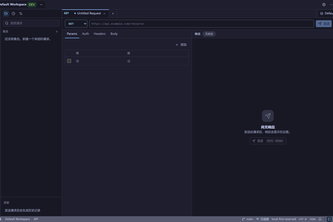
Unfour is a self-reported open-source desktop workspace for backend developers. It integrates API testing, SSH terminal access, and database management into one local-first application. The product exposes these capabilities through a local MCP (Model Control Protocol) server to enable AI agents like Codex to perform debugging workflows.
What changed
The author states that this project emerged from personal experience with fragmented backend debugging workflows. It represents an attempt to build a structured, tool-based interface between human developers and AI coding agents for backend system investigation.
Single most important open question — the commercial due-diligence read
Is there evidence of traction or adoption beyond the single developer's own use case? The description does not indicate any revenue, customers, or usage metrics beyond the author’s personal development experience. This is a critical gap in assessing product-market fit and commercial viability.
What The Product Actually Is
The description states that Unfour is an open-source desktop workspace built with Tauri 2.0, Rust, React, and TypeScript. It includes:
- An API client for organizing and sending HTTP requests
- An SSH terminal for connecting to remote environments
- A database client supporting PostgreSQL, MySQL, and local data exploration
- A local workspace system for managing related connections and requests
- A local MCP server exposing these capabilities to Codex
The architecture separates the UI from underlying engines (API requests, SSH sessions, database queries, etc.), with modules implemented independently.
Inference The product is described as a desktop application that combines developer tools into a single interface, but it is not clear whether this is a standalone tool or one intended for integration with AI agents like Codex.
Positioning & Claim Evolution
The author claims Unfour aims to give an AI coding agent structured access to investigate real backend systems safely and effectively. It is positioned as more than just a collection of tools; it is designed to support AI-assisted debugging workflows by enabling Codex to reproduce API issues, inspect logs, query databases, and suggest next steps.
The author also states that the goal was not simply to place several developer tools inside one application but to create an environment where AI agents can operate with full context and access without manual data transfer.
Inference This positioning implies a niche in AI-assisted backend development, particularly for developers working with Codex or similar agents. However, there is no evidence of market validation or competitive differentiation beyond the author’s own use case.
Target Customer & ICP
The description states that Unfour targets backend developers who work with tools like Codex and need to debug complex systems involving APIs, SSH access, and databases.
It also implies a specific type of user: those who are already using AI coding agents and want to streamline their debugging workflows by integrating these tools directly into the agent’s operational environment.
Inference The ICP appears to be early-stage developers or teams using AI-assisted development environments, particularly those working in backend systems where multi-tool workflows are common. No evidence of customer segmentation or specific personas is provided.
Business Model & Pricing Evidence
The description does not mention any pricing model, revenue streams, or monetization strategy. It only states that Unfour is open-source and includes a “Community edition” and a future “Pro edition.”
Inference There is no evidence of a business model beyond the author’s own development efforts. The presence of a Pro version suggests potential for monetization, but no details are given.
Technical & Delivery Signals
Unfour is built using:
- Tauri 2.0
- Rust
- React
- TypeScript
It supports cross-platform deployment and includes modules for API requests, SSH sessions, database queries, local storage, secrets, diagnostics, and MCP commands.
The author notes that the architecture separates UI from engines and emphasizes modular design to support AI integration.
Inference The technical stack suggests a mature engineering approach with attention to performance, security, and modularity. However, no evidence of scalability or production deployment is provided.
Traction & Maturity Signals
There is no evidence of traction, adoption, or user engagement beyond the author’s own development experience. No customer data, usage statistics, or product metrics are mentioned.
The project was submitted to the OpenAI 2026 hackathon, indicating it may be in an early-stage prototype or experimental phase.
Inference The lack of traction signals indicates that this is likely a personal project or proof-of-concept rather than a commercial product with market validation.
Competitive Context
The description does not provide any information about competitors or the broader marketplace. It does not mention existing tools in the API testing, SSH terminal, or database management space, nor how Unfour compares to them.
Inference Without competitive analysis or awareness of similar offerings, it is impossible to assess whether Unfour fills a meaningful gap in the market or duplicates existing functionality.
Open Questions & Risks
- No traction or adoption: The project appears to be a personal endeavor with no evidence of real-world usage.
- Single developer team: With only one member (reid zhang), there is limited capacity for scaling or rapid iteration.
- Unclear monetization strategy: While a Pro version is mentioned, no clear path to revenue generation exists.
- Limited product maturity: The project seems to be in an early stage, with many features still under development ("next steps").
- AI agent dependency: Reliance on Codex and other AI agents may limit its applicability if those tools do not gain widespread adoption.
Questions the description leaves open
- What specific backend debugging problems are you solving that existing tools don’t?
- Have you validated the need for this product with actual users or developers?
- How do you plan to scale beyond a single developer’s use case?
- What is your roadmap for monetization and long-term sustainability?
- Are there any known limitations in integrating with AI agents like Codex?
- What are the key technical challenges you've faced, and how have you addressed them?
Overall Assessment
Not evidenced: There is no evidence of revenue, customers, or traction to support a commercial investment or partnership decision.
The project appears to be a personal prototype or hackathon submission, not a scalable business. While the idea has potential in the AI-assisted development space, there is currently no indication that it has moved beyond the experimental phase.
Confidence level: Low — based entirely on self-reported information with no external validation or market data.
User Stories BotA demo video on every pull request
Get a demo video on every new feature
GitHub App that watches your pull requests and records a narrated, captioned demo.
Save time on demo prep and make informed decisions faster with a video walkthrough of every new feature.
Source
Submitted to the OpenAI 2026 hackathon on Devpost. Project home on Devpost. Back to the full gallery on Devpost.
This competitive analysis was produced by top-founders.com (opens in a new tab)
Generated by a language model from this project's public Devpost page — its tagline, the author's own write-up and any built-with tags listed there — as captured in August 2026. Short quotations are the author's words. It is an opinion on the idea as a business, not on the people behind it, and it reflects the description as published then. If the project has moved on, request a correction below. The analysis is not independent research and contains no verified traction, revenue or customer data.
An independent guide by KFG International LLC — not affiliated with, endorsed by, or connected to Devpost or OpenAI.