

Archive position — measured, not model output
0 likes on Devpost
2,263 of the 7,850 archived projects have more likes, and 5,587 share exactly 0 — so this project's #7,434 place in the like-ranked listing is a tie-break inside that group, not a ranking.
Projects (log scale)
Likes on Devpost. ▲ marks this project's group.
Show the figures
| Likes | Projects | Share of archive |
|---|---|---|
| 0 | 5,587 | 71.2% |
| 1 | 1,758 | 22.4% |
| 2 | 284 | 3.6% |
| 3–4 | 132 | 1.7% |
| 5–9 | 75 | 1.0% |
| 10+ | 14 | 0.2% |
 User Stories BotA demo video on every pull request
Get a demo video on every new feature
GitHub App that watches your pull requests and records a narrated, captioned demo.
Save time on demo prep and make informed decisions faster with a video walkthrough of every new feature.
Executive Summary
The company appears to be a solo developer project — UCall Widget Lite — an Android app that turns the home screen into a smarter phone shortcut for calling back recent numbers. The author states it uses Kotlin and Android APIs, with Codex assistance in development. It is not evidenced to have revenue, customers or traction beyond its own self-description.
The single most important open question: Is there any evidence of user adoption or monetization strategy beyond the developer's own claims?
What The Product Actually Is
- The description states UCall Widget Lite is an Android application.
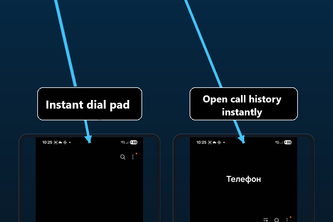
- It adds a compact widget to the home screen that allows one-tap calling back of the latest number.
- It uses Android App Widgets, RemoteViews, call-log APIs, BroadcastReceiver, SharedPreferences, and localization resources.
- It supports Privacy Mode, theme selection, font size adjustment, and Ukrainian/English language switching.
- The app is built in Kotlin using Gradle and Android Studio.
- Codex was used for development assistance.
Inference: The product is a lightweight Android widget that enhances phone access via the home screen. It does not replace the default phone app but supplements it with quick actions.
Positioning & Claim Evolution
- The author states UCall Widget Lite "turns the Android home screen into a smarter phone shortcut."
- It aims to make calling back the latest number as simple as one tap.
- It is described as a tool that improves access to common phone actions without replacing the system phone app.
- The project was submitted to the OpenAI 2026 hackathon, indicating it may be a prototype or proof-of-concept.
Inference: Positioning is focused on improving accessibility and convenience for frequent callers. It is positioned as a utility tool, not a replacement for core phone functionality.
Target Customer & ICP
- The description does not name specific customer segments.
- The app supports Ukrainian and English languages, suggesting a potential audience in those regions.
- It targets users who frequently make or receive calls and want quick access to call history or dialer functions.
Inference: Likely target is Android users who value speed and convenience in phone interactions. No evidence of segmentation beyond language support.
Business Model & Pricing Evidence
- The description does not state a pricing model.
- It does not mention monetization, subscriptions, ads, or in-app purchases.
- The app is described as a "one-tap callback" tool, with no indication of premium features or paid tiers.
Inference: No evidence of a business model or pricing strategy beyond the developer's own claims. The project may be open-source or free-to-use.
Technical & Delivery Signals
- Built in Kotlin using Android App Widgets and call-log APIs.
- Uses RemoteViews, BroadcastReceiver, SharedPreferences, localization resources.
- Codex was used for development assistance.
- Includes onboarding explanation, customizable themes, font sizes, and privacy settings.
- The app is designed to be lightweight and avoid foreground services or overlays.
Inference: The technical approach is consistent with Android widget development. It shows attention to performance and user experience constraints.
Traction & Maturity Signals
- The project was submitted to a hackathon (OpenAI 2026).
- It includes features like onboarding, localization, and privacy settings.
- The author states it can be installed, configured, and used for real one-tap callbacks.
- No evidence of user downloads, reviews, or usage metrics.
Inference: The product is a working prototype, not yet proven in the market. No evidence of adoption or user engagement beyond its own description.
Competitive Context
- The description does not mention competitors.
- It is an Android widget for phone access and one-tap calling.
- No evidence of similar tools or apps in the marketplace.
Inference: No competitive landscape is described, but it likely competes with default phone app functionality or other Android widgets. No evidence of existing market players.
Open Questions & Risks
- The project is a solo developer effort; no team or organizational structure is evident.
- It is not evidenced to have any revenue, customers, or traction.
- It was submitted as a hackathon project, suggesting it may be experimental or unproven.
- No evidence of monetization, scalability, or long-term roadmap.
Inference: High risk due to lack of commercial traction and no clear path to monetization. The product is unproven in the market.
Questions the description leaves open
- What is the expected user base or adoption rate for this tool?
- Is there a plan to monetize UCall Widget Lite beyond its current prototype?
- How does it handle privacy and data compliance on Android devices?
- Are there plans to expand beyond Ukrainian/English language support?
- Has the app been tested across different Android versions and launchers?
Overall Assessment
- The project is a solo developer prototype, not evidenced to have revenue or traction.
- It is described as a utility tool for Android users but lacks commercial evidence.
- No information on scalability, monetization, or long-term strategy.
Inference: Not suitable for investment or partnership at this stage. The product is unproven and lacks commercial signals. A future version with adoption or monetization would be more compelling.
User Stories BotA demo video on every pull request
Get a demo video on every new feature
GitHub App that watches your pull requests and records a narrated, captioned demo.
Save time on demo prep and make informed decisions faster with a video walkthrough of every new feature.
Source
Submitted to the OpenAI 2026 hackathon on Devpost. Project home on Devpost. Back to the full gallery on Devpost.
This competitive analysis was produced by top-founders.com (opens in a new tab)
Generated by a language model from this project's public Devpost page — its tagline, the author's own write-up and any built-with tags listed there — as captured in August 2026. Short quotations are the author's words. It is an opinion on the idea as a business, not on the people behind it, and it reflects the description as published then. If the project has moved on, request a correction below. The analysis is not independent research and contains no verified traction, revenue or customer data.
An independent guide by KFG International LLC — not affiliated with, endorsed by, or connected to Devpost or OpenAI.