

Archive position — measured, not model output
0 likes on Devpost
2,263 of the 7,850 archived projects have more likes, and 5,587 share exactly 0 — so this project's #7,431 place in the like-ranked listing is a tie-break inside that group, not a ranking.
Projects (log scale)
Likes on Devpost. ▲ marks this project's group.
Show the figures
| Likes | Projects | Share of archive |
|---|---|---|
| 0 | 5,587 | 71.2% |
| 1 | 1,758 | 22.4% |
| 2 | 284 | 3.6% |
| 3–4 | 132 | 1.7% |
| 5–9 | 75 | 1.0% |
| 10+ | 14 | 0.2% |
 User Stories BotA demo video on every pull request
Get a demo video on every new feature
GitHub App that watches your pull requests and records a narrated, captioned demo.
Save time on demo prep and make informed decisions faster with a video walkthrough of every new feature.
Executive Summary
What the company appears to be
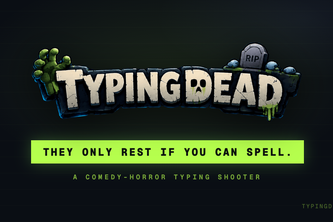
Typing Dead is described by its author as a free, playable browser-based educational experiment designed to teach typing on a keyboard. It was submitted to the OpenAI 2026 hackathon and built using a range of web technologies including React, Three.js, WebGL, and AI tools like OpenAI GPT-5.6 and Codex.
What changed
There is no evidence of prior version or evolution — this appears to be a single project submitted for a hackathon with no indication of prior development or commercial traction.
The single most important open question
Is there any evidence of user engagement, adoption, or monetization strategy beyond the hackathon submission? The description does not indicate whether the project has moved beyond prototype or received feedback from users.
What The Product Actually Is
The description states:
"Typing Dead is a free, playable browser educational experiment to learn typing on a keyboard."
This indicates that Typing Dead is an interactive web-based game or simulation intended for typing practice. It is described as an “educational experiment,” suggesting it may be experimental in nature and not yet fully developed.
Evidence
- The author describes it as a "browser educational experiment"
- It is tagged with: browser-game, web-game, html5, webgl, game-development
Inference It likely uses web technologies to deliver an interactive typing experience within the browser. However, no details are provided about gameplay mechanics or how it teaches typing.
Positioning & Claim Evolution
The description states:
"Typing Dead is a free, playable browser educational experiment to learn typing on a keyboard."
There is no evidence of prior positioning or evolution in claims — this is the only statement made by the author. No indication of branding, messaging strategy, or how it differentiates from other typing tools.
Evidence
- Tagline: “Typing Dead is a free, playable browser educational experiment to learn typing on a keyboard.”
- Submitted to OpenAI 2026 hackathon
Inference It may be positioned as a novelty or experimental tool for learning typing. However, no evidence of prior positioning or evolution in claims.
Target Customer & ICP
The description states:
"Typing Dead is a free, playable browser educational experiment to learn typing on a keyboard."
There is no explicit mention of target customer segments or ideal customer profile (ICP). The project is described as an educational tool, but the intended audience is not specified.
Evidence
- No mention of specific user groups
- No indication of age group, skill level, or use case
Inference It may be aimed at beginners or casual learners who want to practice typing in a game-like environment. However, no evidence supports this inference.
Business Model & Pricing Evidence
The description states:
"Typing Dead is a free, playable browser educational experiment to learn typing on a keyboard."
There is no indication of pricing, monetization strategy, or business model beyond it being “free.”
Evidence
- Described as “free”
- No mention of paid features, subscriptions, or revenue streams
Inference It may be a freemium or ad-supported model, but there is no evidence to support this.
Technical & Delivery Signals
The description states:
"Built with (author-declared): 3d, accessibility, browser-game, bun, draco, game-development, glsl, gltf, gpt-5-6, html5, ktx2, openai, openai-codex, radix-ui, react, shadcn-ui, tailwind-css, three-js, typescript, vercel, vite, web-audio-api, web-game, webgl"
This list of technologies suggests a modern, web-based development stack with some advanced features like 3D rendering (Three.js), AI integration (OpenAI GPT-5.6, Codex), and game development tools.
Evidence
- Technologies listed include React, Three.js, WebGL, TypeScript, Vercel, OpenAI tools
- Tags: browser-game, web-game, html5, webgl
Inference It is likely built with modern web technologies for a browser-based experience. However, no evidence of performance, scalability, or delivery mechanism beyond the tech stack.
Traction & Maturity Signals
The description states:
"This project was submitted to the OpenAI 2026 hackathon on Devpost."
There is no evidence of traction, adoption, or user engagement beyond a hackathon submission. No mention of downloads, usage metrics, or feedback from users.
Evidence
- Submitted to a hackathon
- No mention of user data, retention, or usage
Inference It appears to be an early-stage prototype or proof-of-concept. No evidence of product-market fit or traction.
Competitive Context
The description states:
"This project was submitted to the OpenAI 2026 hackathon on Devpost."
There is no mention of competitors, market analysis, or positioning relative to existing typing tools or educational games.
Evidence
- No reference to existing products or markets
- No competitive differentiation claimed
Inference It may compete with other typing practice tools or educational games. However, no evidence supports this inference.
Open Questions & Risks
The description states:
"This project was submitted to the OpenAI 2026 hackathon on Devpost."
Key risks and open questions include:
- No evidence of commercial viability or monetization strategy
- No user engagement or adoption metrics
- No indication of team size beyond one person (Agnel Nieves)
- No evidence of product-market fit or traction
- No mention of long-term roadmap or scalability
Evidence
- Submitted to a hackathon
- One-person team
- No revenue, customers, or usage data
Inference The project may be experimental and not yet ready for commercial deployment. Risks include lack of product-market fit, limited development resources, and no clear path to monetization.
Questions the description leaves open
- What is the intended user base for Typing Dead?
- How does it differ from existing typing practice tools or games?
- Is there any plan to monetize or scale this beyond the hackathon submission?
- Have you received feedback from users, and if so, what was it?
- What are the next steps in development for this project?
Overall Assessment
The description states:
"This project was submitted to the OpenAI 2026 hackathon on Devpost."
There is no evidence of commercial readiness or traction to support an investment or partnership decision.
Evidence
- Submitted to a hackathon
- No revenue, customers, or adoption metrics
- One-person team
- No indication of monetization strategy
Inference This appears to be an early-stage prototype with no demonstrated commercial viability. It is not ready for investment or partnership at this time.
User Stories BotA demo video on every pull request
Get a demo video on every new feature
GitHub App that watches your pull requests and records a narrated, captioned demo.
Save time on demo prep and make informed decisions faster with a video walkthrough of every new feature.
Source
Submitted to the OpenAI 2026 hackathon on Devpost. Project home on Devpost. Back to the full gallery on Devpost.
This competitive analysis was produced by top-founders.com (opens in a new tab)
Generated by a language model from this project's public Devpost page — its tagline and any built-with tags listed there, since the author published no write-up — as captured in August 2026. Short quotations are the author's words. It is an opinion on the idea as a business, not on the people behind it, and it reflects the description as published then. If the project has moved on, request a correction below. The analysis is not independent research and contains no verified traction, revenue or customer data.
An independent guide by KFG International LLC — not affiliated with, endorsed by, or connected to Devpost or OpenAI.