

Archive position — measured, not model output
1 like on Devpost
505 of the 7,850 archived projects have more likes, and 1,758 share exactly 1 — so this project's #2,131 place in the like-ranked listing is a tie-break inside that group, not a ranking.
Projects (log scale)
Likes on Devpost. ▲ marks this project's group.
Show the figures
| Likes | Projects | Share of archive |
|---|---|---|
| 0 | 5,587 | 71.2% |
| 1 | 1,758 | 22.4% |
| 2 | 284 | 3.6% |
| 3–4 | 132 | 1.7% |
| 5–9 | 75 | 1.0% |
| 10+ | 14 | 0.2% |
 User Stories BotA demo video on every pull request
Get a demo video on every new feature
GitHub App that watches your pull requests and records a narrated, captioned demo.
Save time on demo prep and make informed decisions faster with a video walkthrough of every new feature.
Executive Summary
What the company appears to be
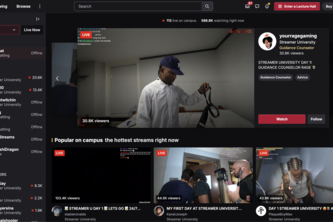
The project described by the author is a self-reported, hackathon-built platform named Streamer University Watch, intended to centralize livestreaming content from a specific campus event — Streamer University 2026. It aggregates live streams from multiple platforms (Twitch, Kick, YouTube) and provides features like multiview, directory browsing, and analytics. The author states that the project was built in a short timeframe using Next.js, TypeScript, and OpenAI Codex.
What changed
The description indicates this is a one-off solution for a single event, not a scalable or commercial product. It was built as part of a hackathon submission and deployed during an event with no evidence of ongoing use beyond that context.
Single most important open question
Is there any evidence of traction, revenue, or adoption beyond the author’s own account? The description is self-reported, unverified, and lacks any data on actual users, monetization, or post-event usage.
What The Product Actually Is
The description states that streameruniversity.watch is a platform for Streamer University 2026. It aggregates livestreams from multiple platforms (Twitch, Kick, YouTube) into one interface. Features include:
- A searchable campus directory of faculty, students, and alumni.
- Live channels appearing first in the UI.
- Multiview functionality supporting up to eight simultaneous streams.
- A random-stream feature for discovery.
- Mobile experience with responsive design.
- Post-event analytics via Stream Charts.
- “Streamer University Wrapped” — a summary of event stats and awards.
The author reports that it was built using Next.js, React, TypeScript, Tailwind CSS, and deployed on Vercel. OpenAI Codex was used as an engineering collaborator.
Evidence
- The description states the product aggregates streams from Twitch, Kick, and YouTube.
- It includes features like multiview, directory browsing, and analytics.
- Built with Next.js, React, TypeScript, Tailwind CSS.
- Deployed on Vercel; used OpenAI Codex for development.
Inference The product is a custom-built, event-specific platform, not a general-purpose streaming tool.
Positioning & Claim Evolution
The author positions the platform as a “Twitch clone” but reoriented around a specific campus community. It is described as a way to make it easy for users to discover, watch, chat, and multiview all livestreams from the event in one place.
Evidence
- The tagline says: “streameruniversity.watch is for SU2026 and brings every faculty and student livestream into one campus-focused platform.”
- The description states: “The interface intentionally feels familiar to Twitch users, but reorganizes the experience around Streamer University rather than individual follows or platform-wide recommendations.”
Inference The positioning is not a general-purpose streaming tool but a niche solution for a single event. It was built as a hackathon project and not intended for long-term use beyond SU2026.
Target Customer & ICP
The description states that the target audience includes:
- Faculty members
- Students
- Returning alumni
These are all users of the Streamer University 2026 event, who were broadcasting or watching livestreams during the event.
Evidence
- The platform was built for “Streamer University 2026,” which brought together hundreds of faculty members, students, and alumni.
- It aggregates content from these groups.
Inference The ICP is limited to users of a single, specific event. There is no evidence of a broader or scalable customer base.
Business Model & Pricing Evidence
Not evidenced.
Evidence No mention of pricing, monetization, or business model in the description.
Inference There is no indication that this project has a commercial model or intends to generate revenue.
Technical & Delivery Signals
The author reports:
- Built with Next.js, React, TypeScript, Tailwind CSS.
- Deployed on Vercel.
- Integrated live data from Twitch, Kick, and YouTube.
- Used OpenAI Codex for development.
- Implemented multiview support for up to eight streams.
- Addressed real-time data challenges through request batching, caching, and graceful degradation.
- Designed for both desktop and mobile.
Evidence
- Built with Next.js, React, TypeScript, Tailwind CSS.
- Deployed on Vercel.
- Integrated live data from Twitch, Kick, YouTube.
- Used OpenAI Codex.
- Multiview support.
- Responsive design.
Inference The technical stack and features suggest a functional, albeit event-specific, platform. The use of Codex implies rapid development but not necessarily scalability or commercial viability.
Traction & Maturity Signals
The author states:
- 200K+ views on social media
- 600K page views
- 90K visitors during the event
There is no evidence of ongoing use, retention, or adoption beyond the event. The project was built for a single hackathon and deployed only during SU2026.
Evidence
- 200K+ social media views.
- 600K page views.
- 90K visitors.
Inference Traction is limited to one-time usage during an event. No evidence of long-term adoption or user retention.
Competitive Context
Not evidenced.
Evidence No mention of competitors, market positioning, or competitive landscape in the description.
Inference The project does not appear to be positioned against existing streaming platforms or marketplace tools. It is a custom solution for one event.
Open Questions & Risks
- Event-specific: The platform was built only for SU2026 and has no evidence of post-event use.
- No commercial model: No indication of monetization, pricing, or revenue streams.
- Self-reported only: All data is from the author’s own account; no independent verification.
- Limited scope: Not designed for general use or scalability beyond a single event.
- Unverified claims: The author reports views and visitors but provides no data to validate these numbers.
Evidence
- Built for one-time event.
- No mention of monetization.
- Self-reported metrics.
- No evidence of ongoing use.
Questions the description leaves open
- What is the actual usage beyond SU2026? Is there any evidence of continued interest or adoption?
- How was the platform monetized, if at all?
- What are the technical limitations of scaling this to other events or platforms?
- Are there plans to expand beyond SU2027 in Europe?
- Was there any feedback from users or organizers about the platform’s utility?
- What is the long-term vision for this product — is it a one-off hackathon project or a scalable solution?
Overall Assessment
Not evidenced.
Evidence No information on funding, valuation, or investment interest.
Inference This appears to be a hackathon project with no evidence of commercial traction, scalability, or investor interest. It is not a viable candidate for investment or partnership at this time.
User Stories BotA demo video on every pull request
Get a demo video on every new feature
GitHub App that watches your pull requests and records a narrated, captioned demo.
Save time on demo prep and make informed decisions faster with a video walkthrough of every new feature.
Source
Submitted to the OpenAI 2026 hackathon on Devpost. Project home on Devpost. Back to the full gallery on Devpost.
This competitive analysis was produced by top-founders.com (opens in a new tab)
Generated by a language model from this project's public Devpost page — its tagline, the author's own write-up and any built-with tags listed there — as captured in August 2026. Short quotations are the author's words. It is an opinion on the idea as a business, not on the people behind it, and it reflects the description as published then. If the project has moved on, request a correction below. The analysis is not independent research and contains no verified traction, revenue or customer data.
An independent guide by KFG International LLC — not affiliated with, endorsed by, or connected to Devpost or OpenAI.