

Archive position — measured, not model output
1 like on Devpost
505 of the 7,850 archived projects have more likes, and 1,758 share exactly 1 — so this project's #2,110 place in the like-ranked listing is a tie-break inside that group, not a ranking.
Projects (log scale)
Likes on Devpost. ▲ marks this project's group.
Show the figures
| Likes | Projects | Share of archive |
|---|---|---|
| 0 | 5,587 | 71.2% |
| 1 | 1,758 | 22.4% |
| 2 | 284 | 3.6% |
| 3–4 | 132 | 1.7% |
| 5–9 | 75 | 1.0% |
| 10+ | 14 | 0.2% |
 User Stories BotA demo video on every pull request
Get a demo video on every new feature
GitHub App that watches your pull requests and records a narrated, captioned demo.
Save time on demo prep and make informed decisions faster with a video walkthrough of every new feature.
Executive Summary
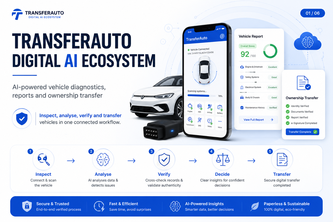
The description states that TRANSFERAUTO DIGITAL AI ECOSYSTEM is a self-reported project submitted to the OpenAI 2026 hackathon. The author describes it as an AI-powered ecosystem combining OBD data, vehicle reports, and online processing to streamline used-car transactions. It includes components such as an OBD scanner, vehicle analytics, cross-checking tools, AI-assisted analysis, and a document-processing platform for ownership transfer.
The project appears to be in early development, with no evidence of revenue, customers, or traction. The author claims the system connects diagnostic data, administrative records, and document workflows into one user journey. However, there is no indication that this has been deployed or tested beyond the hackathon context.
The single most important open question is whether TRANSFERAUTO has any commercial traction or real-world adoption — a key indicator of viability that is entirely absent from the description.
What The Product Actually Is
The description states that TRANSFERAUTO DIGITAL AI ECOSYSTEM is an AI ecosystem designed to make used-car transactions safer and simpler by connecting vehicle diagnostics, reports, and administrative processes. It includes:
- An OBD Scanner that connects via ELM327-compatible adapters to read diagnostic information from the ECU
- Vehicle Analytics providing reports on ownership history, inspections, restrictions, liens, mileage records, etc.
- Cross-checking tools comparing mileage across vehicle, inspection, and freeze-frame data
- AI-assisted analysis to help users understand technical information and identify inconsistencies
- Tramitando, an online platform for vehicle ownership transfer with document upload and status tracking
- AI document processing using OCR to extract data from purchase agreements and other documents
The system is described as a unified ecosystem built from existing mobile apps, web services, vehicle-data systems, and administrative platforms. It is designed as independent products that share data, accounts, and services while working together as one continuous experience.
Positioning & Claim Evolution
The description states that TRANSFERAUTO positions itself as an intelligent workflow connecting all steps of the used-car buying process — from vehicle diagnosis to ownership transfer. The author claims it helps users make safer decisions before buying a vehicle and complete transactions without leaving the ecosystem.
The project evolved from a recognition that buying used vehicles is fragmented and risky, requiring buyers to inspect vehicles, check history, verify mileage, understand diagnostic codes, review legal issues, and complete separate ownership-transfer services. The author states their goal was to connect these steps into one intelligent workflow.
The claim evolution shows a progression from identifying a problem (fragmented, risky process) to proposing a solution (integrated ecosystem), with emphasis on AI assistance, cross-checking capabilities, and user accessibility of technical information.
Target Customer & ICP
The description states that TRANSFERAUTO is designed for users buying used vehicles who need to inspect vehicles, check history, verify mileage, understand diagnostic codes, review legal issues, and complete ownership transfers. The author notes that the system makes professional diagnostic information accessible to non-technical users.
The target customer appears to be individual consumers purchasing used vehicles rather than dealers or commercial entities. The description emphasizes making complex technical information understandable without oversimplifying it, suggesting a focus on average buyers who may not have automotive expertise.
Business Model & Pricing Evidence
Not evidenced. The description does not contain any information about pricing models, revenue streams, subscription structures, or monetization strategies.
Technical & Delivery Signals
The description states that TRANSFERAUTO was built using several technologies including:
- Android and web applications (React, Next.js, TypeScript)
- OBD-II protocols and ELM327 adapters
- AI tools (OpenAI, GPT)
- OCR and document processing
- Firebase, PostgreSQL, Node.js, Kotlin
- REST APIs
The system is described as connecting existing mobile apps, web services, vehicle-data systems, and administrative platforms into one unified ecosystem. It uses OBD scanners that communicate with diagnostic adapters to read ECU information, and connects this data with analytics platforms for comparison with historical records.
Traction & Maturity Signals
Not evidenced. The description contains no evidence of revenue, customers, user adoption, or market traction. It only states that the project was submitted to a hackathon and describes its components and claimed functionality.
The author mentions challenges such as vehicle variation, data integration issues, and making technical information understandable — but these are development obstacles rather than maturity indicators.
Competitive Context
Not evidenced. The description does not mention any competitors or competitive landscape. It only describes TRANSFERAUTO's own features and functionality without reference to existing solutions in the market.
Open Questions & Risks
- No commercial traction: The project is described as a hackathon submission with no evidence of real-world deployment, users, or revenue
- Technical integration complexity: The description notes significant challenges in combining data from different sources (diagnostic data, inspection records, vehicle reports, documents) and handling vehicle variations
- AI reliability concerns: The system must distinguish between confirmed data, inconsistencies, and recommendations requiring professional verification — a key risk for consumer-facing applications
- OBD compatibility issues: The description notes that many low-cost adapters report misleading firmware information or behave differently depending on vehicle type
- Unproven business model: No evidence of pricing, monetization strategy, or customer acquisition approach
Questions the description leaves open
- What is the current stage of development beyond the hackathon? Have any users been tested with this system?
- How does TRANSFERAUTO handle data privacy and security for sensitive vehicle information?
- What specific technical challenges remain in integrating OBD data from different vehicle makes/models?
- How will the system ensure accuracy of AI-generated explanations and avoid misleading consumers?
- What is the plan for monetization and customer acquisition beyond the hackathon context?
- Are there any existing partnerships or relationships with automotive service providers, dealers, or regulatory bodies?
- How does the system handle international vehicle data and compliance requirements?
Overall Assessment
Not evidenced. The description provides no information about funding rounds, valuations, team experience, or investment history that would inform an investment or partnership decision. The project appears to be in early development stage with no commercial evidence to support a due-diligence read beyond its self-reported features and claims.
The author states that TRANSFERAUTO is a hackathon submission, which suggests it has not yet been validated in the market or proven to have traction. Without evidence of revenue, customers, or adoption, any investment or partnership decision would be based entirely on potential rather than demonstrated value.
User Stories BotA demo video on every pull request
Get a demo video on every new feature
GitHub App that watches your pull requests and records a narrated, captioned demo.
Save time on demo prep and make informed decisions faster with a video walkthrough of every new feature.
Source
Submitted to the OpenAI 2026 hackathon on Devpost. Project home on Devpost. Back to the full gallery on Devpost.
This competitive analysis was produced by top-founders.com (opens in a new tab)
Generated by a language model from this project's public Devpost page — its tagline, the author's own write-up and any built-with tags listed there — as captured in August 2026. Short quotations are the author's words. It is an opinion on the idea as a business, not on the people behind it, and it reflects the description as published then. If the project has moved on, request a correction below. The analysis is not independent research and contains no verified traction, revenue or customer data.
An independent guide by KFG International LLC — not affiliated with, endorsed by, or connected to Devpost or OpenAI.