

Archive position — measured, not model output
1 like on Devpost
505 of the 7,850 archived projects have more likes, and 1,758 share exactly 1 — so this project's #2,105 place in the like-ranked listing is a tie-break inside that group, not a ranking.
Projects (log scale)
Likes on Devpost. ▲ marks this project's group.
Show the figures
| Likes | Projects | Share of archive |
|---|---|---|
| 0 | 5,587 | 71.2% |
| 1 | 1,758 | 22.4% |
| 2 | 284 | 3.6% |
| 3–4 | 132 | 1.7% |
| 5–9 | 75 | 1.0% |
| 10+ | 14 | 0.2% |
 User Stories BotA demo video on every pull request
Get a demo video on every new feature
GitHub App that watches your pull requests and records a narrated, captioned demo.
Save time on demo prep and make informed decisions faster with a video walkthrough of every new feature.
Executive Summary
What the company appears to be
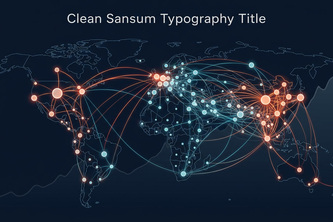
TradeFlow-Inflation is a self-reported project that describes itself as an STGNN (Spatio-Temporal Graph Neural Network) for inflation forecasting across 23 economies, using global trade networks and identifying the source of economic shocks. It was built by one individual (MRayan Asim) as part of a hackathon submission.
What changed
The project is presented as a novel approach to inflation modeling that incorporates trade network dynamics, aiming to improve understanding of how inflation spreads globally rather than relying on traditional time-series models alone.
Single most important open question — the commercial due-diligence read
Is there any evidence of traction, revenue, or customer adoption beyond the author’s own write-up? The description contains no data on actual usage, monetization, or market validation.
What The Product Actually Is
The description states that TradeFlow-Inflation is a Spatio-Temporal Graph Neural Network (ST-GNN) designed to forecast one-step-ahead quarterly CPI inflation across 23 major economies. It uses bilateral trade data from CEPII BACI to construct dynamic trade networks, where countries are nodes and trade relationships form edges.
The model combines:
- A Graph Convolutional Network (GCN) for processing trade networks,
- An LSTM to capture temporal patterns over time,
- A linear output layer, with a persistence skip connection to stabilize predictions.
It also includes an explanation mechanism using Integrated Gradients to identify which trade relationships contribute most to each forecast.
The system was built using Python and various libraries including PyTorch, scikit-learn, pandas, and statsmodels. It is described as a proof-of-concept or hackathon project, not yet deployed in production.
Claim: The model forecasts inflation based on global trade networks.
Evidence: Author's own description; no external validation provided.
Positioning & Claim Evolution
The author positions TradeFlow-Inflation as an alternative to traditional forecasting models like ARIMA and VAR that treat countries independently. Instead, it emphasizes:
- Modeling the global economy as a connected system,
- Identifying how inflation shocks propagate through trade networks,
- Providing explanatory insights, not just predictions.
It claims to offer transparency in forecasting, especially regarding international transmission pathways.
Claim: The model offers better insight into how inflation spreads than traditional models.
Evidence: Self-reported; no comparison with real-world performance or user feedback.
Target Customer & ICP
The description does not specify target customers or personas. It is unclear whether the project is intended for:
- Central banks,
- Economic research institutions,
- Policy makers,
- Financial analysts,
- Or other stakeholders in macroeconomic forecasting.
There is no mention of any specific use case beyond academic or exploratory modeling.
Claim: The model targets policymakers or researchers interested in inflation dynamics.
Evidence: Inferred from context; not explicitly stated.
Business Model & Pricing Evidence
No business model or pricing information is provided. The project is described as a hackathon submission and does not indicate any monetization strategy, licensing terms, or commercial deployment plans.
Claim: There is no evidence of a business model.
Evidence: Not evidenced.
Technical & Delivery Signals
The model architecture includes:
- Use of graph neural networks (GCN),
- Integration with LSTM for temporal modeling,
- Application of Integrated Gradients for explainability,
- Training using Huber loss, rolling refits, and grid search optimization.
It uses publicly available datasets such as CEPII BACI, FRED API, and World Bank API. The codebase is built in Python with tools like Jupyter, PyTorch Geometric, and scikit-learn.
Claim: The model uses advanced machine learning techniques for forecasting.
Evidence: Author’s own description; no independent verification or performance metrics beyond internal testing.
Traction & Maturity Signals
There is no evidence of traction, adoption, or user engagement. The project was submitted to a hackathon and is described as a prototype. No customers, revenue, or usage data are mentioned.
Claim: There is no evidence of traction.
Evidence: Not evidenced.
Competitive Context
The author compares their model against:
- Traditional time-series models (ARIMA),
- Panel VAR models.
They note that while traditional models may outperform in raw forecasting accuracy, the ST-GNN provides interpretability and network-based attribution, which they argue is a key strength.
However, there is no indication of how this compares to existing commercial or academic offerings in macroeconomic forecasting or trade network modeling.
Claim: The model offers interpretability over traditional models.
Evidence: Author’s own description; no external benchmarking or competitive analysis.
Open Questions & Risks
- Lack of real-world validation: No evidence of deployment, testing with actual data, or performance in live environments.
- Single-person team: The entire project was built by one individual, raising questions about scalability and long-term maintenance.
- Limited scope: Only tested on 23 economies; no indication of broader applicability or generalization.
- Model limitations noted: Performance does not exceed traditional models in forecasting accuracy, especially when Argentina is included.
- No commercialization path: No mention of monetization, partnerships, or go-to-market strategy.
Inference: The project may lack practical utility without further development and validation.
Evidence: Author’s own description; no external data to support or contradict this inference.
Questions the description leaves open
- What are the actual performance metrics (e.g., RMSE, MAE) on out-of-sample data?
- Has the model been tested in real-world scenarios or with actual inflation data beyond the hackathon setting?
- Are there plans to expand beyond 23 economies or incorporate additional macroeconomic variables?
- How does the model handle missing or inconsistent trade data?
- What is the current status of the project — prototype, alpha, beta, or production-ready?
- Is there any intention to license or sell this technology to central banks or financial institutions?
Overall Assessment
There is no evidence of traction, revenue, or customer adoption beyond the author’s own description. The project appears to be a proof-of-concept or hackathon submission, not yet a commercial product or service.
It demonstrates technical capability in applying graph neural networks to macroeconomic forecasting but lacks validation, scalability, and clear monetization paths.
Assessment: Not ready for investment or partnership at this stage.
Confidence Level: Low — based entirely on self-reported information with no external corroboration.
User Stories BotA demo video on every pull request
Get a demo video on every new feature
GitHub App that watches your pull requests and records a narrated, captioned demo.
Save time on demo prep and make informed decisions faster with a video walkthrough of every new feature.
Source
Submitted to the OpenAI 2026 hackathon on Devpost. Project home on Devpost. Back to the full gallery on Devpost.
This competitive analysis was produced by top-founders.com (opens in a new tab)
Generated by a language model from this project's public Devpost page — its tagline, the author's own write-up and any built-with tags listed there — as captured in August 2026. Short quotations are the author's words. It is an opinion on the idea as a business, not on the people behind it, and it reflects the description as published then. If the project has moved on, request a correction below. The analysis is not independent research and contains no verified traction, revenue or customer data.
An independent guide by KFG International LLC — not affiliated with, endorsed by, or connected to Devpost or OpenAI.