

Archive position — measured, not model output
0 likes on Devpost
2,263 of the 7,850 archived projects have more likes, and 5,587 share exactly 0 — so this project's #7,261 place in the like-ranked listing is a tie-break inside that group, not a ranking.
Projects (log scale)
Likes on Devpost. ▲ marks this project's group.
Show the figures
| Likes | Projects | Share of archive |
|---|---|---|
| 0 | 5,587 | 71.2% |
| 1 | 1,758 | 22.4% |
| 2 | 284 | 3.6% |
| 3–4 | 132 | 1.7% |
| 5–9 | 75 | 1.0% |
| 10+ | 14 | 0.2% |
 User Stories BotA demo video on every pull request
Get a demo video on every new feature
GitHub App that watches your pull requests and records a narrated, captioned demo.
Save time on demo prep and make informed decisions faster with a video walkthrough of every new feature.
Executive Summary
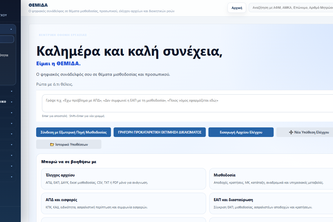
THEMIS Evidence Navigator is a self-reported AI-assisted administrative intelligence platform designed to support public- and private-sector audits by detecting inconsistencies, linking findings to source documents, and maintaining human control over critical decisions. The project was built as part of the OpenAI 2026 hackathon and is described as a modular system with vertical editions for different organizational types (e.g., municipalities, universities, hospitals). It uses synthetic data in a local-first development environment and emphasizes explainability, auditability, and human oversight.
The description states that the platform is not yet in production use but has a functional core, defined vertical editions, and a roadmap toward pilot deployments. The author claims that THEMIS supports multiple administrative functions including payroll auditing, personnel reconciliation, document mapping, and regulatory compliance workflows.
Key commercial due-diligence question
Does the described functionality represent a viable product or service that can be meaningfully adopted by public- or private-sector organizations, or is it an experimental prototype with unclear path to market traction?
What The Product Actually Is
The description states that THEMIS Evidence Navigator is:
- A modular AI-assisted platform for administrative intelligence.
- Designed to support auditing, document mapping, regulatory compliance, and decision support.
- Focused on making every administrative finding traceable by connecting it to source documents.
- Built with a human-led workflow using ChatGPT, GPT-5.6, Codex, Flask, Python, HTML, CSS, JavaScript, JSON, and Nexus.
- Operates in a secure local-first development environment using synthetic data.
- Designed to support multiple vertical editions for different types of organizations (e.g., municipalities, universities, hospitals).
- Does not perform uncontrolled production actions or autonomous database writes.
Inference The system appears to be an experimental prototype built for demonstration purposes, likely intended to showcase capabilities in a controlled environment before broader deployment. It is not described as having real-world customers or live systems.
Positioning & Claim Evolution
The description states that THEMIS was created to:
- Transform fragmented administrative environments into structured, evidence-based platforms.
- Support critical administrative processes through AI-assisted analysis while keeping human control over decisions.
- Detect gaps and inconsistencies in documents and reconcile conflicting records.
- Provide explainable decision support and maintain audit trails.
It positions itself as an evidence-first AI workspace for public-sector audits that maintains institutional memory and supports human review before critical actions.
Inference The positioning reflects a niche focus on administrative intelligence within regulated environments, where trustworthiness and explainability are paramount. However, the claim of being “ready” for pilot deployment is not substantiated by evidence of actual adoption or usage.
Target Customer & ICP
The description states that THEMIS supports:
- Municipalities and municipal organizations,
- Ecclesiastical organizations,
- Universities and educational institutions,
- Hospitals and healthcare organizations,
- Smart-city environments,
- Public-law entities,
- Private-law entities,
- Central and wider public-sector organizations,
- And, through dedicated editions, private-sector organizations.
It is designed to be modular, with isolated vertical editions that share a common intelligence and governance foundation but preserve sector-specific requirements.
Inference The target customer base includes both public and private sectors operating under administrative or regulatory frameworks. However, no evidence of actual customers, pilot users, or market engagement is provided.
Business Model & Pricing Evidence
The description does not contain any information about:
- Revenue streams,
- Pricing models,
- Monetization strategy,
- Customer acquisition plans,
- Subscription or licensing structures.
Not evidenced.
Technical & Delivery Signals
The description states that:
- THEMIS was built using ChatGPT, GPT-5.6, Codex, Flask, Python, HTML, CSS, JavaScript, JSON, and Nexus.
- Development is coordinated through NEXUS, a custom governance and institutional-memory layer.
- The platform currently operates in a secure local-first development environment using synthetic data.
- Critical functions are designed around human review; no autonomous database writes or uncontrolled production actions occur.
Inference The technical stack suggests a prototype built with AI tools and open-source components. The use of NEXUS indicates an emphasis on governance and control, which aligns with the stated goal of maintaining human oversight. However, there is no evidence of scalability, performance metrics, or integration capabilities beyond local development.
Traction & Maturity Signals
The description states that:
- THEMIS has a functional core.
- It includes defined vertical editions.
- Administrative workflows have been tested.
- A structured roadmap exists toward real organizational use.
- The platform is not yet in production but is no longer just an idea.
- It was developed as part of a hackathon.
Not evidenced No evidence of revenue, customers, user feedback, or adoption beyond the author’s own claims. There are no metrics on usage, engagement, or product-market fit.
Competitive Context
The description does not mention:
- Direct competitors,
- Market size,
- Competitive advantages,
- Existing solutions in the space of administrative intelligence or audit automation.
Not evidenced.
Open Questions & Risks
Key risks and open questions based on the self-reported description include:
- Prototype-only status: The system is described as a local-first prototype, not yet deployed in real-world settings.
- No revenue or customer data: No evidence of monetization, users, or traction.
- Unproven market demand: There is no indication that target customers are interested or have engaged with the product.
- Limited scalability claims: The platform operates locally and uses synthetic data; no evidence of real-world deployment or performance under load.
- Unclear path to commercialization: No mention of go-to-market strategy, partnerships, or sales process.
Inference The project is at an early stage of development and lacks any commercial validation. It may be a proof-of-concept rather than a scalable business offering.
Questions the description leaves open
- What specific administrative challenges are you trying to solve for your target customers?
- Have you conducted any user research or interviews with potential adopters?
- How do you plan to transition from local-first development to real-world deployment?
- Are there any existing pilot organizations or early adopters interested in testing the platform?
- What is the timeline and budget for moving beyond the prototype stage?
- How will you ensure compliance with data privacy regulations (e.g., GDPR, HIPAA) in real-world applications?
- What are the key assumptions underlying your vertical edition strategy?
Overall Assessment
The description states that THEMIS is a modular administrative-intelligence platform for public- and private-sector audits, built as part of a hackathon. It has a functional core, defined editions, and a roadmap toward pilot deployments.
However, the project is described as not yet in production, with no evidence of revenue, customers, or real-world usage beyond synthetic data testing.
Assessment The project appears to be an experimental prototype with potential for future development but lacks commercial traction or validation. It may represent a promising idea in a niche market, but further due diligence is required to assess its viability as a business or partnership opportunity.
Confidence level Low — based entirely on self-reported evidence without independent verification or traction data.
User Stories BotA demo video on every pull request
Get a demo video on every new feature
GitHub App that watches your pull requests and records a narrated, captioned demo.
Save time on demo prep and make informed decisions faster with a video walkthrough of every new feature.
Source
Submitted to the OpenAI 2026 hackathon on Devpost. Project home on Devpost. Back to the full gallery on Devpost.
This competitive analysis was produced by top-founders.com (opens in a new tab)
Generated by a language model from this project's public Devpost page — its tagline, the author's own write-up and any built-with tags listed there — as captured in August 2026. Short quotations are the author's words. It is an opinion on the idea as a business, not on the people behind it, and it reflects the description as published then. If the project has moved on, request a correction below. The analysis is not independent research and contains no verified traction, revenue or customer data.
An independent guide by KFG International LLC — not affiliated with, endorsed by, or connected to Devpost or OpenAI.