

Archive position — measured, not model output
0 likes on Devpost
2,263 of the 7,850 archived projects have more likes, and 5,587 share exactly 0 — so this project's #7,236 place in the like-ranked listing is a tie-break inside that group, not a ranking.
Projects (log scale)
Likes on Devpost. ▲ marks this project's group.
Show the figures
| Likes | Projects | Share of archive |
|---|---|---|
| 0 | 5,587 | 71.2% |
| 1 | 1,758 | 22.4% |
| 2 | 284 | 3.6% |
| 3–4 | 132 | 1.7% |
| 5–9 | 75 | 1.0% |
| 10+ | 14 | 0.2% |
 User Stories BotA demo video on every pull request
Get a demo video on every new feature
GitHub App that watches your pull requests and records a narrated, captioned demo.
Save time on demo prep and make informed decisions faster with a video walkthrough of every new feature.
Executive Summary
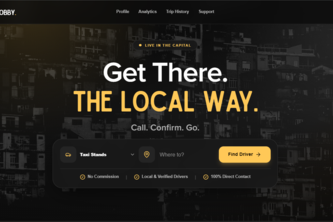
The Lobby is a self-reported driver directory and ride-hailing platform for Nagaland, India, built as a progressive web application (PWA) by a two-person team. The project was submitted to the OpenAI 2026 hackathon and is described as an attempt to solve local transportation challenges in a region without metro services.
The description states that it allows users to digitally find drivers and book cabs, but does not provide evidence of actual deployment, usage, or monetization. It is unclear whether the platform has launched or gained traction beyond its development phase.
Key open question: Is there any evidence of real-world adoption, user engagement, or revenue generation from The Lobby?
What The Product Actually Is
The description states that The Lobby is a driver directory and ride-hailing platform for taxi drivers in Nagaland. It allows users to find drivers and book cabs through an app.
- The product is described as a progressive web application (PWA).
- It was initially built with ReactJS and Node, but later migrated to NextJS.
- The team reports building it using tools like Canva, Clerk, Cloudinary, Codex, CSS, Gemini, JavaScript, Supabase, Tailwind, Vercel.
Inference: Based on the self-reported description, it appears to be a basic digital directory and booking system for local taxi services. However, no evidence is provided that it has been deployed or used beyond its development stage.
Positioning & Claim Evolution
The project’s tagline is: “The Lobby, Uber but Local and Tribal.”
- The description states the idea originated from a desire to help academics, which evolved into a startup plan.
- It positions itself as a local solution for transportation in Nagaland, where metro services are absent.
Inference: The positioning appears to be that of a hyper-local, community-driven ride-hailing platform, aiming to fill a gap in transportation infrastructure. However, the claim is not backed by any evidence of traction or market validation.
Target Customer & ICP
The description states:
- The target audience is people in Nagaland.
- It is designed for users who need to find and book taxis.
- The project was inspired by a lack of metro services in the region.
Inference: The ICP appears to be local residents or travelers in Nagaland, particularly those needing taxi services. However, no evidence is provided about actual users or customer segments.
Business Model & Pricing Evidence
The description does not provide any information on:
- How the platform intends to make money.
- Whether it plans to charge riders, drivers, or both.
- Any pricing model or monetization strategy.
Inference: No business model or pricing evidence is provided. The project is described as a directory and booking tool, but no commercial details are shared.
Technical & Delivery Signals
The team reports:
- Built with ReactJS, Node, NextJS.
- Deployed using Vercel.
- Uses tools like Supabase, Tailwind, Clerk, Gemini, Codex, Cloudinary.
- The platform is a progressive web application (PWA).
Inference: The technical stack suggests a modern, lightweight web-based solution. However, no evidence of live deployment or performance metrics is provided.
Traction & Maturity Signals
The description states:
- The project was completed as part of a hackathon.
- It is described as a “site”, not an app.
- The team upgraded it to a PWA for mobile access.
- The team is proud of completing the project, but no evidence of user adoption or usage is shared.
Inference: There is no evidence of traction or maturity beyond its development phase. No data on users, engagement, or operational metrics are provided.
Competitive Context
The description does not mention any competitors or market context.
Inference: No competitive analysis or positioning relative to existing ride-hailing platforms (e.g., Uber, Ola) is evident in the self-reported description.
Open Questions & Risks
- No evidence of real-world usage or adoption.
- No revenue model or monetization strategy provided.
- Only one team member mentioned, with no indication of a full team or operational structure.
- The project is described as a hackathon submission, not a launched product.
- No mention of regulatory, legal, or infrastructure challenges in Nagaland.
Inference: The lack of evidence for traction, users, or monetization raises significant concerns about the viability and commercial readiness of the platform.
Questions the description leaves open
- Has The Lobby been deployed and used by real users?
- What is the business model? How will it make money?
- Are there any partnerships or collaborations with local taxi services or government bodies?
- What are the technical challenges in scaling this to a full product?
- Is there any user feedback or data from early users?
- What is the go-to-market strategy for Nagaland and beyond?
Overall Assessment
The description states that The Lobby was built as part of a hackathon project, with no evidence of real-world deployment or traction.
- It is described as a conceptual or prototype-level solution, not a product in operation.
- No revenue, customers, or adoption data are provided.
- The team size is small (2 members), and no further details on operational capacity are shared.
Inference: Based on the self-reported description alone, there is no evidence to support commercial viability or investment readiness. This appears to be a pre-product idea, not a product with traction or monetization potential.
The project is positioned as an ambitious attempt to solve a local problem but lacks any demonstrated progress beyond development.
User Stories BotA demo video on every pull request
Get a demo video on every new feature
GitHub App that watches your pull requests and records a narrated, captioned demo.
Save time on demo prep and make informed decisions faster with a video walkthrough of every new feature.
Source
Submitted to the OpenAI 2026 hackathon on Devpost. Project home on Devpost. Back to the full gallery on Devpost.
This competitive analysis was produced by top-founders.com (opens in a new tab)
Generated by a language model from this project's public Devpost page — its tagline, the author's own write-up and any built-with tags listed there — as captured in August 2026. Short quotations are the author's words. It is an opinion on the idea as a business, not on the people behind it, and it reflects the description as published then. If the project has moved on, request a correction below. The analysis is not independent research and contains no verified traction, revenue or customer data.
An independent guide by KFG International LLC — not affiliated with, endorsed by, or connected to Devpost or OpenAI.