

Archive position — measured, not model output
0 likes on Devpost
2,263 of the 7,850 archived projects have more likes, and 5,587 share exactly 0 — so this project's #7,231 place in the like-ranked listing is a tie-break inside that group, not a ranking.
Projects (log scale)
Likes on Devpost. ▲ marks this project's group.
Show the figures
| Likes | Projects | Share of archive |
|---|---|---|
| 0 | 5,587 | 71.2% |
| 1 | 1,758 | 22.4% |
| 2 | 284 | 3.6% |
| 3–4 | 132 | 1.7% |
| 5–9 | 75 | 1.0% |
| 10+ | 14 | 0.2% |
 User Stories BotA demo video on every pull request
Get a demo video on every new feature
GitHub App that watches your pull requests and records a narrated, captioned demo.
Save time on demo prep and make informed decisions faster with a video walkthrough of every new feature.
Executive Summary
What the company appears to be
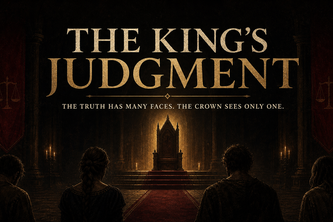
The King’s Judgment is a self-reported AI-powered social deduction game set in a royal court, built as a prototype for the OpenAI 2026 hackathon. It uses GPT-5.6 and Codex to enable dynamic gameplay where players interact with a generative narrative while adhering to a fixed, deterministic core story.
What changed
The author states that this is a prototype built during OpenAI Build Week using AI tools like Codex and GPT-5.6. It includes features such as private roles, evidence tracking, contradiction tracking, and multiplayer support. The project was submitted to the OpenAI hackathon and has no known production or commercial deployment.
Single most important open question
Is there any evidence of traction, revenue, or user adoption beyond this prototype submission? The description does not indicate any real-world usage or monetization.
What The Product Actually Is
The description states that The King’s Judgment is an AI-powered social deduction game. It is set in a royal court and involves players receiving private roles and information, engaging in free-form dialogue, and attempting to uncover the culprit through interaction with GPT-5.6-generated responses.
It includes:
- Private role assignments
- Multiplayer gameplay
- Evidence and contradiction tracking
- A judgment phase where players decide on guilt or innocence
- A truth reveal sequence at the end
The game is built using React, Node.js, TypeScript, Vite, and integrates with OpenAI’s API via Codex.
Not evidenced:
- Whether the product has been deployed beyond the prototype stage
- If it supports any form of monetization or user engagement
- Any real-world usage or player feedback
Positioning & Claim Evolution
The author positions The King’s Judgment as a social deduction game that leverages generative AI to allow for dynamic storytelling without compromising the integrity of the core mystery.
Key claims:
- Players can type freely, and GPT-5.6 interprets actions within a fixed narrative framework.
- The system avoids “narrative cheating” by separating deterministic truth from generative performance.
- It aims to simulate an authored yet flexible experience similar to a live human game master.
Inferences:
- This suggests the product is positioned as a novel approach to interactive storytelling, combining AI with traditional game design principles.
- The positioning implies a niche market for AI-enhanced social deduction games or interactive narrative experiences.
Not evidenced:
- No stated target audience beyond general gamers or AI enthusiasts
- No indication of how this compares to existing social deduction games or AI-driven narrative tools
Target Customer & ICP
The description does not clearly define a specific customer segment or ideal customer profile (ICP). The author describes the game as being for players who enjoy mystery and social deduction, but no explicit demographic or behavioral targeting is provided.
Inferences:
- Likely appeal to fans of social deduction games (e.g., Among Us, Werewolf)
- Possibly attractive to those interested in AI-generated content, especially in narrative contexts
Not evidenced:
- No mention of age groups, gaming habits, or platform preferences
- No indication of whether the product targets casual players, hardcore gamers, or niche communities
Business Model & Pricing Evidence
The description does not provide any information about a business model or pricing strategy.
Inferences:
- Since this is a prototype submitted to a hackathon, there is no evidence of monetization or revenue streams
- The project may be exploratory in nature and not yet commercialized
Not evidenced:
- No mention of subscriptions, one-time purchases, freemium models, or in-app purchases
- No indication of whether the product will ever be sold or offered for free
Technical & Delivery Signals
The description indicates that:
- The project was built using React, Node.js, TypeScript, Vite, and integrates with OpenAI’s API
- It uses Codex to generate code and structure the game logic
- The architecture separates a deterministic truth layer from a generative performance layer
- Server-side processing ensures that AI responses are validated before entering the game state
- Multiplayer functionality allows players to join rooms from separate devices
Inferences:
- The architecture shows an understanding of how to balance control and creativity in generative systems
- The use of schema validation and fallback behavior suggests attention to reliability
Not evidenced:
- No information on scalability, performance metrics, or deployment infrastructure beyond the prototype
- No mention of security practices or data privacy policies
Traction & Maturity Signals
The description states that this is a prototype built for a hackathon. There is no evidence of:
- User adoption or retention
- Revenue generation
- Customer feedback or reviews
- Product maturity beyond initial development
Inferences:
- The project is early-stage and experimental
- It has not yet reached a production-ready state
Not evidenced:
- No metrics, user base, or usage data
- No indication of future plans for scaling or commercialization
Competitive Context
The description does not reference competitors or the broader market landscape.
Inferences:
- The product appears to be in a space that overlaps with social deduction games and AI narrative tools
- It may compete with platforms like Among Us, Werewolf, or AI storytelling engines such as those used in RPGs or interactive fiction
Not evidenced:
- No mention of existing products or services in the same category
- No competitive analysis or differentiation strategy described
Open Questions & Risks
Key risks identified from the description:
- Prototype-only status: The project is a hackathon submission with no known production deployment.
- Unproven market demand: There is no evidence of traction, revenue, or user engagement.
- Dependency on AI APIs: Reliance on OpenAI’s GPT-5.6 and Codex introduces potential technical and cost risks.
- Limited scope for monetization: No indication of how the product might generate value beyond its prototype form.
Open questions:
- Lack of clarity around long-term vision or roadmap
- No evidence of team growth, funding, or investor interest
Not evidenced:
- No mention of intellectual property, partnerships, or strategic alliances
- No indication of any legal or ethical concerns related to AI use in storytelling
Questions the description leaves open
- What is the current status of the product? Is it deployed beyond the prototype stage?
- How do you plan to monetize this product if at all?
- Have you tested the game with real users or conducted any form of user research?
- What are your plans for scaling or expanding the platform after the hackathon?
- Are there any technical dependencies that could pose risks (e.g., API availability, model updates)?
- How do you intend to maintain consistency in narrative logic while allowing for improvisation?
Overall Assessment
Not evidenced:
There is no evidence of revenue, customers, or traction beyond the prototype stage.
Confidence level: Low
This project is described as a hackathon prototype with no indication of commercial viability, user adoption, or monetization strategy. The author’s account is self-reported and unverified.
Assessment:
At this stage, there is insufficient evidence to support investment or partnership interest. The product shows promise in concept but lacks any demonstration of real-world utility or business potential. Further due diligence would require confirmation of deployment, user engagement, and a clear path to monetization.
User Stories BotA demo video on every pull request
Get a demo video on every new feature
GitHub App that watches your pull requests and records a narrated, captioned demo.
Save time on demo prep and make informed decisions faster with a video walkthrough of every new feature.
Source
Submitted to the OpenAI 2026 hackathon on Devpost. Project home on Devpost. Back to the full gallery on Devpost.
This competitive analysis was produced by top-founders.com (opens in a new tab)
Generated by a language model from this project's public Devpost page — its tagline, the author's own write-up and any built-with tags listed there — as captured in August 2026. Short quotations are the author's words. It is an opinion on the idea as a business, not on the people behind it, and it reflects the description as published then. If the project has moved on, request a correction below. The analysis is not independent research and contains no verified traction, revenue or customer data.
An independent guide by KFG International LLC — not affiliated with, endorsed by, or connected to Devpost or OpenAI.