

Archive position — measured, not model output
0 likes on Devpost
2,263 of the 7,850 archived projects have more likes, and 5,587 share exactly 0 — so this project's #7,175 place in the like-ranked listing is a tie-break inside that group, not a ranking.
Projects (log scale)
Likes on Devpost. ▲ marks this project's group.
Show the figures
| Likes | Projects | Share of archive |
|---|---|---|
| 0 | 5,587 | 71.2% |
| 1 | 1,758 | 22.4% |
| 2 | 284 | 3.6% |
| 3–4 | 132 | 1.7% |
| 5–9 | 75 | 1.0% |
| 10+ | 14 | 0.2% |
 User Stories BotA demo video on every pull request
Get a demo video on every new feature
GitHub App that watches your pull requests and records a narrated, captioned demo.
Save time on demo prep and make informed decisions faster with a video walkthrough of every new feature.
Executive Summary
What the company appears to be
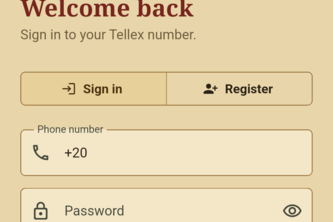
Tellex is a consent-first telephone directory for voice conversations, built as a mobile application with a vintage telephone aesthetic. The product allows users to have a private Tellex number, opt-in public identity in a Telephone Index, and permission-based call requests through a voice room system.
What changed
The project evolved from a backend-only Laravel architecture into a runnable Flutter mobile application during a hackathon, incorporating AI-assisted engineering tools (Codex + GPT-5.6) to scaffold UI, integrate APIs, and implement core functionality including rotary dialing, call request workflows, and media authorization.
Single most important open question
Is there evidence of any traction, revenue, or customer adoption beyond the author's own development work?
What The Product Actually Is
The description states that Tellex is a consent-first telephone directory for voice conversations. It provides:
- A private Tellex number for each user
- An opt-in Telephone Index with safe display name, Tellex number, headline, and interests
- Explicit availability controls for users
- A private Notebook for contacts and personal notes
- A functional rotary dial interface paired with keypad and typed-input alternatives
- Permission-based call requests that require acceptance before voice room creation
- Integration with LiveKit for voice communication
The product uses a modular architecture with Laravel 13 as the control plane, PostgreSQL for durable identity and records, Redis for short-lived presence and coordination, and Flutter for mobile experience.
Evidence The author's own write-up describes these features in detail. It is not evidenced whether any of these features are actually implemented or tested beyond local development.
Positioning & Claim Evolution
The description states that Tellex started with a simple question: "Can we bring back the human intention of the telephone directory while adding the privacy, consent, and accessibility people expect today?"
It positions itself as intentionally different from both traditional phone dialers and social networks, aiming to help people become reachable without making them exposed.
Evidence The author's own submission text contains these claims. No evidence is provided that this positioning has been validated by users or market feedback.
Target Customer & ICP
The description does not explicitly state target customers or ideal customer profiles (ICP). It describes a product for individuals who want to be reachable via voice while maintaining privacy and consent.
Evidence Not evidenced. The author's own write-up does not define specific personas, use cases, or market segments.
Business Model & Pricing Evidence
The description does not contain any information about business model or pricing structures. It focuses on the technical implementation and user experience rather than monetization.
Evidence Not evidenced. No claims about revenue streams, subscriptions, or pricing are made in the provided text.
Technical & Delivery Signals
The project uses:
- Laravel 13 as control plane
- PostgreSQL for identity, directory, Notebook, and call records
- Redis for presence, coordination locks, rate limits, and queue workloads
- LiveKit for media plane
- Flutter and Riverpod for mobile experience
- Docker Compose for local development stack
The interface follows a "Premium Vintage Telephone Exchange" direction with archival paper, Bakelite, brass, burgundy, olive panels, number plates, and indicator lights.
Evidence The author's own write-up describes these technical choices. No evidence of production deployment or scalability is provided.
Traction & Maturity Signals
The description states that the local product slice is working and testable but notes that production TURN/STUN evidence, background push delivery, OTP provider, Trust & Safety workflows, and full administration panel remain future work.
It also mentions passing 52 Flutter tests with clean analyzer, Web release build, Android debug APK, and visual QA.
Evidence The author claims local functionality works and has passed tests. No independent verification or evidence of user adoption, customer base, or revenue is provided.
Competitive Context
The description does not provide any information about competitors or market positioning relative to existing solutions in the voice communication space.
Evidence Not evidenced. No mention of competing products or market dynamics.
Open Questions & Risks
- The project is described as a hackathon submission with no evidence of traction, revenue, or customer adoption.
- All development work appears to be self-contained by one individual (Mohamed Magdy).
- The product remains in a local development state with many future features unimplemented.
- There is no evidence of any business model, monetization strategy, or market validation.
Inference Given the lack of external validation and the fact that this is a hackathon project, there is significant risk that Tellex may not have achieved meaningful product-market fit or commercial viability.
Questions the description leaves open
- What is the current status of production readiness beyond local testing?
- Are there any plans for monetization or business model development?
- How does the team plan to scale beyond a single developer?
- Has there been any user feedback or market validation beyond personal experimentation?
- What are the specific technical challenges that remain before full production deployment?
Overall Assessment
Not evidenced. The description provides no information about revenue, customers, traction, or financial performance. It is a self-reported account of a hackathon project with no evidence of commercial viability or market validation.
The author states that the local product slice is working and testable but that many production features remain future work. There is no indication of any business model, user adoption, or competitive positioning beyond the author's own claims.
Confidence level Low. This analysis is based entirely on self-reported information without external corroboration or evidence of traction, revenue, or customer engagement.
User Stories BotA demo video on every pull request
Get a demo video on every new feature
GitHub App that watches your pull requests and records a narrated, captioned demo.
Save time on demo prep and make informed decisions faster with a video walkthrough of every new feature.
Source
Submitted to the OpenAI 2026 hackathon on Devpost. Project home on Devpost. Back to the full gallery on Devpost.
This competitive analysis was produced by top-founders.com (opens in a new tab)
Generated by a language model from this project's public Devpost page — its tagline, the author's own write-up and any built-with tags listed there — as captured in August 2026. Short quotations are the author's words. It is an opinion on the idea as a business, not on the people behind it, and it reflects the description as published then. If the project has moved on, request a correction below. The analysis is not independent research and contains no verified traction, revenue or customer data.
An independent guide by KFG International LLC — not affiliated with, endorsed by, or connected to Devpost or OpenAI.