

Archive position — measured, not model output
0 likes on Devpost
2,263 of the 7,850 archived projects have more likes, and 5,587 share exactly 0 — so this project's #7,174 place in the like-ranked listing is a tie-break inside that group, not a ranking.
Projects (log scale)
Likes on Devpost. ▲ marks this project's group.
Show the figures
| Likes | Projects | Share of archive |
|---|---|---|
| 0 | 5,587 | 71.2% |
| 1 | 1,758 | 22.4% |
| 2 | 284 | 3.6% |
| 3–4 | 132 | 1.7% |
| 5–9 | 75 | 1.0% |
| 10+ | 14 | 0.2% |
 User Stories BotA demo video on every pull request
Get a demo video on every new feature
GitHub App that watches your pull requests and records a narrated, captioned demo.
Save time on demo prep and make informed decisions faster with a video walkthrough of every new feature.
Executive Summary
What the company appears to be
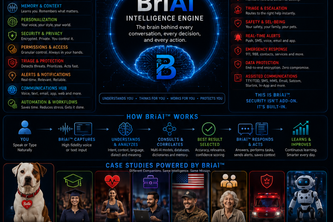
Tell Bella™ — Powered by BriAI™ is a voice-first AI assistant project built as part of the OpenAI 2026 hackathon. The author describes it as an AI tool that turns natural conversation into real-world action, emphasizing trust, transparency, user control, and secure data handling.
What changed
The project was submitted to a hackathon, indicating it is in early development or prototype stage. No evidence of commercial traction, revenue, or customer adoption exists beyond the author’s own description.
Single most important open question
Is there any evidence that the project has moved beyond prototype or hackathon-level development, and if so, what is its current product-market fit?
What The Product Actually Is
The description states:
- Tell Bella™ is a voice-first AI assistant.
- It is powered by BriAI™, which uses OpenAI's models as the intelligence layer.
- It helps users move from conversation to action, organizing information and assisting with everyday workflows.
- It emphasizes natural conversational experience, trust, transparency, and user-controlled memory.
Inference The product appears to be a conversational AI assistant designed for voice interaction, built on OpenAI's platform, with an emphasis on privacy and user control.
Evidence strength
- Evidenced: Voice-first assistant, use of OpenAI models, focus on conversation-to-action workflows.
- Inferred: The product is likely a prototype or early-stage tool; no evidence of commercial deployment or real-world usage.
Positioning & Claim Evolution
The author states:
- AI should reduce friction between human intent and meaningful action.
- Talking to AI should feel like talking to someone you trust.
- The goal is to make AI more approachable, useful, and available to everyone through natural conversation.
- It focuses on trust, accessibility, and real-world usefulness.
Inference The positioning appears to be centered on a conversational AI assistant that prioritizes user control, privacy, and ease-of-use over generic AI capabilities.
Evidence strength
- Evidenced: Claims about approachability, trust, and natural conversation.
- Inferred: The project is positioned as a tool for everyday workflows, not enterprise or high-complexity use cases.
Target Customer & ICP
The description states:
- The goal is to make AI available to everyone through natural conversation.
- It is designed around trust, transparency, and user control.
Inference The target customer appears to be general consumers or individuals looking for a personal assistant that is secure, trustworthy, and easy to use.
Evidence strength
- Evidenced: General audience, focus on accessibility and trust.
- Not evidenced: Specific persona, segment, or user type beyond "everyone."
Business Model & Pricing Evidence
The description states:
- No explicit mention of pricing or monetization strategy.
- The project is described as a hackathon submission.
Inference There is no evidence of a business model or pricing structure. It is likely in early development and not yet monetized.
Evidence strength
- Not evidenced: No pricing, revenue, or monetization details.
Technical & Delivery Signals
The description states:
- Built with OpenAI's models as the intelligence layer.
- Modular architecture focused on voice-first interaction, workflow orchestration, secure data handling, and scalable integrations.
- Technologies used include Python, SQL, NLP, AWS, GitHub, Git, ChatGPT, OpenAI.
Inference The technical stack suggests a modern AI assistant with modular design, voice capabilities, and integration-ready architecture.
Evidence strength
- Evidenced: Use of OpenAI models, Python, NLP, SQL, AWS.
- Inferred: The system is designed to be scalable and secure, but no evidence of actual deployment or performance metrics.
Traction & Maturity Signals
The description states:
- Submitted to the OpenAI 2026 hackathon.
- Accomplishments include establishing branding, a scalable architecture, and an experience that demonstrates conversational AI moving beyond chat into action.
- Next milestones include expanding workflows, refining memory and security, improving integrations, and launching beta testing.
Inference The project is in early development or prototype stage, with no evidence of real-world usage or user adoption.
Evidence strength
- Evidenced: Hackathon submission, stated next steps.
- Not evidenced: No customer base, revenue, usage data, or product-market fit indicators.
Competitive Context
The description states:
- No explicit mention of competitors or competitive positioning.
- The author focuses on trust, transparency, and user control as differentiators.
Inference It is positioned to compete in the voice-based AI assistant space, potentially against tools like Siri, Alexa, or ChatGPT, but no direct comparison or market analysis is provided.
Evidence strength
- Not evidenced: No competitive landscape or differentiation from existing players.
Open Questions & Risks
The description states:
- The project is a hackathon submission.
- It has only one team member (Brian Krogstad).
- No evidence of traction, revenue, or customer adoption.
Inference Key risks include lack of commercial viability, limited team size, and no demonstrated product-market fit or user engagement.
Evidence strength
- Evidenced: One-person team, hackathon origin.
- Inferred: Lack of traction, no monetization strategy, no clear path to market adoption.
Questions the description leaves open
- What is the current stage of development beyond the hackathon?
- Has there been any user testing or feedback from real users?
- Are there any plans for monetization or revenue generation?
- How does the product differentiate from existing voice assistants in the market?
- What are the specific use cases or workflows that the assistant is designed to support?
- Is there a plan to scale beyond the current prototype, and what resources are needed?
Overall Assessment
The description states:
- The project is a hackathon submission with no evidence of commercial traction or revenue.
- It is in early development stage.
Inference At this point, there is insufficient evidence to support an investment or partnership decision. The project lacks demonstrated product-market fit, customer adoption, or monetization strategy.
Evidence strength
- Not evidenced: No financials, no customers, no revenue, no traction.
- Assessment: Not ready for investment or partnership consideration based on the self-reported description alone.
User Stories BotA demo video on every pull request
Get a demo video on every new feature
GitHub App that watches your pull requests and records a narrated, captioned demo.
Save time on demo prep and make informed decisions faster with a video walkthrough of every new feature.
Source
Submitted to the OpenAI 2026 hackathon on Devpost. Project home on Devpost. Back to the full gallery on Devpost.
This competitive analysis was produced by top-founders.com (opens in a new tab)
Generated by a language model from this project's public Devpost page — its tagline, the author's own write-up and any built-with tags listed there — as captured in August 2026. Short quotations are the author's words. It is an opinion on the idea as a business, not on the people behind it, and it reflects the description as published then. If the project has moved on, request a correction below. The analysis is not independent research and contains no verified traction, revenue or customer data.
An independent guide by KFG International LLC — not affiliated with, endorsed by, or connected to Devpost or OpenAI.