

Archive position — measured, not model output
0 likes on Devpost
2,263 of the 7,850 archived projects have more likes, and 5,587 share exactly 0 — so this project's #7,115 place in the like-ranked listing is a tie-break inside that group, not a ranking.
Projects (log scale)
Likes on Devpost. ▲ marks this project's group.
Show the figures
| Likes | Projects | Share of archive |
|---|---|---|
| 0 | 5,587 | 71.2% |
| 1 | 1,758 | 22.4% |
| 2 | 284 | 3.6% |
| 3–4 | 132 | 1.7% |
| 5–9 | 75 | 1.0% |
| 10+ | 14 | 0.2% |
 User Stories BotA demo video on every pull request
Get a demo video on every new feature
GitHub App that watches your pull requests and records a narrated, captioned demo.
Save time on demo prep and make informed decisions faster with a video walkthrough of every new feature.
Executive Summary
What the company appears to be
Taleed Eduvate is an Arabic-language AI tutor built for the Saudi K-12 curriculum. The description states it is live at taleed.ai/eduvate and covers all 12 grades (G1–G12) across 34 subjects, using a curriculum-aligned corpus of 222,720 paragraphs indexed via embeddings.
What changed
The project was submitted to the OpenAI 2026 hackathon. It is described as an experimental or prototype system built by one founder (Sultan Almujaiwel), with no evidence of revenue, customers, or prior traction.
Single most important open question
Is there any evidence that Taleed Eduvate has been adopted in real classrooms or used by students beyond the hackathon context?
What The Product Actually Is
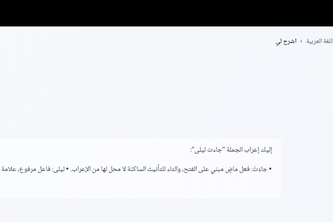
The description states that Taleed Eduvate is an Arabic-language AI tutor aligned with the Saudi K–12 curriculum. It supports 34 subjects across 12 grades (G1–G12). The system provides four teaching modes:
- اشرح لي (Explain)
- احكِ لي قصة (Story)
- حاورني (Dialogue)
- اختبرني (Quiz)
Each answer is grounded in a curriculum-aligned corpus of content generated from and inspired by the Saudi national curriculum. It uses embeddings to retrieve relevant material for each question, and the system prompt instructs the model to treat retrieved context as its only source.
For grades 1–3, the experience includes:
- A companion character (محمد or سارة)
- Shorter sentences and concrete examples
- A rule that avoids using "خطأ" (wrong), replacing it with positive reinforcement
The tutor also supports voice input/output, including text-to-speech with diacritization to ensure correct pronunciation.
Evidence Self-reported by the author. No independent verification or data on actual usage.
Positioning & Claim Evolution
The description positions Taleed Eduvate as an AI tutor designed in Arabic and for the Saudi curriculum from the first line of code, not bolted on afterward. It claims to address a gap where most AI tutors are English-first and do not align with local curricula.
It also emphasizes:
- A focus on Arabic-specific challenges like grammar (إعراب), pronunciation, and pedagogy.
- A deliberate design choice to avoid improvisation by the model — i.e., it says "this topic isn't in the available content" rather than inventing facts.
- An adaptive engine that adjusts difficulty based on student performance.
Inference The positioning implies a niche market need for curriculum-aligned, Arabic-language AI tutoring tools. However, this is not backed by evidence of adoption or traction.
Target Customer & ICP
The description states that Taleed Eduvate targets students in Saudi Arabia, specifically those following the K–12 curriculum. It includes:
- Students in grades 1–12
- Subjects from Arabic Language, Mathematics, Science through Physics, Chemistry, Islamic Studies, Law, and Software Engineering
It also mentions a teacher-facing layer as a future extension, suggesting that teachers are part of the target audience.
Evidence Self-reported by the author. No evidence of actual customers or classroom usage beyond the hackathon.
Business Model & Pricing Evidence
There is no mention of pricing, monetization, or business model in the description. The system is described as live and functional but not commercialized.
Evidence Not evidenced.
Technical & Delivery Signals
The system is built using:
- Frontend: Next.js 16 / React 19 / TypeScript (App Router, Tailwind 4, RTL)
- Backend: Elixir / Phoenix 1.8 JSON API with Ash framework
- Database: PostgreSQL 16 + pgvector
- Infrastructure: Cloudflare Worker, nginx
- AI models: GPT-4o, GPT-4o-mini, OpenAI embeddings, LangChain
- Speech: ElevenLabs TTS with diacritization and validation
The system uses:
- Embedding-based retrieval (text-embedding-3-small)
- Curriculum-aligned content bank of 222,720 paragraphs
- Adaptive difficulty engine using a rolling window of last five answers
- Special handling for Arabic grammar and pronunciation issues
Evidence Self-reported. No evidence of production deployment beyond the hackathon.
Traction & Maturity Signals
The description states that the system is live at taleed.ai/eduvate, with:
- 222,720 curriculum paragraphs indexed
- A content bank of 287,645 rows (183,947 vetted questions, 41,374 explanations, etc.)
- Support for 34 subjects and 12 grades
However, there is no evidence of:
- Real-world usage or student adoption
- Revenue or customer data
- Pilot programs in schools
- Any measurable impact on learning outcomes
Evidence Not evidenced.
Competitive Context
The description does not mention any competitors. It implies that most AI tutors are English-first and do not align with local curricula, suggesting a gap in the market for curriculum-aligned tools in Arabic-speaking regions.
Inference The project positions itself as addressing a niche where existing solutions fall short — but this is an unverified claim without competitive analysis.
Open Questions & Risks
- No traction or adoption evidence: The system is described as live, but there is no data on usage, students, or schools.
- Single-founder project: Only one team member (Sultan Almujaiwel) is mentioned.
- Prototype nature: Submitted to a hackathon — not a commercial product.
- Technical complexity without validation: The system includes complex engineering solutions (e.g., pgvector fixes, Arabic-specific TTS handling), but no evidence of robustness or scalability beyond the prototype phase.
- No pricing or monetization strategy: No indication of how the project intends to generate revenue.
Evidence Not evidenced.
Questions the description leaves open
- Has Taleed Eduvate been piloted in any real classrooms or schools?
- What is the current user base, if any?
- How is the curriculum content being maintained and updated over time?
- Are there plans to expand beyond Saudi Arabia into other Arabic-speaking markets?
- What are the key challenges in scaling this system for broader adoption?
- Is there a plan to monetize or commercialize the platform?
Overall Assessment
Not evidenced.
The description presents Taleed Eduvate as a prototype built by one person, submitted to a hackathon, with no evidence of traction, revenue, customers, or adoption. While it shows technical sophistication and a clear understanding of Arabic-language educational needs, there is no indication that the project has moved beyond the experimental stage.
Confidence Low. The description is self-reported and unverified; no independent data supports its claims about impact or viability.
User Stories BotA demo video on every pull request
Get a demo video on every new feature
GitHub App that watches your pull requests and records a narrated, captioned demo.
Save time on demo prep and make informed decisions faster with a video walkthrough of every new feature.
Source
Submitted to the OpenAI 2026 hackathon on Devpost. Project home on Devpost. Back to the full gallery on Devpost.
This competitive analysis was produced by top-founders.com (opens in a new tab)
Generated by a language model from this project's public Devpost page — its tagline, the author's own write-up and any built-with tags listed there — as captured in August 2026. Short quotations are the author's words. It is an opinion on the idea as a business, not on the people behind it, and it reflects the description as published then. If the project has moved on, request a correction below. The analysis is not independent research and contains no verified traction, revenue or customer data.
An independent guide by KFG International LLC — not affiliated with, endorsed by, or connected to Devpost or OpenAI.