

Archive position — measured, not model output
0 likes on Devpost
2,263 of the 7,850 archived projects have more likes, and 5,587 share exactly 0 — so this project's #7,043 place in the like-ranked listing is a tie-break inside that group, not a ranking.
Projects (log scale)
Likes on Devpost. ▲ marks this project's group.
Show the figures
| Likes | Projects | Share of archive |
|---|---|---|
| 0 | 5,587 | 71.2% |
| 1 | 1,758 | 22.4% |
| 2 | 284 | 3.6% |
| 3–4 | 132 | 1.7% |
| 5–9 | 75 | 1.0% |
| 10+ | 14 | 0.2% |
 User Stories BotA demo video on every pull request
Get a demo video on every new feature
GitHub App that watches your pull requests and records a narrated, captioned demo.
Save time on demo prep and make informed decisions faster with a video walkthrough of every new feature.
Executive Summary
Company: Sunrise Studio
Self-reported basis: The description is entirely self-reported and unverified, based on a Devpost submission for the OpenAI 2026 hackathon. No external corroboration exists.
What it appears to be: A profile-aware AI production workflow tool built as a macOS desktop application for Traditional Chinese content creators, designed to streamline video-to-subtitle workflows with domain-specific correction and script generation capabilities.
What changed: The project evolved from an early Python prototype into a self-contained macOS app during OpenAI Build Week, incorporating AI models (OpenAI, Codex), local processing, and desktop packaging.
Most important open question: Is there evidence of real-world usage or traction beyond the hackathon submission?
What The Product Actually Is
The description states that Sunrise Studio is a profile-aware AI production workflow for Traditional Chinese content teams, built as a self-contained macOS application. It supports:
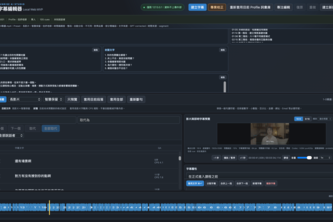
- Importing video/audio and generating Traditional Chinese subtitles
- Selecting content type and Teacher Profile
- Correcting domain-specific terminology and transcription errors
- Editing, splitting, merging, previewing, searching, and replacing subtitles
- Exporting SRT files compatible with professional post-production workflows
- Saving and reopening tasks locally
- Generating natural teacher-facing scripts and production-ready scripts
- Producing B-roll suggestions, on-screen text, timing, and production notes
- Exporting materials as TXT and DOCX
Inference: The product is a desktop tool built using Tauri, React, TypeScript, Python, and OpenAI models. It integrates FFmpeg for media processing and Codex for development assistance.
Positioning & Claim Evolution
The description states that Sunrise Studio was inspired by real production workflows in Taiwan, working with YouTube channels, podcast interviews, online courses, folk-culture educators, spiritual-content creators, and professional video teams.
It aims to address the limitations of generic AI tools, which often misunderstand names, domain-specific terminology, speaking styles, and production requirements.
Inference: The positioning is that it's a specialized tool for Traditional Chinese content creators, not a general-purpose AI assistant. It emphasizes human-in-the-loop workflows, domain awareness, and integration with existing post-production tools.
Target Customer & ICP
The description states that Sunrise Studio works with:
- YouTube channels
- Podcast interviews
- Online courses
- Folk-culture educators
- Spiritual-content creators
- Professional video teams
It is designed for Traditional Chinese content teams, and the tool supports Teacher Profiles to tailor outputs to individual creators.
Inference: The ICP appears to be content creators in Taiwan or other Traditional Chinese-speaking regions, with a focus on educators, spiritual content creators, and professional video producers who need domain-specific AI support.
Business Model & Pricing Evidence
The description does not state anything about pricing, monetization, or business model. It is entirely self-reported and unverified.
Not evidenced: No information on revenue, pricing tiers, subscription models, or customer acquisition strategies.
Technical & Delivery Signals
The product is built as a self-contained macOS application, using:
- Tauri (frontend)
- React
- TypeScript
- Python backend
- FFmpeg and ffprobe
- OpenAI models for transcription, correction, and script generation
- Codex for development assistance
It supports local persistence of tasks, profiles, and user data. It is packaged as an Apple Silicon app, without external dependencies.
Inference: The tool is designed to be self-contained, offline-capable, and integrated with existing workflows. It uses AI models for core functionality but relies on local processing.
Traction & Maturity Signals
The description states that the project was built during OpenAI Build Week and evolved from an early Python prototype. It includes accomplishments like:
- Packaging a self-contained macOS app
- Supporting profile-specific correction
- Integrating editing, script generation, and export workflows
However, there is no evidence of real-world usage, customer adoption, or revenue.
Inference: The product is at a very early stage, likely a prototype or MVP. It has not been validated in production environments beyond the hackathon context.
Competitive Context
The description does not mention any competitors or direct market comparisons. It focuses on the specific use case of Traditional Chinese content teams and how it differs from generic AI tools.
Not evidenced: No information about existing tools, competitive landscape, or market positioning.
Open Questions & Risks
- The product is a hackathon submission, not a commercial product
- No evidence of real-world usage, customers, or revenue
- The tool is limited to macOS and Traditional Chinese
- It relies on local processing, which may limit scalability or collaboration
- The team size is 1, suggesting limited development capacity
- No mention of data privacy, security, or compliance
Inference: The product is not yet a commercial solution, and its viability as a business depends heavily on whether it can scale beyond the hackathon prototype.
Questions the description leaves open
- What is the actual production workflow you're trying to automate or improve?
- How many real-world users have tested this tool, and what feedback did they give?
- Are there any plans for cross-platform support (Windows, Linux)?
- How do you plan to monetize this product, if at all?
- What are the limitations of the current AI models in terms of accuracy or language support?
- Is there a roadmap beyond the current MVP?
- How does the tool handle user data privacy and security?
Overall Assessment
Not evidenced: No information on valuation, funding, traction, or commercial viability.
Inference: This is an early-stage prototype, likely not yet ready for investment or partnership. It may be a proof-of-concept with potential to evolve into a product, but no evidence of real-world adoption or monetization exists. The tool is limited in scope and platform support, and the single-person team raises concerns about scalability.
User Stories BotA demo video on every pull request
Get a demo video on every new feature
GitHub App that watches your pull requests and records a narrated, captioned demo.
Save time on demo prep and make informed decisions faster with a video walkthrough of every new feature.
Source
Submitted to the OpenAI 2026 hackathon on Devpost. Project home on Devpost. Back to the full gallery on Devpost.
This competitive analysis was produced by top-founders.com (opens in a new tab)
Generated by a language model from this project's public Devpost page — its tagline, the author's own write-up and any built-with tags listed there — as captured in August 2026. Short quotations are the author's words. It is an opinion on the idea as a business, not on the people behind it, and it reflects the description as published then. If the project has moved on, request a correction below. The analysis is not independent research and contains no verified traction, revenue or customer data.
An independent guide by KFG International LLC — not affiliated with, endorsed by, or connected to Devpost or OpenAI.