

Archive position — measured, not model output
0 likes on Devpost
2,263 of the 7,850 archived projects have more likes, and 5,587 share exactly 0 — so this project's #6,936 place in the like-ranked listing is a tie-break inside that group, not a ranking.
Projects (log scale)
Likes on Devpost. ▲ marks this project's group.
Show the figures
| Likes | Projects | Share of archive |
|---|---|---|
| 0 | 5,587 | 71.2% |
| 1 | 1,758 | 22.4% |
| 2 | 284 | 3.6% |
| 3–4 | 132 | 1.7% |
| 5–9 | 75 | 1.0% |
| 10+ | 14 | 0.2% |
 User Stories BotA demo video on every pull request
Get a demo video on every new feature
GitHub App that watches your pull requests and records a narrated, captioned demo.
Save time on demo prep and make informed decisions faster with a video walkthrough of every new feature.
Executive Summary
What the company appears to be
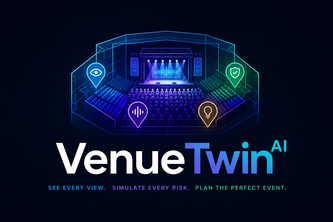
Standpoint is a self-reported AI-powered 3D venue simulation tool for event organizers. The product allows users to sketch a venue layout, upload photos, and describe the space — then generates an interactive 3D model with sightline, safety, audio, and lighting simulations.
What changed
The project was submitted as part of the OpenAI 2026 hackathon. It is described as a proof-of-concept built in a short timeframe using AI tools like Codex and GPT-5.6.
Single most important open question
Is there evidence that Standpoint has traction or early adoption from event organizers, or that it can be monetized beyond the hackathon demo?
Analysis basis
All information is self-reported by the authors and unverified. No revenue, customer data, or independent validation is available. The description contains claims about functionality, use cases, and future plans but no evidence of execution or market traction.
What The Product Actually Is
- The description states that Standpoint builds a 3D venue simulation from:
- A 2D sketch of the layout (stage, seating, pillars, exits)
- Photos of the space
- Textual description ("warehouse, 8m ceilings, stage on north wall")
- GPT-5.6 interprets this input to generate a parametric scene graph.
- The system supports:
- First-person view from any seat or standing spot
- Raycasting for sightlines and obstruction detection
- Safety heatmaps (crowd density, egress distance)
- Audio coverage cones and dead-zone detection
- Lighting preview based on AI-generated rig placement
Inference The product appears to be a hybrid of AI-driven scene generation and interactive 3D rendering. It is described as a tool for event organizers to simulate crowd experience before an event.
Positioning & Claim Evolution
- The description claims that Standpoint addresses a gap in the market:
- Ticketmaster has venue simulators, but only for large-scale venues with CAD files.
- Mid-market organizers (e.g., 3,000-person festivals) lack tools to check sightlines or safety.
- It positions itself as a solution for event organizers who "sell tickets to views they've never seen."
- The authors state that the tool can be used by independent organizers in minutes — without CAD skills or enterprise budgets.
Inference Standpoint is positioned as a democratizing tool for mid-market event organizers, aiming to reduce risk and improve planning through AI-assisted simulation.
Target Customer & ICP
- The description states that the team has experience building event ticketing infrastructure at Meta with Ticketmaster and Eventbrite integrations.
- The target customer is described as:
- Mid-market event organizers (e.g., music festivals in converted warehouses)
- Organizers who currently lack access to venue simulation tools
- The authors mention running Flip, an event ticketing platform in Vietnam (39K+ tickets sold, 21 organizers).
Inference The ICP is likely small-to-mid-sized event organizers who are not served by enterprise-level tools and need affordable, accessible simulation capabilities.
Business Model & Pricing Evidence
- No pricing or monetization model is described.
- The authors mention:
- Piloting with real organizers on Flip’s platform next month
- Longer-term goal: embed the seat-view directly in ticket purchase pages
- Organizers could price seats by simulated experience quality, not guesswork
Inference The business model may evolve toward integration with ticketing platforms and value-based pricing for event organizers. No evidence of current revenue or pricing.
Technical & Delivery Signals
- Built using:
- Codex (for scaffolding and iteration)
- GPT-5.6 (as the venue architect, interpreting sketch + photos + text into scene graph)
- Next.js, React, TypeScript, TailwindCSS
- Three.js for rendering (instanced meshes, raycasting)
- React-Konva for 2D canvas editor
- The system uses structured outputs from GPT-5.6 to feed deterministic rendering.
- Challenges mentioned:
- Getting GPT-5.6 to output spatially consistent scene graphs
- Tuning instanced crowd rendering performance
- Mapping photo perspective to real dimensions
Inference The technical stack is a hybrid of AI and 3D rendering tools, with a focus on rapid prototyping and simulation fidelity.
Traction & Maturity Signals
- The authors state they run Flip, an event ticketing platform in Vietnam (39K+ tickets sold, 21 organizers).
- They are piloting with real organizers next month.
- No evidence of:
- Revenue
- Customer adoption or retention
- Product usage metrics
- Market validation beyond the hackathon
Inference The product is in a very early stage. There is no evidence of traction, revenue, or customer engagement beyond the team’s own platform and pilot plans.
Competitive Context
- The description mentions that Ticketmaster has a venue simulator, but only for major arenas with CAD files.
- No other competitors are named or described.
- The product appears to target a gap in the market between enterprise tools and small-scale organizers.
Inference Standpoint is positioned to compete with or fill a niche between large enterprise tools (e.g., Ticketmaster) and no tools at all for mid-market event organizers. No evidence of direct competitors or competitive analysis.
Open Questions & Risks
- The entire project is self-reported and unverified.
- No evidence of:
- Revenue
- Customers
- Product usage
- Market traction
- The team size is only two members (An Le, Dan Le).
- The product is described as a hackathon submission — no indication of long-term development or scalability.
- GPT-5.6 is used for scene graph generation — this raises questions about consistency and reliability in real-world use.
Inference The project lacks evidence of commercial viability or traction. It appears to be an early-stage idea with limited validation.
Questions the description leaves open
- What specific feedback have you received from the organizers you’re piloting with?
- How do you plan to scale beyond a hackathon demo and into a production-ready tool?
- Are there any technical limitations or edge cases where GPT-5.6 fails to generate accurate scene graphs?
- What is the expected timeline for monetization, and how will pricing be structured?
- How do you plan to integrate with existing ticketing platforms like Flip?
Overall Assessment
- The project is described as a hackathon submission.
- No evidence of revenue, customers, or traction.
- The team has experience in event ticketing but no demonstrated track record in building scalable SaaS products.
- The product is in an early stage and lacks validation beyond the authors’ own platform.
Assessment Not evidenced. This is a very early-stage idea with no commercial evidence. It may be a promising concept, but there is insufficient data to assess its viability or potential for investment or partnership.
User Stories BotA demo video on every pull request
Get a demo video on every new feature
GitHub App that watches your pull requests and records a narrated, captioned demo.
Save time on demo prep and make informed decisions faster with a video walkthrough of every new feature.
Source
Submitted to the OpenAI 2026 hackathon on Devpost. Project home on Devpost. Back to the full gallery on Devpost.
This competitive analysis was produced by top-founders.com (opens in a new tab)
Generated by a language model from this project's public Devpost page — its tagline, the author's own write-up and any built-with tags listed there — as captured in August 2026. Short quotations are the author's words. It is an opinion on the idea as a business, not on the people behind it, and it reflects the description as published then. If the project has moved on, request a correction below. The analysis is not independent research and contains no verified traction, revenue or customer data.
An independent guide by KFG International LLC — not affiliated with, endorsed by, or connected to Devpost or OpenAI.