

Archive position — measured, not model output
0 likes on Devpost
2,263 of the 7,850 archived projects have more likes, and 5,587 share exactly 0 — so this project's #6,908 place in the like-ranked listing is a tie-break inside that group, not a ranking.
Projects (log scale)
Likes on Devpost. ▲ marks this project's group.
Show the figures
| Likes | Projects | Share of archive |
|---|---|---|
| 0 | 5,587 | 71.2% |
| 1 | 1,758 | 22.4% |
| 2 | 284 | 3.6% |
| 3–4 | 132 | 1.7% |
| 5–9 | 75 | 1.0% |
| 10+ | 14 | 0.2% |
 User Stories BotA demo video on every pull request
Get a demo video on every new feature
GitHub App that watches your pull requests and records a narrated, captioned demo.
Save time on demo prep and make informed decisions faster with a video walkthrough of every new feature.
Executive Summary
What the company appears to be
Sponzy is a self-reported marketplace for influencer marketing in Kenya, connecting brands with creators using AI and open MCP (Marketplace Control Protocol). The project was submitted as part of the OpenAI 2026 hackathon.
What changed
The description does not indicate any prior state or evolution — it is a single submission describing an idea and initial implementation.
The single most important open question
Is there any evidence of traction, revenue, customer adoption or monetization beyond the author's own account?
What The Product Actually Is
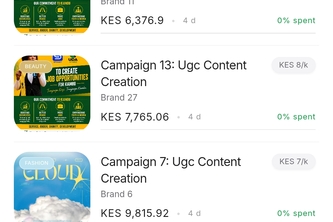
The description states that Sponzy is a marketplace for influencer marketing. Businesses post advertisements through Sponzy, and creators discover and promote these ads, earning from them.
- Claim: Sponzy connects brands with creators using AI and open MCP.
- Inference (not evidenced): The product likely involves some form of ad matching or content generation via AI.
- Inference (not evidenced): "Open MCP" may refer to an API or protocol for managing marketplace interactions, but no details are provided.
The project is described as built with Claude, Cloudflare, Codex, and Firebase — tools that suggest a tech stack leaning toward AI integration and cloud hosting.
Positioning & Claim Evolution
- Claim: Sponzy aims to bridge the gap between creators and brands in Kenya where social media advertising is underdeveloped.
- Inference (not evidenced): The positioning implies a solution to a lack of marketing infrastructure for small businesses and creators.
- Claim: It uses AI and open MCP to facilitate this process.
- Inference (not evidenced): The use of AI may involve content generation, matching, or personalization.
No evidence of prior positioning or evolution is provided — this is the only version described.
Target Customer & ICP
- Claim: The target customers are businesses in Kenya that lack sufficient marketing funds and social media presence, and creators who want to monetize their platforms.
- Inference (not evidenced): The ICP likely includes small-to-medium enterprises (SMEs) and micro-influencers or content creators.
- Not evidenced No segmentation of customer types, no evidence of specific buyer personas or user interviews.
Business Model & Pricing Evidence
- Claim: Businesses list advertisements and pay creators for posts.
- Inference (not evidenced): This suggests a commission-based model where Sponzy takes a cut from transactions.
- Not evidenced No pricing structure, fees, or monetization details are provided.
- Not evidenced No evidence of revenue streams beyond the idea.
Technical & Delivery Signals
- Claim: Built with Claude (AI assistant), Cloudflare (CDN and serverless), Codex (code generation), Firebase (backend).
- Inference (not evidenced): The tech stack suggests a focus on AI integration, scalability, and rapid development.
- Not evidenced No evidence of product architecture, delivery timeline, or technical maturity.
Traction & Maturity Signals
- Not evidenced No customer data, usage metrics, revenue, or adoption figures are provided.
- Not evidenced No evidence of product-market fit, user feedback, or iteration history.
- Inference (not evidenced): The project is described as a hackathon submission, suggesting early-stage development.
Competitive Context
- Not evidenced No mention of competitors, market size, or competitive landscape.
- Inference (not evidenced): The idea may overlap with existing influencer marketing platforms, but no evidence supports this.
Open Questions & Risks
- Risk: The project is described as a hackathon submission — no evidence of product-market fit or commercial viability.
- Risk: No team size or members are listed — raises questions about execution capability.
- Open Question: Limited technical details and lack of traction suggest high uncertainty in delivery and scalability.
- Open Question: Use of AI tokens and funding constraints indicate resource limitations.
Questions the description leaves open
- What is the exact mechanism by which creators are matched to brand ads?
- How does Sponzy ensure ad authenticity and compliance with regulations?
- Are there any early users or pilot programs in Kenya?
- What is the plan for monetization beyond transaction fees?
- How do you intend to scale beyond a hackathon prototype?
Overall Assessment
Not evidenced No data on revenue, traction, or team capability exists to support an investment or partnership decision.
- Confidence: Low — based entirely on self-reported description.
- Inference (not evidenced): The project is in a very early stage and lacks commercial evidence.
- Assessment: Not ready for due diligence or investment. Requires further development, traction, and clarity on execution plan before any meaningful evaluation.
User Stories BotA demo video on every pull request
Get a demo video on every new feature
GitHub App that watches your pull requests and records a narrated, captioned demo.
Save time on demo prep and make informed decisions faster with a video walkthrough of every new feature.
Source
Submitted to the OpenAI 2026 hackathon on Devpost. Project home on Devpost. Back to the full gallery on Devpost.
This competitive analysis was produced by top-founders.com (opens in a new tab)
Generated by a language model from this project's public Devpost page — its tagline, the author's own write-up and any built-with tags listed there — as captured in August 2026. Short quotations are the author's words. It is an opinion on the idea as a business, not on the people behind it, and it reflects the description as published then. If the project has moved on, request a correction below. The analysis is not independent research and contains no verified traction, revenue or customer data.
An independent guide by KFG International LLC — not affiliated with, endorsed by, or connected to Devpost or OpenAI.