

Archive position — measured, not model output
0 likes on Devpost
2,263 of the 7,850 archived projects have more likes, and 5,587 share exactly 0 — so this project's #2,984 place in the like-ranked listing is a tie-break inside that group, not a ranking.
Projects (log scale)
Likes on Devpost. ▲ marks this project's group.
Show the figures
| Likes | Projects | Share of archive |
|---|---|---|
| 0 | 5,587 | 71.2% |
| 1 | 1,758 | 22.4% |
| 2 | 284 | 3.6% |
| 3–4 | 132 | 1.7% |
| 5–9 | 75 | 1.0% |
| 10+ | 14 | 0.2% |
 User Stories BotA demo video on every pull request
Get a demo video on every new feature
GitHub App that watches your pull requests and records a narrated, captioned demo.
Save time on demo prep and make informed decisions faster with a video walkthrough of every new feature.
Executive Summary
What the company appears to be
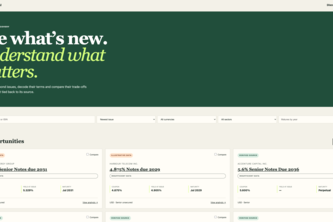
BondRadar AI is a self-reported tool built by one developer (Arshad SYED) that scans new bond issues from SEC EDGAR filings, extracts yield, risk and key terms, and helps investors compare opportunities using AI-generated summaries. It is described as an educational platform for novice users, not providing investment advice or execution.
What changed
The project was submitted to the OpenAI 2026 hackathon on Devpost. It is a self-contained Django application with deterministic bond extraction logic, AI enrichment via OpenAI GPT-5.6 Luna, and a server-rendered interface for browsing and comparing bonds.
Single most important open question
Is there any evidence of real-world usage or traction beyond the developer’s own deployment and demo data?
What The Product Actually Is
The description states that BondRadar AI is a tool that:
- Scans new bond issues from SEC EDGAR filings
- Extracts conventional fixed-rate bond terms with provenance
- Provides plain English risk explanations using OpenAI
- Supports transparent comparison of bonds
- Includes a Django Admin workflow for review-first processing
It is described as an educational platform, not an investment advice or execution tool.
Evidence
- The author describes it as a “Django-based” application with structured data ingestion from SEC.
- It uses deterministic extraction logic and OpenAI for structured summaries.
- It includes a command-line interface for ingestion and enrichment.
- It is built with Python/Django, PostgreSQL, and OpenAI APIs.
Inference The tool appears to be a proof-of-concept or prototype, not a production-grade SaaS offering. The use of SQLite and local development commands suggests it’s not yet deployed at scale.
Positioning & Claim Evolution
The author states that BondRadar AI:
- Helps people discover and understand newly issued fixed-income bonds
- Finds official SEC filings and extracts conventional bond terms with source evidence
- Explains risks in plain English using OpenAI
- Supports transparent comparison of opportunities
It is positioned as an educational tool for novice investors, not a financial advisory or execution platform.
Evidence
- The tagline: “BondRadar AI scans new bond issues, extracts yield, risk and key terms, then helps investors compare opportunities in seconds instead of reading scattered data and long prospectuses.”
- The write-up explicitly states: “Educational information only. BondRadar AI does not provide investment advice, execution, live quotes, credit ratings or suitability assessments.”
Inference The positioning is clearly educational and non-advisory. It may be intended as a learning tool for those new to fixed-income investing.
Target Customer & ICP
The description states that BondRadar AI is aimed at:
- Novice investors
- Individuals seeking to understand newly issued bonds
- Users who want to compare opportunities quickly
It is not described as targeting institutional investors or professional traders.
Evidence
- The write-up mentions a “novice knowledge centre covering terminology, cash flows, risks and trading mechanics.”
- It is positioned as an educational tool for those unfamiliar with bond investing.
- No mention of institutional use or advanced features.
Inference The ICP appears to be individual investors or students learning about fixed-income markets. No evidence of targeting professional or institutional users.
Business Model & Pricing Evidence
There is no evidence in the description of a business model, pricing strategy, monetization plan, or revenue streams.
Evidence
- The project is described as educational and non-advisory.
- No mention of subscriptions, fees, or paid features.
- The code is released under MIT License; no commercial licensing is mentioned.
Inference No business model is evident. It may be a prototype or open-source tool with no current monetization strategy.
Technical & Delivery Signals
The project is built using:
- Django (Python web framework)
- SEC EDGAR ingestion via Python
- OpenAI API for structured explanations
- Deterministic extraction logic for bond terms
- Server-rendered HTML interface
- SQLite for local development, PostgreSQL for production
It includes:
- Command-line tools for ingestion and enrichment
- Admin workflow for review-first processing
- Structured data models with evidence tracking
- Responsive UI templates
Evidence
- Built with Django, Python, PostgreSQL, OpenAI APIs.
- Uses SEC EDGAR daily-index and filing ingestion.
- Includes deterministic bond classification and extraction.
- AI explanations are generated offline via CLI commands.
- Deployment instructions for WSGI host (e.g., Gunicorn).
Inference The tool is a developer-focused prototype with clear architecture. It’s not yet a scalable SaaS product.
Traction & Maturity Signals
There is no evidence of traction, customers, revenue, or adoption beyond the author's own use and demo data.
Evidence
- The project is described as a hackathon submission.
- Demo data is seeded via CLI commands.
- No mention of users, usage metrics, or real-world deployment.
- The tool is self-hosted with local SQLite database.
Inference No evidence of traction. It appears to be an early-stage prototype or proof-of-concept.
Competitive Context
The description does not provide any information about competitors or the competitive landscape.
Evidence
- No mention of existing tools in the fixed-income data or bond comparison space.
- No reference to similar platforms or market players.
Inference No competitive context is evident. The project may be entering a niche or underserved area, but no evidence supports this.
Open Questions & Risks
Key risks and open questions include:
- No traction or revenue: The tool is not demonstrated in production.
- Single developer team: No indication of scaling or support beyond one person.
- Educational-only positioning: May limit monetization potential.
- No commercial data rights: The tool uses public SEC filings but does not clarify licensing for third-party financial data.
- Prototype nature: Not a finished product, and no evidence of production readiness.
Evidence
- One-person team (Arshad SYED).
- No revenue or customer data.
- Educational focus with no commercial features.
- MIT license does not grant rights to financial data.
Inference This is a prototype with no commercial viability or traction. It may be a learning tool, but it’s not yet a product for sale or investment.
Questions the description leaves open
- What is the intended path from this prototype to a scalable SaaS product?
- Are there any plans to monetize or generate revenue from this tool?
- How does the team plan to scale beyond a single developer?
- Is there any interest from financial institutions or investors in using this tool?
- Has the tool been tested with real users, and what feedback was received?
- What are the legal and licensing considerations for using SEC data and OpenAI APIs at scale?
Overall Assessment
Not evidenced.
There is no evidence of revenue, customers, traction or a clear business model. The project is described as a hackathon submission and prototype with no commercial viability or demonstrated adoption.
Confidence Low This analysis is based entirely on self-reported information, which is unverified and lacks any evidence of real-world usage or financial performance.
User Stories BotA demo video on every pull request
Get a demo video on every new feature
GitHub App that watches your pull requests and records a narrated, captioned demo.
Save time on demo prep and make informed decisions faster with a video walkthrough of every new feature.
Source
Submitted to the OpenAI 2026 hackathon on Devpost. Project home on Devpost. Back to the full gallery on Devpost.
This competitive analysis was produced by top-founders.com (opens in a new tab)
Generated by a language model from this project's public Devpost page — its tagline, the author's own write-up and any built-with tags listed there — as captured in August 2026. Short quotations are the author's words. It is an opinion on the idea as a business, not on the people behind it, and it reflects the description as published then. If the project has moved on, request a correction below. The analysis is not independent research and contains no verified traction, revenue or customer data.
An independent guide by KFG International LLC — not affiliated with, endorsed by, or connected to Devpost or OpenAI.