

Archive position — measured, not model output
0 likes on Devpost
2,263 of the 7,850 archived projects have more likes, and 5,587 share exactly 0 — so this project's #6,905 place in the like-ranked listing is a tie-break inside that group, not a ranking.
Projects (log scale)
Likes on Devpost. ▲ marks this project's group.
Show the figures
| Likes | Projects | Share of archive |
|---|---|---|
| 0 | 5,587 | 71.2% |
| 1 | 1,758 | 22.4% |
| 2 | 284 | 3.6% |
| 3–4 | 132 | 1.7% |
| 5–9 | 75 | 1.0% |
| 10+ | 14 | 0.2% |
 User Stories BotA demo video on every pull request
Get a demo video on every new feature
GitHub App that watches your pull requests and records a narrated, captioned demo.
Save time on demo prep and make informed decisions faster with a video walkthrough of every new feature.
Executive Summary
What the company appears to be
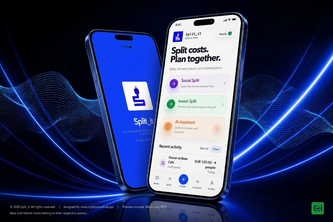
Split_it is a self-reported Web3 application built for creating structured, reviewable shared-expense requests using GPT-5.6 assistance and wallet authentication on the Base blockchain. It does not move funds or execute payments.
What changed
The project was submitted as part of the OpenAI 2026 hackathon. The author describes a working prototype with wallet integration, AI-powered expense structuring, and human-reviewed workflows.
Single most important open question
Is there any evidence that this product has been used by users beyond the development team or hackathon participants?
What The Product Actually Is
The description states that Split_it is a GPT-5.6-assisted Web3 application for creating clear, reviewable shared-expense requests with wallet authentication on Base.
Key functional claims:
- Users can connect a supported Web3 wallet.
- Authentication is done via Sign-In with Ethereum (SIWE).
- A user describes an expense in natural language or manually.
- GPT-5.6 generates a structured split proposal.
- The proposal is reviewed and confirmed by the user before being created.
- No funds are moved, executed, or settled by the app.
The product does not:
- Execute payments
- Transfer funds
- Settle debts
- Manage escrow
- Perform swaps or investments
Evidence
- The author states: “Split_it creates reviewable requests only. No funds are moved.”
- It uses Next.js, React, TypeScript, Wagmi, viem, Supabase, GPT-5.6.
- The app is deployed on Vercel.
Inference The product is a structured expense request tool, not a payment or settlement system.
Positioning & Claim Evolution
The author positions Split_it as an application that improves upon informal shared expense coordination (e.g., chats, screenshots) by introducing:
- A structured workflow
- Natural language input
- AI assistance for splitting
- Wallet authentication
- Review-first design
Evidence
- The inspiration section says: “Shared expenses are usually coordinated through chats, rough calculations, screenshots, and incomplete context.”
- The product description states: “turn an informal shared-expense description into a structured request that people can inspect before anything happens.”
Inference Split_it is positioned as a tool for clarity and accountability in group expense coordination, not a financial tool or platform.
Target Customer & ICP
The description does not state the target customer or ideal customer profile (ICP).
Evidence
- No mention of specific user personas, industries, or use cases.
- The product is described as useful for “dinner, trip, gift, or group purchase” — but no segmentation.
Inference The ICP appears to be groups or individuals coordinating shared expenses, likely in Web3 contexts where wallet-based authentication is relevant.
Business Model & Pricing Evidence
There is no evidence of a business model or pricing strategy.
Evidence
- The description does not mention monetization, subscriptions, fees, or any commercial structure.
- No revenue streams, pricing tiers, or customer acquisition methods are described.
Inference The product appears to be a prototype, not a commercial offering.
Technical & Delivery Signals
The technical stack and delivery approach are detailed in the author’s write-up:
Evidence
- Built with Next.js, React, TypeScript
- Wallet connectivity via Wagmi and viem
- SIWE authentication through Supabase Web3 Auth
- GPT-5.6 used for structured split proposal generation (server-side)
- PostgreSQL-backed data storage via Supabase
- Deployed on Vercel
Inference The product is built with modern Web3 and AI tooling, but it’s a prototype or hackathon project, not a production-grade system.
Traction & Maturity Signals
There is no evidence of traction, adoption, or user engagement beyond the development team.
Evidence
- Team size: 0
- No customers, users, or usage metrics are mentioned.
- The project was submitted to a hackathon.
- No revenue, ARR, or funding rounds are referenced.
Inference The product is at early prototype stage, with no evidence of real-world use or commercial traction.
Competitive Context
No competitive analysis or market positioning is provided in the description.
Evidence
- No mention of competitors or similar tools.
- No indication of market size, addressable market, or competitive landscape.
Inference Split_it may be a novel idea within Web3 expense coordination, but there’s no evidence of existing competition or market validation.
Open Questions & Risks
Several risks and open questions are evident from the self-reported description:
- No traction or users: The project is described as a hackathon submission with no real-world usage.
- AI model dependency: GPT-5.6 is used for generating proposals, but its output is not validated beyond human review — this could be a risk if AI hallucinations are not well controlled.
- Limited wallet support: Base Account smart-wallet authentication is deferred due to compatibility issues.
- No commercialization plan: No pricing, monetization, or go-to-market strategy is evident.
- Unverified claims: The project is self-reported and unverified — no third-party validation.
Inference The product is a conceptual prototype, not a viable commercial offering, with potential risks in AI reliability, wallet compatibility, and lack of traction.
Questions the description leaves open
- What is the intended user base for this tool?
- How does the team plan to validate the utility of the product beyond the hackathon?
- What are the specific use cases or scenarios where this would be valuable?
- Is there any plan to move beyond a review-first model, and if so, how will security and authorization be handled?
- Are there any plans for monetization or commercialization?
- How is the GPT-5.6 output validated beyond human review?
- What are the technical limitations of the current wallet support?
Overall Assessment
Not evidenced
The description provides no information on:
- Revenue
- Customers
- Traction
- Valuation
- Funding rounds
- Team size or background
- Market opportunity
This is a self-reported hackathon project, not a commercial entity. The product is described as a prototype with no evidence of real-world usage, adoption, or monetization.
Confidence Low The entire analysis is based on self-reported information and lacks any independent verification or historical data.
User Stories BotA demo video on every pull request
Get a demo video on every new feature
GitHub App that watches your pull requests and records a narrated, captioned demo.
Save time on demo prep and make informed decisions faster with a video walkthrough of every new feature.
Source
Submitted to the OpenAI 2026 hackathon on Devpost. Project home on Devpost. Back to the full gallery on Devpost.
This competitive analysis was produced by top-founders.com (opens in a new tab)
Generated by a language model from this project's public Devpost page — its tagline, the author's own write-up and any built-with tags listed there — as captured in August 2026. Short quotations are the author's words. It is an opinion on the idea as a business, not on the people behind it, and it reflects the description as published then. If the project has moved on, request a correction below. The analysis is not independent research and contains no verified traction, revenue or customer data.
An independent guide by KFG International LLC — not affiliated with, endorsed by, or connected to Devpost or OpenAI.