

Archive position — measured, not model output
0 likes on Devpost
2,263 of the 7,850 archived projects have more likes, and 5,587 share exactly 0 — so this project's #6,874 place in the like-ranked listing is a tie-break inside that group, not a ranking.
Projects (log scale)
Likes on Devpost. ▲ marks this project's group.
Show the figures
| Likes | Projects | Share of archive |
|---|---|---|
| 0 | 5,587 | 71.2% |
| 1 | 1,758 | 22.4% |
| 2 | 284 | 3.6% |
| 3–4 | 132 | 1.7% |
| 5–9 | 75 | 1.0% |
| 10+ | 14 | 0.2% |
 User Stories BotA demo video on every pull request
Get a demo video on every new feature
GitHub App that watches your pull requests and records a narrated, captioned demo.
Save time on demo prep and make informed decisions faster with a video walkthrough of every new feature.
Executive Summary
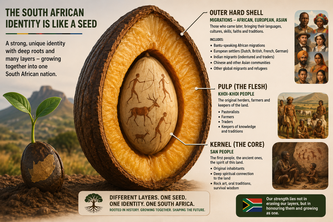
The description states that South Africa Heritage Digital is a project initiated by Chris Kanyane, submitted to the OpenAI 2026 hackathon. The author describes an ambition to establish an online newspaper, The Heritage, as part of a broader effort to explore and articulate South Africa’s national identity through historical and ideological lenses. There is no evidence of revenue, customers, product usage, or any commercial traction. The project appears to be in early conceptual or prototype stage, with no indication of monetization, pricing, or business model. The single most important open question is: **What is the actual scope and intent of The Heritage newspaper, and how does it intend to differentiate itself from existing historical or cultural media in South Africa?**
What The Product Actually Is
The description states that the project is intended to become an online newspaper named The Heritage. It is described as a platform aimed at exploring South Africa’s national identity through the lens of ideologies tested in the country. The author declares that it was built using cloud infrastructure, but no further technical details or product features are provided.
- The description states: “We aim to establish an online newspaper, The Heritage.”
- The description states: “Built with (author-declared): cloud”
- Not evidenced: What content, format, or audience The Heritage will serve; whether it is a news outlet, historical archive, opinion platform, or hybrid.
Positioning & Claim Evolution
The author positions the project as a digital effort to understand and communicate South Africa’s national identity by examining how ideologies have been tested in the country. The tagline suggests confusion and lack of clarity about national essence, implying that The Heritage will offer a narrative or analysis to resolve this.
- The description states: “South Africa as a country has been used as a laboratory to test all kinds of ideologies.”
- The description states: “And because of that the country is wobbling around in confusion of what it is in essence.”
- Inference: The project may be positioned as a historical or ideological commentary platform, but this is not explicitly stated.
- Not evidenced: How The Heritage will differentiate itself from other media or academic outlets; whether it is intended to be a newsroom, archive, or opinion platform.
Target Customer & ICP
The description does not specify the target audience for The Heritage. It implies a general interest in South African history and identity, but no explicit customer segment or persona is defined.
- The description states: “South Africa as a country has been used as a laboratory to test all kinds of ideologies.”
- Not evidenced: Who reads The Heritage, what their needs are, or whether the project targets scholars, general public, policymakers, or specific demographics.
Business Model & Pricing Evidence
There is no evidence in the description of any pricing model, monetization strategy, or revenue streams. The author does not describe how The Heritage will generate income or sustain itself.
- Not evidenced: Business model, pricing, subscriptions, advertising, or any commercial mechanism.
- Inference: If it becomes a full-fledged online newspaper, it may rely on digital advertising, subscriptions, or grants, but this is speculative.
Technical & Delivery Signals
The project was built using cloud infrastructure, as declared by the author. No further technical details are provided about platform architecture, content management systems, or delivery mechanisms.
- The description states: “Built with (author-declared): cloud”
- Not evidenced: Platform stack, scalability, user interface, or delivery methods beyond the use of cloud infrastructure.
Traction & Maturity Signals
There is no evidence of any traction, adoption, or maturity in the project. It was submitted to a hackathon and is described as an ambition to launch an online newspaper — no users, revenue, or product usage are mentioned.
- Not evidenced: Customers, revenue, user engagement, or product development milestones.
- Inference: The project may be at prototype or conceptual stage, but this cannot be confirmed.
Competitive Context
The description does not provide any information about competitors or the broader media landscape in South Africa. It is unclear how The Heritage would position itself relative to existing historical, cultural, or news outlets.
- Not evidenced: Competitors, market positioning, or competitive advantages.
- Inference: If it becomes a digital newspaper, it may compete with traditional media, academic journals, or online history platforms, but this is not stated.
Open Questions & Risks
- The project is described as a single-person effort, which raises questions about scalability and execution capability.
- No evidence of revenue, traction, or product development suggests high risk of failure or lack of viability.
- The ambition to create an online newspaper without any commercial or user engagement data is speculative.
Questions the description leaves open
- What specific content will The Heritage publish, and how does it differ from existing historical or cultural media in South Africa?
- How does the founder plan to build audience and sustain the platform monetarily?
- Is there a defined editorial or content strategy beyond ideological exploration?
- What is the timeline for launching and scaling the project?
- Are there any partnerships, grants, or funding sources already secured?
Overall Assessment
Not evidenced: No commercial due-diligence basis exists to assess investment or partnership viability. The project is described as a single-person ambition to launch an online newspaper, with no evidence of traction, revenue, or product development. It is in a very early stage and lacks any demonstrated market fit or business model.
- Inference: If the founder can articulate a clear content strategy, audience, and monetization plan, it may be worth exploring further.
- Not evidenced: Any commercial potential, scalability, or competitive advantage.
User Stories BotA demo video on every pull request
Get a demo video on every new feature
GitHub App that watches your pull requests and records a narrated, captioned demo.
Save time on demo prep and make informed decisions faster with a video walkthrough of every new feature.
Source
Submitted to the OpenAI 2026 hackathon on Devpost. Project home on Devpost. Back to the full gallery on Devpost.
This competitive analysis was produced by top-founders.com (opens in a new tab)
Generated by a language model from this project's public Devpost page — its tagline and any built-with tags listed there, since the author published no write-up — as captured in August 2026. Short quotations are the author's words. It is an opinion on the idea as a business, not on the people behind it, and it reflects the description as published then. If the project has moved on, request a correction below. The analysis is not independent research and contains no verified traction, revenue or customer data.
An independent guide by KFG International LLC — not affiliated with, endorsed by, or connected to Devpost or OpenAI.