

Archive position — measured, not model output
0 likes on Devpost
2,263 of the 7,850 archived projects have more likes, and 5,587 share exactly 0 — so this project's #6,778 place in the like-ranked listing is a tie-break inside that group, not a ranking.
Projects (log scale)
Likes on Devpost. ▲ marks this project's group.
Show the figures
| Likes | Projects | Share of archive |
|---|---|---|
| 0 | 5,587 | 71.2% |
| 1 | 1,758 | 22.4% |
| 2 | 284 | 3.6% |
| 3–4 | 132 | 1.7% |
| 5–9 | 75 | 1.0% |
| 10+ | 14 | 0.2% |
 User Stories BotA demo video on every pull request
Get a demo video on every new feature
GitHub App that watches your pull requests and records a narrated, captioned demo.
Save time on demo prep and make informed decisions faster with a video walkthrough of every new feature.
Executive Summary
The company appears to be a solo developer project named "Smart Rental Management for Small Landlords", self-described as an AI-assisted platform for small landlords managing shared apartments. The author states the system helps manage properties, tenants, rent, contracts, and permissions in one place, built using Codex as an AI development partner. It is described as a working application that converts fragmented manual work into a centralized process.
What changed
The project was submitted to the OpenAI 2026 hackathon, indicating it was developed as a proof-of-concept or prototype with real-world operational feedback incorporated iteratively.
The single most important open question
Is there evidence of traction, revenue, or customer adoption beyond the author's own use case and development experience?
This analysis is based entirely on self-reported information from the project description. No independent verification or third-party data is available. The description states the author built a working application but does not provide any evidence of actual users, customers, or monetization.
What The Product Actually Is
The description states that Smart Rental Management for Small Landlords is:
- An AI-assisted platform
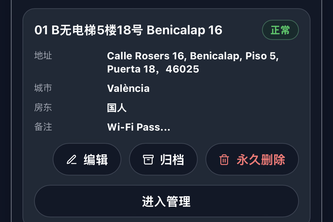
- Designed to help small landlords manage rooms, tenants, rent, deposits, documents, permissions, and daily rental operations in one place
- A system that brings daily operation of shared apartments into one platform
- Capable of managing:
- Properties, rooms, and tenants
- Rent, deposits, payments, and outstanding balances
- Contracts, receipts, and attachments
- Move-in and move-out records
- Operating expenses and settlement calculations
- User accounts, permissions, and data access
- Daily rental-management workflows
The system is described as being built with modern web architecture using a structured database and responsive user interface. It was developed iteratively from real operational feedback.
Positioning & Claim Evolution
The description states that the project was inspired by small landlords who manage shared apartments using spreadsheets, chat messages, paper contracts, and manual calculations. The author's claim is that this creates duplicated work, missed payments, unclear deposits, scattered documents, and difficulty controlling access for staff members.
The positioning appears to be:
- A practical system based on real rental-management needs rather than a theoretical demo
- Designed to remain simple enough for small landlords while providing structured records and operational control
- An application that converts fragmented manual work into a centralized and traceable process
The claim evolution shows the author moving from identifying a problem (manual processes) to building a solution (centralized platform), with an emphasis on practicality over theoretical demonstration.
Target Customer & ICP
The description states that the target customer is:
- Small landlords who manage shared apartments
- Users who currently rely on spreadsheets, chat messages, paper contracts, and manual calculations
- Individuals who need to manage rooms, tenants, rent, deposits, documents, permissions, and daily rental operations in one place
The ICP appears to be small landlords managing shared apartment properties, with a focus on those who are currently using inefficient manual processes.
Business Model & Pricing Evidence
Not evidenced. The description does not contain any information about pricing models, revenue streams, or business model details beyond the author's own development experience.
Technical & Delivery Signals
The description states that:
- The system was built using Codex as an AI development partner throughout the project
- Codex helped analyze requirements, inspect codebase, diagnose defects, improve data flows, implement features, test changes, and document work
- The application uses a modern web architecture with a structured database and responsive user interface
- The project was developed iteratively from real operational feedback
- The main challenges included maintaining data consistency across multiple data types and designing permissions that are simple yet precise
- Mobile reliability was a key consideration since much daily work is completed from phones
Traction & Maturity Signals
Not evidenced. The description does not contain any information about actual users, customers, revenue, or adoption beyond the author's own development experience.
Competitive Context
Not evidenced. The description does not provide any information about competitors, market positioning, or competitive landscape.
Open Questions & Risks
- The project is described as a solo developer effort with no team size mentioned beyond "1"
- No evidence of traction, revenue, or customer adoption
- The system was built for personal use rather than commercial deployment
- No information about scalability, security, or enterprise features that would be needed for broader market adoption
- The author's own account indicates this is a hackathon submission, suggesting it may not be fully mature for commercial use
Questions the description leaves open
- What specific manual processes are you trying to replace with this system?
- How many small landlords have you actually tested this with?
- What is your plan for monetization and customer acquisition?
- How do you intend to scale beyond a single developer's capacity?
- What are the key technical challenges that remain unresolved?
- How does this differ from existing property management software in the market?
Overall Assessment
Not evidenced. The description provides no information about financials, traction, or commercial viability beyond the author's own development experience. The project appears to be a prototype developed for a hackathon rather than a commercial product with demonstrated market demand or revenue generation capabilities.
The author states they built a working application that supports real rental-management workflows, but there is no evidence of actual users, customers, or monetization. The system was developed iteratively from real operational feedback, but this does not indicate any commercial traction or business model validation.
The solo developer approach and hackathon context suggest the project may be in early stages of development with significant work needed before commercial viability can be assessed.
User Stories BotA demo video on every pull request
Get a demo video on every new feature
GitHub App that watches your pull requests and records a narrated, captioned demo.
Save time on demo prep and make informed decisions faster with a video walkthrough of every new feature.
Source
Submitted to the OpenAI 2026 hackathon on Devpost. Project home on Devpost. Back to the full gallery on Devpost.
This competitive analysis was produced by top-founders.com (opens in a new tab)
Generated by a language model from this project's public Devpost page — its tagline, the author's own write-up and any built-with tags listed there — as captured in August 2026. Short quotations are the author's words. It is an opinion on the idea as a business, not on the people behind it, and it reflects the description as published then. If the project has moved on, request a correction below. The analysis is not independent research and contains no verified traction, revenue or customer data.
An independent guide by KFG International LLC — not affiliated with, endorsed by, or connected to Devpost or OpenAI.