

Archive position — measured, not model output
0 likes on Devpost
2,263 of the 7,850 archived projects have more likes, and 5,587 share exactly 0 — so this project's #6,645 place in the like-ranked listing is a tie-break inside that group, not a ranking.
Projects (log scale)
Likes on Devpost. ▲ marks this project's group.
Show the figures
| Likes | Projects | Share of archive |
|---|---|---|
| 0 | 5,587 | 71.2% |
| 1 | 1,758 | 22.4% |
| 2 | 284 | 3.6% |
| 3–4 | 132 | 1.7% |
| 5–9 | 75 | 1.0% |
| 10+ | 14 | 0.2% |
 User Stories BotA demo video on every pull request
Get a demo video on every new feature
GitHub App that watches your pull requests and records a narrated, captioned demo.
Save time on demo prep and make informed decisions faster with a video walkthrough of every new feature.
Executive Summary
The company appears to be a solo indie developer project named Shapeships, a digital strategy board game built using AI-assisted development tools like Codex and GPT. The description states it began as a paper-based dice game, evolved into a browser-based strategy game with simultaneous turns, and uses a server-authoritative architecture. It supports private online matches and solo play against bots, and is designed for desktop and mobile browsers.
What changed: The author transitioned from a physical pen-and-paper game to a digital version using modern web technologies (React, TypeScript, Supabase) and AI development tools. The project was submitted to the OpenAI 2026 hackathon.
The single most important open question: Is there evidence of any traction, revenue, or user adoption beyond the author's own playtesting and development? The description contains no data on users, monetization, or market validation.
Analysis basis: This report is based entirely on the self-reported, unverified account provided by the author in the project description. No third-party verification, archived data, or independent sources are available. All claims are stated by the author and not independently confirmed.
What The Product Actually Is
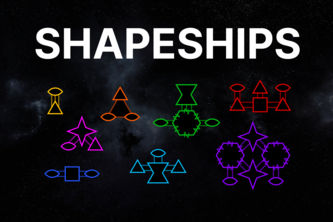
The description states that Shapeships is a strategy board game where players use shared dice to create lines, which become ships, and those ships grow into fleets with unique powers. Players secretly commit builds from shared resources, reveal simultaneously, and adapt as their fleets evolve.
It supports:
- Private online matches
- Solo play against bots (described as "pretty decent")
- Desktop and mobile browser play
The game uses a server-authoritative architecture, where the browser handles interaction and previews, while the server validates and resolves gameplay. The frontend is built with React, TypeScript, Vite, and Tailwind CSS; the backend uses Supabase Edge Functions, Deno, and Hono.
Inference: The product is described as a digital version of an existing pen-and-paper game, suggesting it's a re-imagining rather than a completely new concept.
Positioning & Claim Evolution
The author describes Shapeships as:
- A strategy board game with simultaneous turns
- A digital adaptation of a paper-based dice game
- A game that supports private online matches and solo play
- A game with deep meta, including openings, counter-builds, and debates about ship balance
The positioning appears to be:
- A browser-based strategy game for casual and competitive players
- A digital reimagining of a tabletop experience
- A game with potential for community growth and competitive play
Claim vs. Fact: The description states the author's intent and vision, but does not provide evidence of market positioning or user reception.
Target Customer & ICP
The description states that Shapeships supports:
- Private online matches (suggesting a social or multiplayer audience)
- Solo play against bots (indicating single-player appeal)
It is designed for desktop and mobile browsers, suggesting a broad but potentially niche audience of strategy game enthusiasts.
Inference: The target customer likely includes:
- Strategy board game fans
- Casual and competitive online players
- Users interested in browser-based games with deep mechanics
Not evidenced: No specific customer segments, personas, or user data are provided.
Business Model & Pricing Evidence
The description does not state anything about:
- Revenue streams
- Pricing models
- Monetization strategy
- Paid features or subscriptions
It only mentions that the game supports private online matches and solo play against bots, but no indication of how users pay or if there are any paid elements.
Not evidenced: No business model or pricing evidence is provided.
Technical & Delivery Signals
The project was built using:
- Frontend: React, TypeScript, Vite, Tailwind CSS
- Backend: Supabase Edge Functions, Deno, Hono
- Development tools: GPT and Codex (AI-assisted development)
Key technical details include:
- Server-authoritative architecture
- Lightweight polling for game state updates
- Separation of chat, match history, and live payload
- Use of AI as a "director-level assistant" and "live code editor"
Inference: The use of modern web stack and AI tools suggests a developer-focused approach with attention to scalability and development workflow.
Traction & Maturity Signals
The description states:
- The game was submitted to the OpenAI 2026 hackathon
- The author did all game design, visual direction, architecture, playtesting, balance, and final review
- It supports private online matches and solo play against bots
- The author mentions balance testing, onboarding improvements, and computer opponent development as next steps
Not evidenced: No data on user numbers, retention, engagement, or revenue is provided. No evidence of a user base or monetization.
Competitive Context
The description does not mention:
- Direct competitors
- Market positioning relative to other strategy games
- Similar products in the browser-based strategy game space
Not evidenced: No competitive analysis or market context is provided.
Open Questions & Risks
Key risks and open questions based on the self-reported information:
- Solo developer project: The team size is listed as 1, which may limit scalability and long-term maintenance
- No traction or monetization evidence: No data on users, revenue, or adoption
- AI-assisted development: While efficient, it introduces risks of scope creep and lack of clear ownership if not well-managed
- Limited market validation: The project is described as a personal endeavor with no external user feedback or community growth
Inference: The lack of evidence for traction or monetization raises questions about viability as a commercial product.
Questions the description leaves open
- What is the current stage of development, and how many hours have been invested?
- Have you playedtest with others beyond yourself? How many people have tried it?
- Are there any plans to monetize or generate revenue from the game?
- What are your long-term goals for Shapeships — community building, competitive scene, or commercial success?
- How do you plan to scale beyond solo development?
Overall Assessment
The description provides no evidence of traction, revenue, or user adoption. It is a self-reported account of a solo developer’s project submitted to a hackathon.
Assessment: Not evidenced as a viable commercial opportunity without further data on users, monetization, or market demand.
Confidence level: Low — based entirely on the author's own description, with no external validation or performance metrics.
User Stories BotA demo video on every pull request
Get a demo video on every new feature
GitHub App that watches your pull requests and records a narrated, captioned demo.
Save time on demo prep and make informed decisions faster with a video walkthrough of every new feature.
Source
Submitted to the OpenAI 2026 hackathon on Devpost. Project home on Devpost. Back to the full gallery on Devpost.
This competitive analysis was produced by top-founders.com (opens in a new tab)
Generated by a language model from this project's public Devpost page — its tagline, the author's own write-up and any built-with tags listed there — as captured in August 2026. Short quotations are the author's words. It is an opinion on the idea as a business, not on the people behind it, and it reflects the description as published then. If the project has moved on, request a correction below. The analysis is not independent research and contains no verified traction, revenue or customer data.
An independent guide by KFG International LLC — not affiliated with, endorsed by, or connected to Devpost or OpenAI.