

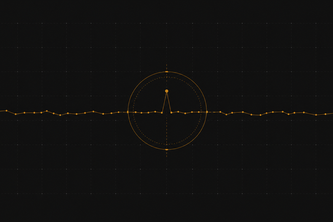
Archive position — measured, not model output
0 likes on Devpost
2,263 of the 7,850 archived projects have more likes, and 5,587 share exactly 0 — so this project's #6,621 place in the like-ranked listing is a tie-break inside that group, not a ranking.
Projects (log scale)
Likes on Devpost. ▲ marks this project's group.
Show the figures
| Likes | Projects | Share of archive |
|---|---|---|
| 0 | 5,587 | 71.2% |
| 1 | 1,758 | 22.4% |
| 2 | 284 | 3.6% |
| 3–4 | 132 | 1.7% |
| 5–9 | 75 | 1.0% |
| 10+ | 14 | 0.2% |
 User Stories BotA demo video on every pull request
Get a demo video on every new feature
GitHub App that watches your pull requests and records a narrated, captioned demo.
Save time on demo prep and make informed decisions faster with a video walkthrough of every new feature.
Executive Summary
What the company appears to be
Sentinel is a self-reported anomaly detection system for open-source software incidents, built as a personal project by one developer (Ricardo Pinho). It claims to detect OSS incidents ~13 hours before maintainers confirm them using a learned coherence ranker and GPT-5.6. The system publishes every miss alongside its findings in a replayable scorecard.
What changed
The author reports that the project was built during a hackathon (OpenAI 2026) and includes iterative experimentation with detector versions, including V7 and V7.1, which were frozen and published to show methodological evolution. The system is described as learning through explicit, falsifiable iterations rather than silent tuning.
The single most important open question
Is there any evidence of real-world usage or adoption beyond the author's own experiments? The description contains no data on customers, revenue, or product-market fit beyond self-reported performance metrics and a single developer team.
What The Product Actually Is
The description states that Sentinel:
- Ingests public software-event streams into a source-neutral contract.
- Scores active repository-hours with learned coherence features.
- Turns alerts into signal-scoped claims.
- Fetches bounded evidence only for elected claims.
- Routes structured findings.
- Includes a web application interface with endpoints like
/replay/,/scorecard/, and/live/. - Uses GPT-5.6 for offline detection, caching exact request/response pairs to ensure deterministic replay.
Inference The system appears to be a prototype or proof-of-concept built in Python using tools such as FastAPI, DuckDB, scikit-learn, and Docker. It is not described as a commercial product or service but rather as an experimental tool for detecting anomalies in open-source software events.
Positioning & Claim Evolution
The description states:
- Sentinel claims to flag OSS incidents ~13 hours before maintainers confirm them.
- It publishes every miss alongside results, with a public, replayable scorecard.
- The system is described as a “learned anomaly ranker” that reaches ROC AUC 0.841.
- It found 253 out of 287 confirmed incidents (88.2%) in a held-out study.
- It also reports alert precision at 13.6% and shows methodological failures, such as V7 compressing claims too aggressively.
Inference The positioning is that Sentinel is an experimental anomaly detection tool for open-source software, focused on transparency and reproducibility of its findings. The claim evolution shows a progression from early-stage experiments (V2–V4) to more refined versions (V5–V7.1), with the author emphasizing the importance of publishing failures.
Target Customer & ICP
The description does not identify any specific customer or ideal customer profile (ICP). It mentions:
- The system operates on public GitHub events.
- It is built for open-source software incident detection.
- It is described as a personal project by one developer.
Inference There is no evidence of a defined target customer or ICP. The tool appears to be aimed at developers or researchers interested in anomaly detection in open-source ecosystems, but no explicit user segment is stated.
Business Model & Pricing Evidence
The description does not contain any information about:
- Revenue streams
- Pricing models
- Monetization strategy
- Customer acquisition plans
Inference No business model or pricing evidence is provided. The project is described as a personal hackathon effort with no indication of commercial intent or monetization.
Technical & Delivery Signals
The description states:
- Built using Codex, Docker, DuckDB, FastAPI, GPT-5.6, Python, Render, scikit-learn.
- Implements adapters, feedback storage, deterministic detectors, temporal no-leakage boundaries, provider-independent triage, exact-response caching.
- Uses a frozen artifact hash system for auditability.
- Includes endpoints like
/replay/,/scorecard/, and/live/. - The GPT-5.6 model is used offline with strict pre-firing events to ensure deterministic replay.
Inference The technical stack suggests a developer-focused prototype with strong emphasis on reproducibility, auditability, and deterministic behavior. It uses modern tools for data processing and LLM integration but lacks evidence of production-grade infrastructure or scalability.
Traction & Maturity Signals
The description states:
- Sentinel surfaced 253 of 287 maintainer-confirmed incidents (88.2%) a median 13.4 hours before confirmation.
- ROC AUC of 0.841.
- Found 64 incidents invisible to the old burst gate.
- Published methodological failures, including V7 and V7.1 experiments.
- The project was submitted to the OpenAI 2026 hackathon.
Inference There is no evidence of traction beyond internal experimentation and a hackathon submission. No customers, revenue, or adoption data are provided. The system appears to be in an early experimental phase with no indication of product-market fit or real-world deployment.
Competitive Context
The description does not mention any competitors or competitive landscape. It focuses solely on the internal development and performance metrics of Sentinel.
Inference No competitive context is provided. The project is described as a personal effort, with no reference to existing tools or platforms in the anomaly detection or open-source monitoring space.
Open Questions & Risks
- Lack of commercial traction or adoption: No evidence of customers, revenue, or product-market fit.
- Single-person team: The entire project is attributed to one developer (Ricardo Pinho), raising questions about scalability and long-term maintenance.
- No monetization strategy: There is no indication of how the tool would be monetized if it were to evolve into a product.
- Experimental nature: The system is described as a series of experiments with published failures, suggesting it is not yet production-ready or validated for real-world use.
- Unverified claims: All performance metrics and results are self-reported without external validation.
Questions the description leaves open
- What is the intended path from this prototype to a commercial product?
- Are there any plans to expand beyond open-source incident detection or to target enterprise users?
- How would you scale this system if it were to be used in production environments?
- What are the limitations of the current approach, and how do they affect real-world applicability?
- Is there any plan for integrating feedback loops or continuous learning from actual users?
Overall Assessment
Not evidenced.
The description provides no information on:
- Revenue
- Customers
- Market traction
- Financials
- Team expansion plans
- Product roadmap beyond the current prototype
This is a self-reported, unverified personal project submitted to a hackathon. There is no evidence of commercial viability or investment-ready traction.
Confidence level Low. The analysis is based entirely on the author’s own account, with no external validation or data points to assess product-market fit, scalability, or commercial potential.
User Stories BotA demo video on every pull request
Get a demo video on every new feature
GitHub App that watches your pull requests and records a narrated, captioned demo.
Save time on demo prep and make informed decisions faster with a video walkthrough of every new feature.
Source
Submitted to the OpenAI 2026 hackathon on Devpost. Project home on Devpost. Back to the full gallery on Devpost.
This competitive analysis was produced by top-founders.com (opens in a new tab)
Generated by a language model from this project's public Devpost page — its tagline, the author's own write-up and any built-with tags listed there — as captured in August 2026. Short quotations are the author's words. It is an opinion on the idea as a business, not on the people behind it, and it reflects the description as published then. If the project has moved on, request a correction below. The analysis is not independent research and contains no verified traction, revenue or customer data.
An independent guide by KFG International LLC — not affiliated with, endorsed by, or connected to Devpost or OpenAI.