

Archive position — measured, not model output
0 likes on Devpost
2,263 of the 7,850 archived projects have more likes, and 5,587 share exactly 0 — so this project's #6,601 place in the like-ranked listing is a tie-break inside that group, not a ranking.
Projects (log scale)
Likes on Devpost. ▲ marks this project's group.
Show the figures
| Likes | Projects | Share of archive |
|---|---|---|
| 0 | 5,587 | 71.2% |
| 1 | 1,758 | 22.4% |
| 2 | 284 | 3.6% |
| 3–4 | 132 | 1.7% |
| 5–9 | 75 | 1.0% |
| 10+ | 14 | 0.2% |
 User Stories BotA demo video on every pull request
Get a demo video on every new feature
GitHub App that watches your pull requests and records a narrated, captioned demo.
Save time on demo prep and make informed decisions faster with a video walkthrough of every new feature.
Executive Summary
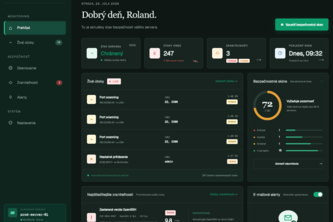
The description states that "Security watchdog" is a project focused on real-time monitoring of machine security, including vulnerability detection and intrusion alerting. The author describes it as a tool that watches for medium or high vulnerabilities and sends alerts. It was built by one person (Roland Ragalyi) in a hackathon context using Docker, JavaScript, Linux, PostgreSQL, and a VPS.
The project is presented as a self-contained application running in a Docker container on a Linux VPS, with no evidence of external integrations or customer adoption. The author notes that the code should be placed on GitHub and installation automation needs improvement, suggesting it is early-stage.
Key open question
What is the actual security scope and capability of this tool? Is it a real-time vulnerability scanner, an intrusion detection system, or something else?
What The Product Actually Is
The description states that "Security watchdog" is a tool that watches vulnerabilities in real-time, classifies vulnerabilities, and sends alerts for medium or high vulnerabilities. It runs on a machine and monitors security issues and intrusions.
The author describes the technical implementation as an application built with Codex, running in Docker on a Contabo Linux VPS. The stack includes JavaScript, PostgreSQL, and npm.
Inference Based on the description, it appears to be a security monitoring tool that operates locally on a machine or server, but there is no evidence of what specific threats it detects or how it classifies vulnerabilities.
Positioning & Claim Evolution
The author states that the project focuses on "security of a machine, on which it runs" and aims to watch security issues and intrusions in real-time. It also sends alerts for medium or high vulnerabilities.
The positioning appears to be a self-contained, local security monitoring tool with real-time alerting capabilities. The claim evolution is minimal — it's presented as a basic vulnerability and intrusion detection system without elaboration on how it differs from existing tools or what unique value it provides.
Inference The project seems to position itself as a lightweight, local security monitoring solution, but there is no evidence of differentiation from existing open-source or commercial tools in this space.
Target Customer & ICP
The description does not state who the target customer is. It only mentions that the tool watches "security issues and intrusions" on the machine where it runs.
Inference Based on the author's own write-up, the likely target would be individual developers or small teams running their own servers or machines, but this is not explicitly stated.
Business Model & Pricing Evidence
There is no evidence of a business model or pricing structure in the description. The project is described as a hackathon submission with no indication of monetization or commercial intent.
Inference The project appears to be non-commercial at this stage, possibly intended for personal use or demonstration purposes.
Technical & Delivery Signals
The author states that the application was built using Codex, runs in Docker on a Contabo Linux VPS, and uses JavaScript, PostgreSQL, and npm. It is described as being installed on a VPS with no mention of cloud deployment or scalability features.
Inference The technical approach suggests a simple, single-machine solution with limited infrastructure requirements. However, there's no evidence of how it integrates with other systems or scales beyond a single host.
Traction & Maturity Signals
The description states that this was submitted to the OpenAI 2026 hackathon and is described as an early-stage project. The author notes that "many improvements" are needed, including installation automation and placing code on GitHub.
There is no evidence of revenue, customers, or adoption beyond the author's own development efforts.
Inference This appears to be a very early-stage prototype with no commercial traction or user base.
Competitive Context
The description does not provide any information about competitors or how this project fits into the broader security landscape. It is presented as an independent tool without reference to existing solutions in vulnerability scanning or intrusion detection.
Inference Without specific details, it's unclear whether this project addresses a gap in the market or overlaps with existing tools such as OSSEC, Wazuh, or commercial SIEM platforms.
Open Questions & Risks
- The project is described as a hackathon submission with no evidence of commercial viability.
- No evidence of revenue, customers, or traction.
- The author notes that many improvements are needed, including code placement on GitHub and installation automation.
- Single-person team suggests limited development capacity.
- No indication of how the tool actually detects vulnerabilities or intrusions.
Inference The project appears to be a proof-of-concept with no clear path to commercialization or market adoption.
Questions the description leaves open
- What specific types of vulnerabilities does the tool detect, and how does it classify them?
- How does the tool integrate with existing security infrastructure or monitoring systems?
- What is the actual threat model that this tool addresses?
- Is there any evidence of testing or validation of its detection capabilities?
- What are the specific improvements planned for installation automation and code hosting?
Overall Assessment
The description states that "Security watchdog" is a hackathon project with no evidence of commercial traction, revenue, or customer adoption. The author notes that many improvements are needed, including placing code on GitHub and automating installation.
Inference At this stage, there is insufficient evidence to support any investment or partnership consideration. This appears to be an early-stage prototype with no demonstrated market need or commercial viability.
User Stories BotA demo video on every pull request
Get a demo video on every new feature
GitHub App that watches your pull requests and records a narrated, captioned demo.
Save time on demo prep and make informed decisions faster with a video walkthrough of every new feature.
Source
Submitted to the OpenAI 2026 hackathon on Devpost. Project home on Devpost. Back to the full gallery on Devpost.
This competitive analysis was produced by top-founders.com (opens in a new tab)
Generated by a language model from this project's public Devpost page — its tagline, the author's own write-up and any built-with tags listed there — as captured in August 2026. Short quotations are the author's words. It is an opinion on the idea as a business, not on the people behind it, and it reflects the description as published then. If the project has moved on, request a correction below. The analysis is not independent research and contains no verified traction, revenue or customer data.
An independent guide by KFG International LLC — not affiliated with, endorsed by, or connected to Devpost or OpenAI.