

Archive position — measured, not model output
0 likes on Devpost
2,263 of the 7,850 archived projects have more likes, and 5,587 share exactly 0 — so this project's #6,593 place in the like-ranked listing is a tie-break inside that group, not a ranking.
Projects (log scale)
Likes on Devpost. ▲ marks this project's group.
Show the figures
| Likes | Projects | Share of archive |
|---|---|---|
| 0 | 5,587 | 71.2% |
| 1 | 1,758 | 22.4% |
| 2 | 284 | 3.6% |
| 3–4 | 132 | 1.7% |
| 5–9 | 75 | 1.0% |
| 10+ | 14 | 0.2% |
 User Stories BotA demo video on every pull request
Get a demo video on every new feature
GitHub App that watches your pull requests and records a narrated, captioned demo.
Save time on demo prep and make informed decisions faster with a video walkthrough of every new feature.
Executive Summary
Company: Second Life
Self-reported basis: Author's own description of a hackathon project submitted to the OpenAI 2026 hackathon
Commercial due-diligence read: The description states that Second Life is an AI-powered voxel survival sandbox where players generate worlds through natural-language prompts. It is presented as a prototype with a deterministic game engine and an AI layer for world generation, supporting both local and online multiplayer. No evidence of revenue, customers or traction is provided. The project appears to be a personal hackathon effort by one developer (Dave Cheng), with no indication of commercialization or market validation.
Key open question: Is there any evidence that this project has moved beyond the prototype stage, or that it has traction, users, or a path to monetization?
What The Product Actually Is
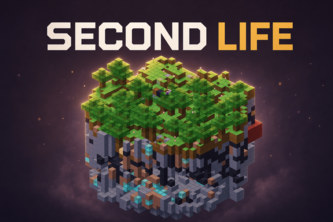
The description states that Second Life is an isometric voxel survival sandbox where players enter a natural-language prompt and receive a playable world. It supports:
- Prompt-based world generation
- Terrain, biomes, weather conditions
- Mining, resource gathering, crafting, building
- Survival mechanics (health, hunger)
- Farming, fishing, trading, smelting
- Quests, objectives, rewards
- Villagers, hostile mobs, animals, pets
- Saving and reopening generated worlds
- Local or online multiplayer
The game engine is deterministic for systems like movement, crafting, survival, and multiplayer state. AI is used to propose the adventure, while the engine decides what is actually possible.
It uses a WorldSpec structure to define generated worlds, which are validated before being loaded into the game engine.
Inference: The product is a prototype that combines AI-generated content with deterministic gameplay systems in a sandbox environment. It is not described as a commercial product or service.
Positioning & Claim Evolution
The author states that Second Life was built to explore whether rapid-building techniques used for AI tools and dashboards could be applied to game development. The inspiration came from Theme Hospital, which emphasized how simple systems can create emergent complexity.
The core positioning is:
- A provider-neutral AI voxel survival sandbox
- Worlds are generated via natural-language prompts
- AI proposes the adventure; deterministic code handles gameplay
There is no evidence of a prior version or evolution in positioning. The project is described as a single, self-contained hackathon effort.
Inference: The project was conceived as an experimental exploration of AI and game design, not as a commercial product with a defined market position.
Target Customer & ICP
The description states that the target is players who want to generate unique worlds through natural-language prompts. It supports both local co-op and online multiplayer, suggesting a focus on collaborative gameplay experiences.
No specific customer segments or personas are described beyond "players." There is no indication of whether the product targets casual gamers, AI enthusiasts, or developers.
Inference: The ICP is not clearly defined. The project appears to be aimed at players who enjoy sandbox survival games and want to experiment with AI-generated content.
Business Model & Pricing Evidence
The description does not mention any business model or pricing strategy. It states that the game supports zero-configuration local co-op and has a deterministic local provider, meaning it works without an internet connection or API key.
There is no evidence of monetization, subscriptions, or paid features.
Inference: No business model or pricing is evident. The project is described as a prototype with no indication of commercial intent.
Technical & Delivery Signals
The author built Second Life using:
- React, TypeScript, TanStack Start, Vite
- A custom isometric voxel engine
- BroadcastChannel API for local multiplayer
- Supabase, PostgreSQL, Realtime for online multiplayer
- JSON-over-HTTP service for AI generation (provider-neutral)
- Schema validation and WorldSpec contract
The system includes:
- Deterministic seeds for reproducibility
- Provider adapters to support different AI services
- Validation of generated WorldSpecs
- Multiplayer consistency via versioning, mutation IDs, and resync
There are 488 passing automated tests covering gameplay systems, multiplayer, saving, crafting, quests, and accessibility.
Inference: The project shows strong engineering discipline and a clear separation between AI and deterministic game logic. It is built with modern tools and has a test-driven approach.
Traction & Maturity Signals
The description states that this is a hackathon project, submitted to the OpenAI 2026 hackathon. No evidence of revenue, customers, or adoption is provided.
It includes:
- A working prototype
- 488 automated tests
- Production build success
- TypeScript check passed
There is no mention of user feedback, usage metrics, or product-market fit.
Inference: The project is at the prototype stage, with no evidence of traction or market validation. It is not described as a commercial product or service in use.
Competitive Context
The description does not mention any competitors. It is unclear whether Second Life is positioned against other sandbox games, AI-generated content tools, or survival game engines.
It is described as AI-powered, but no comparison to existing products or platforms is made.
Inference: No competitive context is provided. The project appears to be a standalone exploration rather than part of an existing market.
Open Questions & Risks
- Prototype only: No evidence of commercialization, customers, or revenue.
- Single developer: The project was built by one person (Dave Cheng), which raises questions about scalability and long-term maintenance.
- No monetization strategy: No indication of how the product would generate value or revenue.
- Unproven market demand: There is no evidence of user interest or adoption beyond the author’s own use.
- Limited scope: The project is described as a hackathon effort, not a long-term product.
Inference: The biggest risk is that this remains a personal prototype with no path to commercial viability or traction.
Questions the description leaves open
- What is the intended path from prototype to product? Is there a plan for monetization?
- How does the AI layer integrate with different providers, and what are the performance trade-offs?
- Are there any plans to expand beyond local multiplayer or add user-generated content features?
- Has the author considered how to scale beyond one developer?
- What is the long-term vision for the game engine and world generation system?
Overall Assessment
The description states that Second Life is a hackathon project by one developer, with no evidence of revenue, customers, or traction.
It is presented as an experimental exploration of AI in game design, not a commercial product.
Assessment: Not evidenced as a viable investment or partnership opportunity at this stage. The project shows strong technical execution but lacks commercialization, market validation, or scalability signals.
User Stories BotA demo video on every pull request
Get a demo video on every new feature
GitHub App that watches your pull requests and records a narrated, captioned demo.
Save time on demo prep and make informed decisions faster with a video walkthrough of every new feature.
Source
Submitted to the OpenAI 2026 hackathon on Devpost. Project home on Devpost. Back to the full gallery on Devpost.
This competitive analysis was produced by top-founders.com (opens in a new tab)
Generated by a language model from this project's public Devpost page — its tagline, the author's own write-up and any built-with tags listed there — as captured in August 2026. Short quotations are the author's words. It is an opinion on the idea as a business, not on the people behind it, and it reflects the description as published then. If the project has moved on, request a correction below. The analysis is not independent research and contains no verified traction, revenue or customer data.
An independent guide by KFG International LLC — not affiliated with, endorsed by, or connected to Devpost or OpenAI.