

Archive position — measured, not model output
0 likes on Devpost
2,263 of the 7,850 archived projects have more likes, and 5,587 share exactly 0 — so this project's #2,914 place in the like-ranked listing is a tie-break inside that group, not a ranking.
Projects (log scale)
Likes on Devpost. ▲ marks this project's group.
Show the figures
| Likes | Projects | Share of archive |
|---|---|---|
| 0 | 5,587 | 71.2% |
| 1 | 1,758 | 22.4% |
| 2 | 284 | 3.6% |
| 3–4 | 132 | 1.7% |
| 5–9 | 75 | 1.0% |
| 10+ | 14 | 0.2% |
 User Stories BotA demo video on every pull request
Get a demo video on every new feature
GitHub App that watches your pull requests and records a narrated, captioned demo.
Save time on demo prep and make informed decisions faster with a video walkthrough of every new feature.
Executive Summary
What the company appears to be
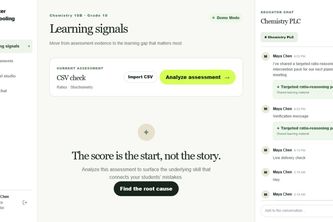
Better Schooling is a self-reported educational platform designed to help teachers identify learning gaps in students by analyzing test results, auto-generating custom learning materials, and providing a built-in chat for collaboration. It is described as a demo-ready web application built with FastAPI backend and frontend technologies including CSS, HTML, JavaScript, TypeScript, and Python.
What changed
The project was submitted to the OpenAI 2026 hackathon by one developer, David Khaliqi. The author describes it as a vertical slice demonstration of an idea that could scale into a larger system for personalized education support.
Single most important open question — the commercial due-diligence read
Is there evidence of any real-world usage, traction or revenue beyond the demo mode? If not, what is the path to product-market fit and monetization?
What The Product Actually Is
The description states that Better Schooling is a web-based platform with:
- A teacher-focused dashboard.
- An AI-driven workflow:
- Analyzes assessment patterns.
- Identifies possible root causes of learning gaps.
- Generates targeted worksheets, quizzes, homework, or revision material.
- A built-in chat for collaboration between teachers and students.
- PDF export functionality for printable materials.
- Responsive UI for desktop, tablet, and mobile devices.
- Demo mode enabled by default (
DEMO_MODE=true) that works without an OpenAI API key.
The platform uses FastAPI as its backend framework and integrates with OpenAI services (specifically GPT-5.6 Sol) for content generation. The AI output is validated using Pydantic JSON Schema before being saved or shown to users.
Not evidenced:
- Whether any actual customer data or real student assessments are used.
- If the system has been tested in live classrooms.
- Any production deployment beyond demo mode.
Positioning & Claim Evolution
The author claims that Better Schooling aims to:
- Help teachers understand why students struggle, not just what score they received.
- Provide personalized learning support without replacing teachers.
- Use AI to diagnose root causes of learning gaps and generate targeted materials.
- Save teachers time when preparing individualized instruction.
This positioning reflects a shift from traditional assessment tools toward diagnostic and adaptive learning solutions. The idea is rooted in the belief that “a low score should not only tell us that something went wrong, but help us understand why it went wrong and what we can do next.”
Inferences:
- The platform positions itself as an AI-powered assistant for educators.
- It implies a move toward more individualized education systems.
Not evidenced:
- No mention of how this differs from existing tools or platforms in the edtech space.
- No evidence of market research or user feedback on positioning.
Target Customer & ICP
The description explicitly identifies the primary user as:
- Teachers, who are tasked with identifying and addressing student learning gaps.
- The system is designed to support individualized instruction within schools.
Inferences:
- The target audience likely includes K–12 educators or school administrators looking for tools to improve student outcomes.
- It may appeal to institutions seeking to adopt AI-enhanced teaching methods.
Not evidenced:
- No indication of specific grade levels, subject areas, or geographic markets.
- No evidence of segmentation strategy or customer personas beyond “teachers.”
- No mention of whether the tool targets private schools, public schools, or both.
Business Model & Pricing Evidence
The description does not provide any information about:
- Revenue model (e.g., subscription, freemium, per-seat licensing).
- Pricing structure.
- Monetization strategy.
- Whether there are plans to charge for access or features.
Inferences:
- Since the tool is presented as a demo, it may be intended for future monetization via enterprise sales or SaaS subscriptions.
- The use of OpenAI APIs suggests potential cost considerations in scaling.
Not evidenced:
- No pricing data, business model details, or monetization strategy.
Technical & Delivery Signals
The platform was built using:
- Frontend: CSS, HTML, JavaScript, TypeScript, Next.js (implied).
- Backend: FastAPI.
- AI Integration: OpenAI GPT-5.6 Sol via server-side API calls.
- Database: SQL.
- Security Features:
- Student privacy ensured through display aliases.
- API keys never exposed to browser.
- Validation Mechanism: Pydantic JSON Schema for validating AI outputs.
- Print Functionality: Separate print styles for A4 and US Letter formats.
Demo Mode:
- Enabled by default (
DEMO_MODE=true). - Works offline without OpenAI API key.
- Produces deterministic sample materials.
Inferences:
- The architecture supports secure handling of sensitive data (student info).
- The system is designed with usability in mind, including editable previews and PDF export.
- It shows awareness of responsive design and accessibility concerns.
Not evidenced:
- No evidence of scalability or performance metrics.
- No mention of cloud infrastructure or deployment strategy beyond local demo mode.
Traction & Maturity Signals
The description states that:
- The project was submitted to the OpenAI 2026 hackathon.
- It is a demo-ready vertical slice.
- A demo account exists:
demo@betterschooling.edu/demo12345. - The demo mode creates deterministic sample materials.
Not evidenced:
- No evidence of real-world usage or adoption.
- No mention of pilot programs, beta users, or institutional partnerships.
- No data on user engagement or retention.
- No indication of any revenue, ARR, or funding rounds.
Competitive Context
The description does not provide any information about:
- Direct competitors in the edtech space.
- How Better Schooling compares to existing tools for learning analytics or personalized instruction.
- Market size or competitive landscape analysis.
Inferences:
- The platform likely competes with tools that offer assessment dashboards, adaptive learning platforms, or AI-powered tutoring systems.
- It may be positioned against platforms like Khan Academy, DreamBox, or Carnegie Learning.
Not evidenced:
- No competitive benchmarking or market positioning data.
- No evidence of differentiation from other edtech solutions.
Open Questions & Risks
Key risks and open questions based on the self-reported description:
- No real-world usage: The entire system appears to be a demo with no evidence of actual classroom use or adoption.
- Limited scope: The project is described as a vertical slice, not a full product.
- Dependency on AI APIs: Heavy reliance on OpenAI services may create scalability and cost issues.
- Lack of commercial viability signals: No pricing, monetization, or business model discussed.
- Single-founder team: Only one developer (David Khaliqi) is listed, which raises questions about execution capacity.
- Unverified claims: All statements are self-reported; no third-party validation exists.
Not evidenced:
- No evidence of risk mitigation strategies or contingency plans.
- No indication of how the platform would scale beyond demo mode.
Questions the description leaves open
- What is your plan for transitioning from a hackathon demo to a scalable product?
- Have you tested this with actual teachers and students? If so, what feedback did you receive?
- How do you intend to monetize the platform? What pricing model are you considering?
- What are the key technical challenges in moving from demo mode to production-ready deployment?
- Are there any existing partnerships or pilot programs with schools or districts?
- How will you ensure data privacy compliance, especially around student information?
- What is your roadmap for AI integration and content generation accuracy?
- How do you plan to differentiate yourself from other edtech platforms in the market?
Overall Assessment
The description presents Better Schooling as a conceptual prototype submitted for a hackathon, not a commercial product with traction or revenue.
While the idea has potential and the execution shows some technical sophistication, there is no evidence of real-world usage, revenue, customers, or product-market fit beyond the demo.
The author’s vision aligns with current trends in AI-enhanced education, but without further development, testing, or commercialization steps, this remains a pre-product concept.
Confidence level: Low.
This analysis is based entirely on self-reported information and lacks any external validation or traction data.
User Stories BotA demo video on every pull request
Get a demo video on every new feature
GitHub App that watches your pull requests and records a narrated, captioned demo.
Save time on demo prep and make informed decisions faster with a video walkthrough of every new feature.
Source
Submitted to the OpenAI 2026 hackathon on Devpost. Project home on Devpost. Back to the full gallery on Devpost.
This competitive analysis was produced by top-founders.com (opens in a new tab)
Generated by a language model from this project's public Devpost page — its tagline, the author's own write-up and any built-with tags listed there — as captured in August 2026. Short quotations are the author's words. It is an opinion on the idea as a business, not on the people behind it, and it reflects the description as published then. If the project has moved on, request a correction below. The analysis is not independent research and contains no verified traction, revenue or customer data.
An independent guide by KFG International LLC — not affiliated with, endorsed by, or connected to Devpost or OpenAI.