

Archive position — measured, not model output
0 likes on Devpost
2,263 of the 7,850 archived projects have more likes, and 5,587 share exactly 0 — so this project's #6,521 place in the like-ranked listing is a tie-break inside that group, not a ranking.
Projects (log scale)
Likes on Devpost. ▲ marks this project's group.
Show the figures
| Likes | Projects | Share of archive |
|---|---|---|
| 0 | 5,587 | 71.2% |
| 1 | 1,758 | 22.4% |
| 2 | 284 | 3.6% |
| 3–4 | 132 | 1.7% |
| 5–9 | 75 | 1.0% |
| 10+ | 14 | 0.2% |
 User Stories BotA demo video on every pull request
Get a demo video on every new feature
GitHub App that watches your pull requests and records a narrated, captioned demo.
Save time on demo prep and make informed decisions faster with a video walkthrough of every new feature.
Executive Summary
Project: SAME SHIT
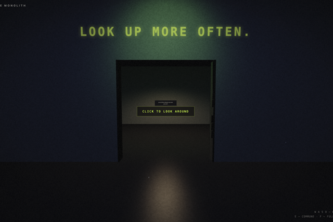
Author's self-description: A digital art project submitted to the OpenAI 2026 hackathon.
Analysis basis: Self-reported only — no independent verification, no revenue, customers or traction data.
Commercial due-diligence read: The description states this is a digital art project that "makes you feel something" and is about "what screens do to us". It is not evident whether this has any commercial application, customer base, or business model beyond artistic expression. The single most important open question is: What is the intended use case for SAME SHIT beyond personal or artistic expression?
What The Product Actually Is
The description states that SAME SHIT “makes you feel something.” It is described as a digital art project built with tools including Claude, Codex, FFmpeg, GitHub, WebGL2, and Web Audio API. The author says it was submitted to the OpenAI 2026 hackathon.
- Claim: It is a digital art project.
- Evidence: The description states this is an artistic submission to a hackathon.
- Inference: It may be an interactive or immersive experience, given references to “glow,” “screens,” and “museum.”
Not evidenced: What the product actually does beyond "making you feel something", how it functions technically, or whether it has any commercial application.
Positioning & Claim Evolution
The description states that SAME SHIT is an artistic project that challenges viewers to “think and feel in a way you haven't before.” It references themes around digital museums, NFTs, and screens’ influence on human attention.
- Claim: The product challenges perception and emotional response.
- Evidence: The tagline and write-up refer to “thinking and feeling” and “what screens do to us.”
- Inference: It is positioned as a conceptual or experiential work rather than a functional tool.
Not evidenced: How the positioning evolved, whether it has been tested with an audience, or how it differentiates from other art projects.
Target Customer & ICP
The description does not identify any specific customer base or target user. It is described as an artistic project submitted to a hackathon.
- Claim: No explicit customer or ICP identified.
- Evidence: The description refers to “you” and “the judges,” but no defined audience or persona.
- Inference: If it has a commercial application, it may be limited to art enthusiasts or collectors, but this is not stated.
Not evidenced: Who the intended users are, whether there’s a defined customer segment, or how the product would reach them.
Business Model & Pricing Evidence
There is no evidence of any business model or pricing structure in the description. The project is described as an artistic submission.
- Claim: No business model or pricing mentioned.
- Evidence: The description does not reference revenue, monetization, or pricing.
- Inference: If this is intended for commercial use, it is unclear how it would be sold or priced.
Not evidenced: Any indication of monetization, revenue streams, or pricing strategy.
Technical & Delivery Signals
The project was built using tools such as Claude, Codex, FFmpeg, GitHub, WebGL2, and Web Audio API. It references procedural generation and zero-dependencies.
- Claim: The project is technically complex and self-contained.
- Evidence: The author lists technologies used, including WebGL2 and Playwright.
- Inference: It may be a web-based or interactive experience with audiovisual components.
Not evidenced: Whether the product is functional, deployed, or accessible to users beyond the creator.
Traction & Maturity Signals
The project was submitted to a hackathon. The author says it is “a complete works for a moment in time.”
- Claim: It is a completed hackathon submission.
- Evidence: Submitted to OpenAI 2026 hackathon, described as a “complete works.”
- Inference: It may not have been deployed or tested beyond the hackathon context.
Not evidenced: Any evidence of user adoption, engagement, or product maturity beyond the submission stage.
Competitive Context
The description does not reference any competitors or similar products. It is positioned as a unique artistic work.
- Claim: No competitive landscape described.
- Evidence: The description does not mention other digital art projects, museums, or NFTs.
- Inference: It may be part of a niche or emerging space in digital art or interactive media.
Not evidenced: Any comparison to existing products, platforms, or market players.
Open Questions & Risks
- Lack of commercial clarity: The project is described as an artistic endeavor with no indication of how it would generate value beyond personal expression.
- No evidence of traction or user feedback: It was submitted to a hackathon and has no data on adoption or engagement.
- Ambiguity in purpose: The description is vague, focusing on emotion and experience rather than functionality or outcome.
Not evidenced: Any risk mitigation strategies, scalability, or long-term viability.
Questions the description leaves open
- What is the intended use case for SAME SHIT beyond artistic expression?
- Is there a plan to deploy or distribute this beyond the hackathon submission?
- How would you monetize or scale this if it were to be commercialized?
- Have you tested it with an audience, and what feedback did you receive?
- What is the long-term vision for SAME SHIT — is it meant to evolve into a product or remain an artistic piece?
Overall Assessment
The description states that SAME SHIT is a digital art project submitted to a hackathon. It is not evident whether this has any commercial application, traction, or business model beyond artistic expression.
- Claim: No clear commercial application or investment opportunity.
- Evidence: The description does not indicate revenue, customers, or product-market fit.
- Inference: If the goal is to explore artistic or conceptual territory, it may be a valid creative endeavor. However, it does not appear to have a defined path to commercialization.
Not evidenced: Any indication of return potential, scalability, or strategic value for investment or partnership.
User Stories BotA demo video on every pull request
Get a demo video on every new feature
GitHub App that watches your pull requests and records a narrated, captioned demo.
Save time on demo prep and make informed decisions faster with a video walkthrough of every new feature.
Source
Submitted to the OpenAI 2026 hackathon on Devpost. Project home on Devpost. Back to the full gallery on Devpost.
This competitive analysis was produced by top-founders.com (opens in a new tab)
Generated by a language model from this project's public Devpost page — its tagline, the author's own write-up and any built-with tags listed there — as captured in August 2026. Short quotations are the author's words. It is an opinion on the idea as a business, not on the people behind it, and it reflects the description as published then. If the project has moved on, request a correction below. The analysis is not independent research and contains no verified traction, revenue or customer data.
An independent guide by KFG International LLC — not affiliated with, endorsed by, or connected to Devpost or OpenAI.