

Archive position — measured, not model output
0 likes on Devpost
2,263 of the 7,850 archived projects have more likes, and 5,587 share exactly 0 — so this project's #6,518 place in the like-ranked listing is a tie-break inside that group, not a ranking.
Projects (log scale)
Likes on Devpost. ▲ marks this project's group.
Show the figures
| Likes | Projects | Share of archive |
|---|---|---|
| 0 | 5,587 | 71.2% |
| 1 | 1,758 | 22.4% |
| 2 | 284 | 3.6% |
| 3–4 | 132 | 1.7% |
| 5–9 | 75 | 1.0% |
| 10+ | 14 | 0.2% |
 User Stories BotA demo video on every pull request
Get a demo video on every new feature
GitHub App that watches your pull requests and records a narrated, captioned demo.
Save time on demo prep and make informed decisions faster with a video walkthrough of every new feature.
Executive Summary
What the company appears to be
SalesView AI Operator is a self-reported human-controlled closed-loop system that integrates GPT-5.6 Sol for generating sales outreach content, with deterministic code enforcing safety and human authority over delivery. It uses Google Sheets as a source of truth, Gmail API for delivery, and structured outputs from OpenAI to propose content and next actions.
What changed
The project is described as a hackathon submission (Devpost entry) that builds on the idea of improving sales outreach through AI while maintaining human control. The author states it was built in a short timeframe using Codex for development assistance, and includes an explicit separation between decision-making (SalesView) and delivery (Mail Engagement).
Single most important open question
Is there any evidence of real-world usage or adoption beyond the demo mode? The description does not indicate whether this system has been tested with actual sales teams or deployed in production.
What The Product Actually Is
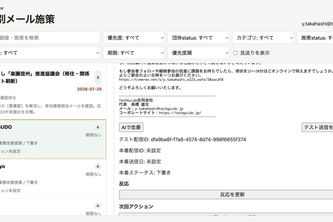
The description states that SalesView AI Operator is a human-controlled closed-loop system. It reads data from Google Sheets, uses GPT-5.6 Sol via the OpenAI Responses API to generate subject lines and email bodies, and proposes reasoning and risks. A human reviews and approves the content before it is sent through Gmail.
Key components include:
- SalesView: Decision and approval cockpit that owns Google Sheets context, GPT-5.6 proposals, content review, approval hashes, engagement feedback, and next-action suggestions.
- Mail Engagement: Deterministic delivery system that handles Gmail delivery, retries, tracking, reply sync, and ownership checks — but does not make AI decisions.
The system is described as deliberately human-in-the-loop and not autonomous in sending emails.
Claimed functionality
The product proposes email content using GPT-5.6 Sol, enforces deterministic code for safety, and returns engagement signals back to the AI for next-action suggestions.
Inference The architecture separates decision-making from delivery, which implies a design choice focused on trust and accountability rather than full automation.
Positioning & Claim Evolution
The author positions SalesView AI Operator as a tool that improves sales outreach by leveraging AI while preserving human judgment. It is framed as a solution to the problem of scattered sales context across tools.
Claim
“Sales teams already have valuable context, but it is scattered across spreadsheets, draft emails, delivery tools, and follow-up notes.”
Evolution of claim
The project evolves from a general idea (improving outreach with AI) into a specific implementation (human-in-the-loop closed loop). It explicitly avoids autonomous sending and emphasizes safety and transparency.
Inference The positioning reflects an intent to build trust in AI-assisted workflows, particularly in high-stakes environments like sales where accountability matters.
Target Customer & ICP
The description does not name specific customers or define a target customer profile. However, it implies that the intended users are sales teams who manage outreach via spreadsheets and need structured support for content generation and follow-up.
Claim
The system targets “sales teams” who already use Google Sheets as part of their operations.
Inference Based on the architecture (Google Sheets integration), this likely appeals to small-to-medium-sized sales organizations or individual sales reps using spreadsheets for tracking campaigns.
Absence of evidence
No mention of enterprise customers, pricing tiers, or segmentation beyond “sales teams.”
Business Model & Pricing Evidence
There is no evidence in the description of a business model or pricing structure. The project is described as a hackathon submission and lacks any indication of monetization plans or revenue streams.
Claim
Not stated.
Inference Given that this is a demo-mode-only system, it likely has no commercial offering at this stage.
Absence of evidence
No mention of subscriptions, usage fees, or licensing models.
Technical & Delivery Signals
The project uses:
- SvelteKit and Svelte 5 for frontend/backend
- TypeScript
- OpenAI Responses API with GPT-5.6 Sol and Structured Outputs
- Google Sheets API
- Gmail API
- Auth.js with Google OAuth
- Vercel for deployment
- Vitest and Playwright for testing
Claim
The system separates responsibilities between two private repositories: SalesView (decision-making) and Mail Engagement (delivery).
Inference This suggests a modular, secure architecture designed to isolate risks and maintain auditability.
Evidence of delivery signals
The system returns delivery ID, state, engagement signals, reply time, retriability, and detail link — but not message content.
Traction & Maturity Signals
There is no evidence of traction or maturity beyond the demo mode. The project is described as a hackathon submission with:
- Demo mode that cannot send to real addresses
- Sanitized synthetic data
- No indication of live users or production deployments
Claim
“The demo uses sanitized synthetic data and does not contact a real sales prospect.”
Inference This indicates the system has not yet been tested in real-world conditions.
Absence of evidence
No customer base, usage metrics, or performance data are provided.
Competitive Context
No competitive landscape is described. The author does not reference existing tools or platforms in the sales outreach space.
Claim
Not stated.
Inference The project appears to be a novel approach within the hackathon context, but there is no evidence of prior art or differentiation from other AI-powered email tools.
Open Questions & Risks
- No real-world usage: The system is demo-only and does not appear to have been used in production.
- Limited scope: It only supports Google Sheets and Gmail, with no indication of broader integrations.
- Human-in-the-loop design may limit scalability: While safe, this approach could slow down outreach efforts.
- Unverified claims about GPT-5.6 Sol: The description refers to a model named “GPT-5.6 Sol,” which is not confirmed as an existing product or version.
Open question
The lack of any real-world testing or feedback suggests the system may not be ready for commercial deployment.
Questions the description leaves open
- Has this system been tested with actual sales teams? What were their reactions?
- Are there plans to expand beyond Google Sheets and Gmail?
- How does the team plan to scale the human-in-the-loop process?
- What are the technical limitations of GPT-5.6 Sol in practice, especially for complex outreach scenarios?
- Is there any intention to monetize or commercialize this product?
Overall Assessment
Not evidenced.
There is no evidence of traction, revenue, customers, or a clear path to monetization. The project is described as a hackathon submission with demo-only functionality and no indication of real-world adoption.
Confidence level Low — based on self-reported description only, with no external validation or data points.
Assessment At this stage, the system appears to be an experimental prototype with strong architectural design but no commercial viability or proven utility. Further due diligence would require evidence of user testing, performance metrics, and a clear go-to-market strategy.
User Stories BotA demo video on every pull request
Get a demo video on every new feature
GitHub App that watches your pull requests and records a narrated, captioned demo.
Save time on demo prep and make informed decisions faster with a video walkthrough of every new feature.
Source
Submitted to the OpenAI 2026 hackathon on Devpost. Project home on Devpost. Back to the full gallery on Devpost.
This competitive analysis was produced by top-founders.com (opens in a new tab)
Generated by a language model from this project's public Devpost page — its tagline, the author's own write-up and any built-with tags listed there — as captured in August 2026. Short quotations are the author's words. It is an opinion on the idea as a business, not on the people behind it, and it reflects the description as published then. If the project has moved on, request a correction below. The analysis is not independent research and contains no verified traction, revenue or customer data.
An independent guide by KFG International LLC — not affiliated with, endorsed by, or connected to Devpost or OpenAI.