

Archive position — measured, not model output
0 likes on Devpost
2,263 of the 7,850 archived projects have more likes, and 5,587 share exactly 0 — so this project's #6,401 place in the like-ranked listing is a tie-break inside that group, not a ranking.
Projects (log scale)
Likes on Devpost. ▲ marks this project's group.
Show the figures
| Likes | Projects | Share of archive |
|---|---|---|
| 0 | 5,587 | 71.2% |
| 1 | 1,758 | 22.4% |
| 2 | 284 | 3.6% |
| 3–4 | 132 | 1.7% |
| 5–9 | 75 | 1.0% |
| 10+ | 14 | 0.2% |
 User Stories BotA demo video on every pull request
Get a demo video on every new feature
GitHub App that watches your pull requests and records a narrated, captioned demo.
Save time on demo prep and make informed decisions faster with a video walkthrough of every new feature.
Executive Summary
What the company appears to be
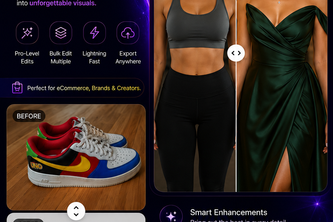
Retouchly is a mobile AI product-content studio built for small sellers and independent creators. The app turns an iPhone into a tool for generating commerce-ready images, video, and 3D assets from a single product shoot. It integrates with Cloudinary, Qwen/Wan, Tripo, and other providers to support image editing, background replacement, animation, and 360/3D workflows.
What changed
The project evolved significantly after July 13, incorporating Codex and GPT-5.6 into its development process. Prior to this date, it was a basic Expo photo editor with Qwen/Wan image generation. After July 13, it gained a typed, provider-aware Cloudinary pipeline, native multipart uploads, resumable jobs, durable archives, and preset-aware routing.
The single most important open question
Is there any evidence of actual user adoption or revenue generation beyond the author's self-reported development process?
What The Product Actually Is
The description states that Retouchly is a mobile AI product-content studio. It allows users to clean and enhance images, isolate products, remove or replace backgrounds, add studio shadows, expand canvases, recolor products, create channel-specific video outputs, animate still images, assemble ordered 360 spins, and initiate photo-to-3D workflows.
It routes tasks to specific providers:
- Cloudinary for production image/video transformations, delivery, and archival
- Qwen/Wan for creative and multi-reference generation
- Tripo for estimated photo-to-3D geometry
- Skia for on-device filter work
The app is built using Expo SDK 56, React Native 0.85, TypeScript, Firebase, Supabase, and integrates with Alibaba Model Studio, Codex, GPT-5.6, and others.
Evidence Self-reported by the author.
Confidence Low — no independent verification or traction data provided.
Positioning & Claim Evolution
The project positions itself as a mobile solution that streamlines product content creation for small sellers and creators. It claims to make workflows “mobile, understandable, and durable,” addressing fragmentation across desktop tools and opaque AI apps.
Before July 13:
- A general Expo photo editor with Qwen/Wan image generation
- Basic result and credit lifecycle
After July 13:
- Typed, provider-aware Cloudinary mobile image pipeline
- Native multipart uploads for real-device reliability
- Product extraction, white-background, shadow, recolor, canvas-expansion, and staging workflows
- Cloudinary Product Video Studio with exact output sizing and validation
- Persisted and resumable jobs with idempotent success-only charging
- Durable delivery and archive behavior through Albums
- Preset-aware routing with no silent fallback
Evidence Self-reported by the author.
Confidence Low — claims are not independently verified.
Target Customer & ICP
The description states that Retouchly targets “small sellers and independent creators” who need a full content pipeline from one product shoot: catalog images, marketplace-ready backgrounds, social video, motion, multiple output sizes, and sometimes 360 or AR assets.
Evidence Self-reported by the author.
Confidence Low — no customer data or segmentation evidence provided.
Business Model & Pricing Evidence
There is no mention of pricing, monetization strategy, or business model in the description. The project appears to be a hackathon submission with no indication of revenue streams or paid features.
Evidence Not evidenced.
Confidence Very low — no commercial data available.
Technical & Delivery Signals
The app uses:
- Expo SDK 56, React Native 0.85, TypeScript
- Firebase and Supabase for backend services
- Cloudinary for image/video upload, transformation, delivery, and archival
- Qwen/Wan for generative editing
- Tripo for photo-to-3D geometry (behind a server-side control plane)
- Codex with GPT-5.6 for engineering workflow
Key technical features include:
- Native-safe React Native multipart uploads
- Typed transformation builders
- Provider-aware routing that fails honestly instead of silently substituting models
- Resumable jobs and idempotent credit settlement
- Durable archive behavior through Albums
- Live-smoked testing of Cloudinary image/product cases and video presets
Evidence Self-reported by the author.
Confidence Medium — technical details are described but not independently verified.
Traction & Maturity Signals
There is no evidence of traction, customers, or revenue. The project is described as a hackathon submission (Devpost entry for OpenAI 2026 hackathon). The team size is listed as one member.
Evidence Not evidenced.
Confidence Very low — no user data, adoption metrics, or commercial activity reported.
Competitive Context
The description does not provide any information on competitors or market positioning beyond the general idea of AI-powered product content creation. It does not name specific tools or platforms in this space.
Evidence Not evidenced.
Confidence Very low — no competitive analysis provided.
Open Questions & Risks
- The project is self-reported and unverified; no third-party validation.
- No evidence of revenue, customers, or adoption.
- Only one team member listed.
- The app is described as a hackathon submission, suggesting early-stage development.
- Heavy reliance on Codex and GPT-5.6 for engineering workflow raises questions about scalability and dependency risks.
- The use of multiple providers (Cloudinary, Qwen/Wan, Tripo) introduces complexity without clarity on integration robustness or performance trade-offs.
Evidence Self-reported by the author.
Confidence Medium — inferred from lack of evidence and project context.
Questions the description leaves open
- What is your current user base or customer traction?
- How do you plan to monetize this product?
- Are there any existing partnerships or integrations with Cloudinary, Qwen, Tripo, or other providers?
- What are the key challenges in scaling the provider routing logic and ensuring consistent quality?
- Can you provide evidence of real-world usage beyond the development process?
- How do you handle edge cases where a provider fails or returns an unexpected result?
- What is your roadmap for expanding beyond the current set of workflows?
Evidence Not evidenced — these are questions to probe further.
Confidence Medium — based on project limitations.
Overall Assessment
There is no evidence of revenue, customers, or traction. The project appears to be a hackathon submission with limited commercial activity. It shows technical sophistication but lacks any indication of market readiness or business viability.
Evidence Self-reported by the author.
Confidence Very low — no commercial data or validation provided.
User Stories BotA demo video on every pull request
Get a demo video on every new feature
GitHub App that watches your pull requests and records a narrated, captioned demo.
Save time on demo prep and make informed decisions faster with a video walkthrough of every new feature.
Source
Submitted to the OpenAI 2026 hackathon on Devpost. Project home on Devpost. Back to the full gallery on Devpost.
This competitive analysis was produced by top-founders.com (opens in a new tab)
Generated by a language model from this project's public Devpost page — its tagline, the author's own write-up and any built-with tags listed there — as captured in August 2026. Short quotations are the author's words. It is an opinion on the idea as a business, not on the people behind it, and it reflects the description as published then. If the project has moved on, request a correction below. The analysis is not independent research and contains no verified traction, revenue or customer data.
An independent guide by KFG International LLC — not affiliated with, endorsed by, or connected to Devpost or OpenAI.