

Archive position — measured, not model output
0 likes on Devpost
2,263 of the 7,850 archived projects have more likes, and 5,587 share exactly 0 — so this project's #6,278 place in the like-ranked listing is a tie-break inside that group, not a ranking.
Projects (log scale)
Likes on Devpost. ▲ marks this project's group.
Show the figures
| Likes | Projects | Share of archive |
|---|---|---|
| 0 | 5,587 | 71.2% |
| 1 | 1,758 | 22.4% |
| 2 | 284 | 3.6% |
| 3–4 | 132 | 1.7% |
| 5–9 | 75 | 1.0% |
| 10+ | 14 | 0.2% |
 User Stories BotA demo video on every pull request
Get a demo video on every new feature
GitHub App that watches your pull requests and records a narrated, captioned demo.
Save time on demo prep and make informed decisions faster with a video walkthrough of every new feature.
Executive Summary
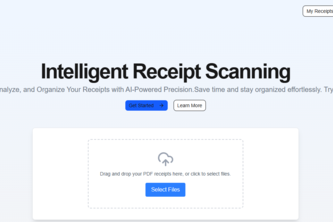
Receiptly is a self-reported AI-powered web application that extracts structured data from receipt images using OpenAI's API, allowing users to upload receipts and view organized expense information in a searchable dashboard. The author describes building a full-stack prototype using Next.js, React, TypeScript, Tailwind CSS, Clerk, Convex, Inngest, and Vercel — with no evidence of revenue, customers, or product-market fit beyond the developer's own account.
The project is presented as a personal hackathon submission for the OpenAI 2026 hackathon. It does not demonstrate commercial traction, user adoption, or business model validation. The author states intentions to expand functionality but provides no evidence of execution or market testing.
The single most important open question
Is there any evidence that Receiptly has moved beyond a prototype or personal project into actual usage by users?
What The Product Actually Is
The description states that Receiptly is an AI-powered web application that:
- Extracts key information from receipt images
- Includes merchant name, purchase date, total amount, and purchased items
- Provides a searchable dashboard for organized expense data
- Allows users to upload receipt images for automatic processing
The author describes the core functionality as:
"Users can upload an image of a receipt, and the AI automatically processes and organizes the data into a searchable dashboard, eliminating the need for manual data entry."
This is a receipt digitization tool that uses AI to extract structured data from unstructured physical receipts.
Evidence The author's own write-up.
Confidence Low — self-reported only; no independent verification or product demonstration provided.
Positioning & Claim Evolution
The author positions Receiptly as:
- An AI-powered solution for managing paper receipts
- A tool that transforms physical receipts into organized digital records
- A productivity application that makes expense management faster and more convenient
The project is described as a simple, user-friendly solution to a common problem — losing or mismanaging paper receipts.
The author also states:
"I wanted to build a simple AI-powered solution that could transform physical receipts into organized digital records"
This reflects an early-stage positioning focused on solving a personal or niche problem rather than scaling a commercial product.
Evidence The author's own write-up.
Confidence Low — self-reported and unverified; no external validation or market positioning data.
Target Customer & ICP
The description does not specify:
- Who the target customer is
- Whether it’s aimed at individuals, small businesses, or enterprise users
- Any segmentation or persona development
The author states:
"Managing paper receipts can be frustrating. Receipts are easy to lose, fade over time, and make it difficult to keep track of expenses."
This implies a consumer or personal user base — likely individuals managing personal expenses.
However, the description does not elaborate on:
- Specific use cases
- Customer needs beyond convenience
- Any targeting strategy
Evidence The author's own write-up.
Confidence Low — no evidence of customer research or defined ICP.
Business Model & Pricing Evidence
The description does not contain any information about:
- Revenue model
- Pricing structure
- Monetization strategy
- Subscription plans or paid features
The author mentions:
"What's next for Receiptly" includes features like CSV/Excel export, spending insights, and budgeting tools — but no indication of how these would be monetized.
Evidence The author's own write-up.
Confidence Not evidenced — no business model or pricing data provided.
Technical & Delivery Signals
The project was built using:
- Frontend: Next.js, React, TypeScript, Tailwind CSS
- Backend: Node.js, Convex (database), Inngest (workflows)
- Authentication: Clerk
- AI/ML: OpenAI API for OCR and data extraction
- Deployment: Vercel
The author reports:
"Successfully integrated AI into a real-world productivity application"
They also state:
"Built a fully functional AI-powered receipt scanner"
"Designed a clean, responsive, and user-friendly interface"
This suggests:
- A working prototype with basic functionality
- Integration of modern web stack components
- Use of AI for core functionality
Evidence The author's own write-up.
Confidence Medium — the technical stack is described but not validated or tested in production.
Traction & Maturity Signals
There is no evidence of:
- Revenue
- Customers
- User adoption
- Product-market fit
- Usage metrics
- Product iteration history
The author describes Receiptly as a personal hackathon project, submitted to the OpenAI 2026 hackathon.
They state:
"This project was submitted to the OpenAI 2026 hackathon on Devpost."
No evidence of:
- User testing or feedback
- Product development beyond prototype stage
- Market validation or traction
Evidence The author's own write-up.
Confidence Very low — no traction data provided.
Competitive Context
The description does not mention:
- Competitors
- Existing solutions in the market
- How Receiptly differentiates from similar tools
Receiptly appears to be positioned within the receipt scanning and expense management space, which includes tools like Expensify, Shoeboxed, Receipt Bank, and others.
However, no competitive analysis or differentiation strategy is described by the author.
Evidence The author's own write-up.
Confidence Not evidenced — no competitive landscape provided.
Open Questions & Risks
Key risks and open questions based on the self-reported description:
- Prototype-only: No evidence of product-market fit or real-world usage
- No revenue or monetization strategy: The project is described as a personal hackathon submission, not a commercial venture
- Unproven AI accuracy: The author notes challenges in handling different receipt layouts and image qualities — suggesting potential limitations in real-world performance
- No customer data or feedback: No evidence of user testing or adoption
- Single-founder team: Only one member listed (Dua Naeem), which may limit execution capacity
Evidence The author's own write-up.
Confidence Medium to high — based on the lack of any commercial or traction signals.
Questions the description leaves open
- What is your plan for validating product-market fit beyond this prototype?
- Have you tested Receiptly with real users? If so, what feedback did you receive?
- How do you intend to monetize the product? What pricing model are you considering?
- What are the technical limitations or edge cases in receipt recognition that you've encountered?
- Are there any existing competitors you're aware of, and how does Receiptly differentiate?
- What is your roadmap for scaling beyond a personal project?
Note
These questions are based on the lack of evidence in the self-reported description.
Overall Assessment
There is no evidence that Receiptly has progressed beyond a prototype or personal hackathon project. The author states:
"This project was submitted to the OpenAI 2026 hackathon on Devpost."
No evidence of:
- Revenue
- Customers
- Product-market fit
- Business model validation
The project is described as a personal learning exercise and a hackathon submission, not a commercial product.
Assessment Not ready for investment or partnership. The author’s own account suggests this is an early-stage idea, not a validated business.
Confidence Very low — no evidence of traction, revenue, or commercial viability.
User Stories BotA demo video on every pull request
Get a demo video on every new feature
GitHub App that watches your pull requests and records a narrated, captioned demo.
Save time on demo prep and make informed decisions faster with a video walkthrough of every new feature.
Source
Submitted to the OpenAI 2026 hackathon on Devpost. Project home on Devpost. Back to the full gallery on Devpost.
This competitive analysis was produced by top-founders.com (opens in a new tab)
Generated by a language model from this project's public Devpost page — its tagline, the author's own write-up and any built-with tags listed there — as captured in August 2026. Short quotations are the author's words. It is an opinion on the idea as a business, not on the people behind it, and it reflects the description as published then. If the project has moved on, request a correction below. The analysis is not independent research and contains no verified traction, revenue or customer data.
An independent guide by KFG International LLC — not affiliated with, endorsed by, or connected to Devpost or OpenAI.