

Archive position — measured, not model output
0 likes on Devpost
2,263 of the 7,850 archived projects have more likes, and 5,587 share exactly 0 — so this project's #6,246 place in the like-ranked listing is a tie-break inside that group, not a ranking.
Projects (log scale)
Likes on Devpost. ▲ marks this project's group.
Show the figures
| Likes | Projects | Share of archive |
|---|---|---|
| 0 | 5,587 | 71.2% |
| 1 | 1,758 | 22.4% |
| 2 | 284 | 3.6% |
| 3–4 | 132 | 1.7% |
| 5–9 | 75 | 1.0% |
| 10+ | 14 | 0.2% |
 User Stories BotA demo video on every pull request
Get a demo video on every new feature
GitHub App that watches your pull requests and records a narrated, captioned demo.
Save time on demo prep and make informed decisions faster with a video walkthrough of every new feature.
Executive Summary
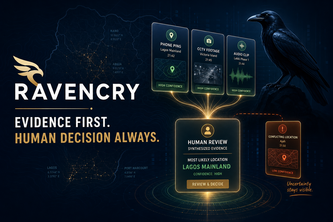
RAVENCRY is a self-reported system for handling emergency reports in uncertain or conflicting situations, built as a demonstration for OpenAI Build Week. The project describes an "Evidence Briefing Desk" that uses AI to summarize and structure evidence from multiple sources but does not make alert decisions itself. It includes safety controls to prevent automatic alerts and requires human approval before any action.
The system is described as having two modes: a repeatable demo mode with deterministic cases, and a live case-record mode that interfaces with an AI model (gpt-4o-mini) to generate structured summaries from redacted data. The interface includes source-citation chips, conflict indicators, and explicit approval gates.
Key commercial due-diligence questions:
- What is the actual product being built? Is it a reporting tool or a decision-support system?
- Who are the intended users and what is their current process?
- How does this differ from existing systems for emergency response or information verification?
- What is the path to production, including authentication, audit trails, and security review?
The most important open question: What is the actual commercial use case beyond a hackathon demo?
What The Product Actually Is
The description states that RAVENCRY began as a multi-channel reporting and alerting system in a Qwen hackathon project. For OpenAI Build Week, it evolved into an "Evidence Briefing Desk" with two modes:
- A repeatable safety demo mode with three deterministic cases
- A live case-record mode that interfaces with an AI model to generate structured summaries
The system is described as having:
- A source bridge: an Express endpoint that constructs a typed evidence ledger from RAVENCRY case, person, and sighting records
- A structured server briefing: a second server endpoint that calls the OpenAI API with gpt-4o-mini
- An operator interface: a Next.js Evidence Briefing Desk that renders source cards and citation chips
- Safety controls outside the model: strict validation rejects blank, uncited, or unknown-source output
The system does not send alerts automatically. It requires human review and approval before any alert is issued.
Positioning & Claim Evolution
RAVENCRY positions itself as a system for handling emergency reports where evidence conflicts or is uncertain. The authors state:
- "A missing-person report is also a call that asks a community to look"
- "We wanted to build the moment before the alert: a place where someone can lay the evidence out, see where it agrees, see where it breaks apart, and make a responsible human decision"
The project evolved from a general reporting system to a specific "Evidence Briefing Desk" focused on structured evidence handling and human decision-making. The positioning emphasizes:
- Evidence-first approach
- Human decision always
- Safety controls over automation
- Transparency in source attribution
Target Customer & ICP
Not evidenced.
The description does not state who the target customers are, what their current processes are, or how they would use this system. It only describes the technical implementation and demo cases.
Business Model & Pricing Evidence
Not evidenced.
There is no information about pricing models, revenue streams, customer acquisition costs, or business model assumptions in the description.
Technical & Delivery Signals
The project was built using:
- Docker
- Express.js
- Flutter
- JSON Schema
- Next.js
- Node.js
- OpenAI API
- PostgreSQL
- React
- REST API
- TypeScript
- Web development tools
Key technical elements described:
- Source bridge: Express endpoint that constructs typed evidence ledger from case, person, and sighting records
- Structured server briefing: Server endpoint calling OpenAI API with gpt-4o-mini, strict JSON Schema, 20-second timeout
- Safety controls: strict validation rejects blank, uncited, or unknown-source output
- Operator interface: Next.js Evidence Briefing Desk with source cards and citation chips
- Verification: web production bundle, type-checked API, live requests for three test cases
The system is described as having:
- Server-only OpenAI integration
- Strict JSON Schema validation
- Source-citation validation
- Timeout handling
- Generic error handling
Traction & Maturity Signals
Not evidenced.
There is no evidence of revenue, customers, adoption, or traction beyond the hackathon demonstration. The project is described as a demonstration for OpenAI Build Week with no mention of deployment, usage, or impact.
Competitive Context
Not evidenced.
The description does not provide information about existing systems or competitors in the emergency reporting or information verification space.
Open Questions & Risks
- Unproven commercial use case: The system is described only as a hackathon demo with no evidence of real-world application or customer need
- No revenue or traction data: No evidence of customers, users, or revenue streams
- Limited scope: The demonstration covers only three test cases and does not show scalability or production readiness
- Dependency on external AI service: Relies on OpenAI API which may change or become unavailable
- No security or privacy review: The description states that such reviews are "next steps" but not yet completed
- Unverified claims: All information is self-reported and unverified
Questions the description leaves open
- What specific emergency response scenarios does this system address?
- Who are the actual users of this system and how do they currently operate?
- How does this solution differ from existing systems in the market?
- What is the path to production deployment, including authentication and audit trails?
- How will security and privacy be addressed before connecting additional intake channels?
- What are the specific requirements for human operators and their training?
- How will the system handle edge cases not covered in the demo?
- What are the technical limitations of the current implementation that would need to be resolved?
Overall Assessment
Not evidenced.
The description provides no information about financials, funding rounds, valuation, or partnership opportunities. It is unclear whether this represents a viable business opportunity or merely a technical demonstration.
User Stories BotA demo video on every pull request
Get a demo video on every new feature
GitHub App that watches your pull requests and records a narrated, captioned demo.
Save time on demo prep and make informed decisions faster with a video walkthrough of every new feature.
Source
Submitted to the OpenAI 2026 hackathon on Devpost. Project home on Devpost. Back to the full gallery on Devpost.
This competitive analysis was produced by top-founders.com (opens in a new tab)
Generated by a language model from this project's public Devpost page — its tagline, the author's own write-up and any built-with tags listed there — as captured in August 2026. Short quotations are the author's words. It is an opinion on the idea as a business, not on the people behind it, and it reflects the description as published then. If the project has moved on, request a correction below. The analysis is not independent research and contains no verified traction, revenue or customer data.
An independent guide by KFG International LLC — not affiliated with, endorsed by, or connected to Devpost or OpenAI.