

Archive position — measured, not model output
1 like on Devpost
505 of the 7,850 archived projects have more likes, and 1,758 share exactly 1 — so this project's #1,737 place in the like-ranked listing is a tie-break inside that group, not a ranking.
Projects (log scale)
Likes on Devpost. ▲ marks this project's group.
Show the figures
| Likes | Projects | Share of archive |
|---|---|---|
| 0 | 5,587 | 71.2% |
| 1 | 1,758 | 22.4% |
| 2 | 284 | 3.6% |
| 3–4 | 132 | 1.7% |
| 5–9 | 75 | 1.0% |
| 10+ | 14 | 0.2% |
 User Stories BotA demo video on every pull request
Get a demo video on every new feature
GitHub App that watches your pull requests and records a narrated, captioned demo.
Save time on demo prep and make informed decisions faster with a video walkthrough of every new feature.
Executive Summary
Project: Prospería Balance
Self-reported basis only — no independent verification of claims, traction, customers, or revenue.
Author states: A responsive financial companion for people and microbusinesses, built as a web application using vanilla JavaScript, Supabase, Vercel, and OpenAI’s GPT-5.6 Terra.
Key commercial insight: The product is described as a tool to simplify financial tracking for microentrepreneurs, with optional AI guidance. It emphasizes accessibility, privacy, and no-account usage.
Most important open question: Is there evidence of user adoption or feedback from microentrepreneurs beyond the prototype stage?
What The Product Actually Is
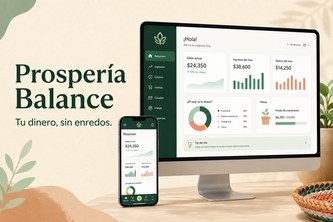
The description states that Prospería Balance is a responsive financial companion for people and microbusinesses, built as a web application. It allows users to:
- Register income and expenses;
- Separate business spending from personal or household spending;
- See money in, money out, and money remaining;
- Search, edit, delete, import, and export transactions;
- Set monthly spending limits;
- Receive plain-language local guidance without an account;
- Optionally create an account for private data synchronization;
- Request enhanced AI guidance from GPT-5.6 Terra based on aggregated financial figures.
The interface is described as using everyday Spanish, large touch targets, example data, and progressive disclosure to be accessible to users with limited financial or digital experience.
Inference: The product appears to be a lightweight, no-account financial tool for microbusinesses and individuals, with optional AI features. It does not appear to offer full accounting or tax preparation services.
Positioning & Claim Evolution
The author states that Prospería Balance was inspired by a vision of conscious entrepreneurship, where financial clarity should be accessible to everyone, not just those with advanced education or expensive tools.
It is positioned as:
- A financial companion for microbusinesses;
- A tool that removes jargon, spreadsheets, and digital barriers;
- A product that simplifies finance without misleading users;
- An application that supports both first-time users and more advanced entrepreneurs.
The author also states that the AI guidance is optional, bounded, and based only on aggregated financial figures. It is not intended to replace human judgment but to reduce administrative friction.
Inference: The positioning is focused on accessibility, simplicity, and ethical use of AI in financial contexts. It does not claim to be a full accounting solution or a replacement for professional services.
Target Customer & ICP
The description states that Prospería Balance targets:
- People and microbusinesses;
- Those who know how to work, sell, and support their families but struggle with basic financial questions (income, expenses, remaining balance);
- Users who may not have financial knowledge, digital confidence, or time.
It also mentions a dual audience: those using a financial tool for the first time and users who may later need richer consulting or integrations.
Inference: The ICP is likely first-time entrepreneurs, microbusiness owners, and individuals with low to moderate financial literacy. It is not explicitly targeting large businesses or accountants.
Business Model & Pricing Evidence
The description states that the product will offer:
- A free "Prospería Esencial" experience with simple records, clear summaries, local guidance, and accessible onboarding;
- A future "Prospería Pro" service that will add deeper AI assistance, budgets, cash-flow planning, business reports, and optional access to human specialists.
It also mentions that the AI guidance is optional, and the core experience remains deterministic and available without AI.
Inference: The business model appears to be a freemium structure, with a free tier for basic use and a paid tier (Prospería Pro) for enhanced features. No pricing details are provided.
Technical & Delivery Signals
The product was built using:
- Vanilla JavaScript;
- Supabase authentication and PostgreSQL storage;
- Vercel serverless API;
- OpenAI API (GPT-5.6 Terra) for optional AI guidance;
- Codex in ChatGPT Work for iterative development.
The system is described as:
- Responsive, accessible, and designed with large touch targets;
- Using row-level security for data privacy;
- Sending only minimal monthly aggregates to the AI service;
- Supporting local persistence and no-account usage;
- Having 12 passing automated tests and zero npm audit vulnerabilities at submission time.
Inference: The technical stack is lightweight and focused on accessibility, privacy, and performance. It uses modern tools but avoids over-engineering for its target audience.
Traction & Maturity Signals
The description states:
- A working mobile and desktop application deployed publicly;
- A no-account mode with example data and local persistence;
- A clear separation of business and personal spending;
- Private multi-device synchronization protected by Supabase row-level security;
- Optional GPT-5.6 guidance with server-side authentication, data minimization, and store: false;
- Twelve passing automated tests, a clean production build, and zero known npm audit vulnerabilities.
However, the description does not state:
- Any user feedback or pilot data;
- Customer acquisition or usage metrics;
- Revenue or monetization details;
- Any real-world adoption beyond the prototype.
Inference: The product is at a prototype or early MVP stage, with no evidence of traction or customer validation.
Competitive Context
The description does not mention any direct competitors. It emphasizes that the tool is designed for users who struggle with traditional accounting tools, which implies a gap in the market for simple, accessible financial tools for microbusinesses and individuals.
It also notes that it avoids assumptions of financial knowledge or digital confidence, suggesting a differentiation from tools aimed at more experienced users.
Inference: The competitive landscape is not clearly defined. It may compete with basic budgeting apps or accounting tools like Wave, QuickBooks, or even spreadsheets, but the author does not make direct comparisons.
Open Questions & Risks
- No evidence of user adoption or feedback beyond prototype stage;
- No revenue or monetization data;
- No customer base or traction metrics;
- AI guidance is optional, but the product’s value proposition may depend on it;
- Limited team size (1 person), which may constrain development and scaling;
- No mention of long-term sustainability or go-to-market strategy;
- Self-reported only: all claims are unverified.
Inference: The project appears to be in an early stage with no commercial traction. Risks include lack of user validation, scalability concerns, and unclear monetization path.
Questions the description leaves open
- What is the current user feedback or pilot data from microentrepreneurs?
- How do you plan to scale beyond a single developer?
- What are your plans for customer acquisition and retention?
- Are there any partnerships or integrations with banks, POS systems, or financial institutions?
- How do you intend to monetize the "Pro" tier, and what features will it include?
- What is the timeline for launching the pilot program with microentrepreneurs?
- How are you addressing data privacy and compliance (e.g., GDPR, local financial regulations)?
- Do you have a plan for handling AI model failures or unavailability?
Overall Assessment
Not evidenced: There is no evidence of revenue, customers, traction, or financial performance.
The author states that Prospería Balance is a prototype with a working application, but there is no indication of user adoption, monetization, or market validation. The product is described as simple and accessible, with optional AI features, but the business model remains unproven.
Confidence level: Low — based on self-reported description only.
Assessment: This project appears to be an early-stage prototype with a clear vision for accessibility and ethical AI use in financial tools. However, without evidence of traction, customers, or monetization, it is not ready for investment or partnership consideration at this time.
User Stories BotA demo video on every pull request
Get a demo video on every new feature
GitHub App that watches your pull requests and records a narrated, captioned demo.
Save time on demo prep and make informed decisions faster with a video walkthrough of every new feature.
Source
Submitted to the OpenAI 2026 hackathon on Devpost. Project home on Devpost. Back to the full gallery on Devpost.
This competitive analysis was produced by top-founders.com (opens in a new tab)
Generated by a language model from this project's public Devpost page — its tagline, the author's own write-up and any built-with tags listed there — as captured in August 2026. Short quotations are the author's words. It is an opinion on the idea as a business, not on the people behind it, and it reflects the description as published then. If the project has moved on, request a correction below. The analysis is not independent research and contains no verified traction, revenue or customer data.
An independent guide by KFG International LLC — not affiliated with, endorsed by, or connected to Devpost or OpenAI.