

Archive position — measured, not model output
1 like on Devpost
505 of the 7,850 archived projects have more likes, and 1,758 share exactly 1 — so this project's #1,722 place in the like-ranked listing is a tie-break inside that group, not a ranking.
Projects (log scale)
Likes on Devpost. ▲ marks this project's group.
Show the figures
| Likes | Projects | Share of archive |
|---|---|---|
| 0 | 5,587 | 71.2% |
| 1 | 1,758 | 22.4% |
| 2 | 284 | 3.6% |
| 3–4 | 132 | 1.7% |
| 5–9 | 75 | 1.0% |
| 10+ | 14 | 0.2% |
 User Stories BotA demo video on every pull request
Get a demo video on every new feature
GitHub App that watches your pull requests and records a narrated, captioned demo.
Save time on demo prep and make informed decisions faster with a video walkthrough of every new feature.
Executive Summary
What the company appears to be
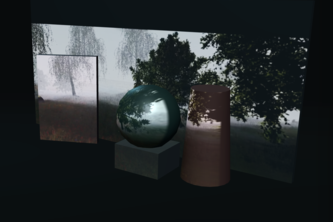
Projector Space is a self-reported, host-neutral Three.js runtime package that enables real HTML video projection across 3D geometry selected by the host application. It was built as part of a hackathon project and is described as a reusable component for integrating projective media into larger applications.
What changed
The author reports building a reusable package from an existing internal integration within Garden Planner, extracting it to support broader use cases while maintaining lifecycle safety and explicit receiver management. The package supports video playback, projector pose independence, and receiver rebuilds without restarting sessions.
Single most important open question
Is there any evidence of external adoption or usage beyond the author’s own sandbox and reference integration in Garden Planner?
Note: This analysis is based entirely on the self-reported description provided by the author. No independent verification, traction data, revenue figures, customer names, or third-party sources are available.
What The Product Actually Is
The description states that Projector Space is a host-neutral Three.js runtime for projecting real HTML video across host-selected 3D geometry. It manages:
- HTML video elements and VideoTexture;
- Projector camera and projector-space mapping;
- Shader overlays for registered receivers;
- Playback state and media status;
- Receiver refresh and subtree detachment;
- Transactional construction and best-effort disposal.
It also supports:
- Independent projector pose from receiver selection;
- Media replacement without restarting playback;
- Receiver rebuilds without session interruption.
The author notes that the package was extracted from an existing application (Garden Planner) and validated in a standalone sandbox. It is described as a reusable, public API entry point.
Inference: The product appears to be a low-level runtime library for handling projective video rendering in 3D environments using Three.js. It is not a complete application but a component intended for integration into other tools or platforms.
Positioning & Claim Evolution
The author claims that Projector Space addresses limitations in existing examples of projective texturing, which often stop at shader demos or single-plane projections. The goal was to build something usable inside real Three.js applications with reliable playback and lifecycle control.
The positioning evolves from:
- A hackathon prototype within an existing editor (Garden Planner),
- To a reusable package, extracted from that context,
- To a public API sandbox, validated externally.
Claim: The product is positioned as a tool for developers working with 3D environments and HTML video projection, aiming to solve lifecycle complexity in projective media workflows.
Target Customer & ICP
The description does not identify specific customer segments or personas. However, it implies that the target audience includes:
- Developers using Three.js;
- Users of 3D editors or visualization tools;
- Teams building interactive 3D experiences involving video projection.
It is unclear whether there are any known users beyond the author’s own development environment and sandbox.
Not evidenced: No explicit customer list, user interviews, or market segmentation data.
Business Model & Pricing Evidence
There is no evidence of a business model or pricing structure in the description. The project is presented as a pre-release package, distributed via its public repository.
Claim: The author intends to publish it on npm after a release review, but no commercialization strategy or monetization plan is described.
Technical & Delivery Signals
The implementation followed three stages:
- Application-scale integration inside Garden Planner;
- Boundary extraction into a reusable package (
three-projective-media); - Independent validation in a standalone sandbox.
Key technical features include:
- Support for muted public playback and autoplay restrictions;
- Persistent projector pose and receiver policy;
- Transactional construction and idempotent cleanup;
- Public API sandbox with multiple video sources;
- CI, tests, GitHub Pages deployment, and documentation.
Inference: The author has built a robust, modular system that separates product behavior from reusable runtime concerns. This suggests an engineering approach focused on correctness and portability.
Traction & Maturity Signals
The project is described as:
- A pre-release package;
- Built during a hackathon (Devpost submission);
- Integrated into a reference application called Nocturne Garden;
- Published with tests, CI, and documentation.
There is no evidence of:
- External adoption or usage;
- Revenue or monetization;
- Customer base or user feedback;
- Product-market fit indicators.
Absence of evidence: No traction data, customer numbers, or product usage metrics are provided.
Competitive Context
The description does not mention competitors or similar tools. It focuses on the novelty of solving lifecycle issues in projective video rendering within 3D environments using Three.js.
Not evidenced: No competitive landscape, market analysis, or comparison to existing solutions.
Open Questions & Risks
- No external adoption – The package is only used internally and in a sandbox; no evidence of real-world usage.
- Pre-release status – Not yet published on npm or widely available.
- Single-founder project – Only one team member (Bartek Bąk) is mentioned.
- Limited maturity – Built during a hackathon, with no indication of long-term maintenance or roadmap beyond initial features.
- Unclear commercial viability – No pricing, monetization, or business model described.
Open question: The lack of external validation or traction raises questions about product-market fit and scalability.
Questions the description leaves open
- What is the current level of adoption or interest from developers using this package?
- Are there any plans to open-source or publish this on npm, and what are the timelines?
- How does this package compare to other 3D media projection libraries in terms of performance and compatibility?
- Has the author considered how this might scale across different platforms or browsers?
- What is the long-term vision for the project beyond its current scope?
Overall Assessment
This is a pre-release, single-developer project built during a hackathon. It shows technical capability and modularity but lacks evidence of traction, adoption, or commercial viability.
Confidence: Low
Assessment: Not ready for investment or partnership at this stage. Further validation through external usage, community interest, or product-market fit is required before considering deeper due diligence.
User Stories BotA demo video on every pull request
Get a demo video on every new feature
GitHub App that watches your pull requests and records a narrated, captioned demo.
Save time on demo prep and make informed decisions faster with a video walkthrough of every new feature.
Source
Submitted to the OpenAI 2026 hackathon on Devpost. Project home on Devpost. Back to the full gallery on Devpost.
This competitive analysis was produced by top-founders.com (opens in a new tab)
Generated by a language model from this project's public Devpost page — its tagline, the author's own write-up and any built-with tags listed there — as captured in August 2026. Short quotations are the author's words. It is an opinion on the idea as a business, not on the people behind it, and it reflects the description as published then. If the project has moved on, request a correction below. The analysis is not independent research and contains no verified traction, revenue or customer data.
An independent guide by KFG International LLC — not affiliated with, endorsed by, or connected to Devpost or OpenAI.