

Archive position — measured, not model output
0 likes on Devpost
2,263 of the 7,850 archived projects have more likes, and 5,587 share exactly 0 — so this project's #5,948 place in the like-ranked listing is a tie-break inside that group, not a ranking.
Projects (log scale)
Likes on Devpost. ▲ marks this project's group.
Show the figures
| Likes | Projects | Share of archive |
|---|---|---|
| 0 | 5,587 | 71.2% |
| 1 | 1,758 | 22.4% |
| 2 | 284 | 3.6% |
| 3–4 | 132 | 1.7% |
| 5–9 | 75 | 1.0% |
| 10+ | 14 | 0.2% |
 User Stories BotA demo video on every pull request
Get a demo video on every new feature
GitHub App that watches your pull requests and records a narrated, captioned demo.
Save time on demo prep and make informed decisions faster with a video walkthrough of every new feature.
Executive Summary
Company: Pirate Pearls
Self-reported basis: The description provided by the author is the only evidence. No third-party verification, revenue, customer data, or traction metrics are available.
What it appears to be: A mobile game for Apple Watch, rebuilt from a 20-year-old Java ME match-three puzzle game using AI tools like Codex and Swift.
What changed: The original game was reimagined with modern visuals, controls, and gameplay mechanics, but not simply ported.
Single most important open question: Is there any evidence of monetization or user engagement beyond the author's own playtesting?
What The Product Actually Is
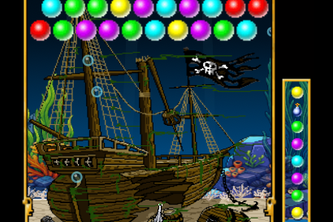
The description states that Pirate Pearls is a fast, pick-up-and-play underwater match-three pearl shooter for Apple Watch. It involves:
- Aiming with the Digital Crown or ship’s wheel
- Firing pearls to make matches
- Unlocking power-ups
- Stopping the sea from filling up
The game is described as:
- Colorful
- Relaxing
- Chaotic
- Suitable for short play sessions
It was rebuilt using Swift and SwiftUI, with input from Codex. The original source code came from a Java ME project built nearly 20 years ago.
Inference: The product is a mobile game, not a SaaS or B2B tool. It’s a consumer-facing entertainment app.
Positioning & Claim Evolution
The author claims:
- The game is a "classic reimagined match-three colored ball shooter"
- It was built with "simple controls and fun in mind"
- It's designed to be played during short breaks, especially when the user has their Apple Watch on
- It’s a "rebirth" of an old game, not just a port
The positioning is:
- Nostalgic
- Casual
- Mobile-first (Apple Watch)
- Focused on accessibility and ease-of-use
Claim vs. Fact: The author states the game is “fun” and “perfect for a few spare minutes,” but no evidence of user feedback or engagement exists.
Target Customer & ICP
The description does not state:
- Who the target customer is
- What segment or persona this product is aimed at
- Whether there are any specific demographics or use cases
Not evidenced: No explicit customer profile, ICP, or target market defined.
Business Model & Pricing Evidence
The description does not mention:
- How the game will be monetized (e.g., paid download, in-app purchases, ads)
- Any pricing strategy
- Whether it’s free-to-play or premium
Not evidenced: No business model or pricing information is provided.
Technical & Delivery Signals
The project was built using:
- Swift and SwiftUI
- Codex (AI coding assistant)
- Xcode
- J2ME (as reference source)
The author notes:
- The original Java ME code was used as a reference
- The game was rebuilt from scratch, not ported
- AI tools were used to help translate and refine the mechanics
- Testing was difficult due to Apple Watch quirks
Inference: The development process involved modern iOS tooling and AI-assisted coding. However, no evidence of scalability, performance metrics, or production deployment is given.
Traction & Maturity Signals
The description states:
- The game is nearly complete
- It’s expected to be released on the App Store soon
- The author is proud of how it “feels” like a native Apple Watch app
- It was submitted to a hackathon (OpenAI 2026)
Not evidenced: No data on downloads, user engagement, retention, or post-launch performance.
Competitive Context
The description does not mention:
- Competitors in the match-three genre for Apple Watch
- Similar games or platforms
- Market size or competitive positioning
Not evidenced: No competitive analysis or market context is provided.
Open Questions & Risks
- No monetization strategy is evident, which raises questions about viability.
- The product is a single-person project with no team or external support.
- It’s unclear whether it will be released as a paid app or free-to-play.
- The author has not provided any user feedback or data on gameplay.
- The game is described as “fun” but lacks evidence of broader appeal or traction.
Inference: The lack of revenue, customer data, and business model makes this a high-risk investment or partnership opportunity.
Questions the description leaves open
- What is the monetization strategy for Pirate Pearls?
- How many users have played the game so far, and what feedback have you received?
- Are there plans to expand beyond Apple Watch (e.g., iOS, Android)?
- What are your long-term goals for the game—will it be a standalone product or part of a larger ecosystem?
- Have you considered partnerships with Apple or other platforms?
Overall Assessment
The description is self-reported and unverified, and contains no evidence of:
- Revenue
- Customers
- Traction
- Business model
- Market data
Assessment: Based on the provided information, there is no commercial due-diligence basis to support an investment or partnership decision. The project appears to be a personal hobby or hackathon effort with no demonstrated commercial viability or market traction.
Confidence level: Low. The evidence is minimal and entirely self-reported.
User Stories BotA demo video on every pull request
Get a demo video on every new feature
GitHub App that watches your pull requests and records a narrated, captioned demo.
Save time on demo prep and make informed decisions faster with a video walkthrough of every new feature.
Source
Submitted to the OpenAI 2026 hackathon on Devpost. Project home on Devpost. Back to the full gallery on Devpost.
This competitive analysis was produced by top-founders.com (opens in a new tab)
Generated by a language model from this project's public Devpost page — its tagline, the author's own write-up and any built-with tags listed there — as captured in August 2026. Short quotations are the author's words. It is an opinion on the idea as a business, not on the people behind it, and it reflects the description as published then. If the project has moved on, request a correction below. The analysis is not independent research and contains no verified traction, revenue or customer data.
An independent guide by KFG International LLC — not affiliated with, endorsed by, or connected to Devpost or OpenAI.