

Archive position — measured, not model output
0 likes on Devpost
2,263 of the 7,850 archived projects have more likes, and 5,587 share exactly 0 — so this project's #5,937 place in the like-ranked listing is a tie-break inside that group, not a ranking.
Projects (log scale)
Likes on Devpost. ▲ marks this project's group.
Show the figures
| Likes | Projects | Share of archive |
|---|---|---|
| 0 | 5,587 | 71.2% |
| 1 | 1,758 | 22.4% |
| 2 | 284 | 3.6% |
| 3–4 | 132 | 1.7% |
| 5–9 | 75 | 1.0% |
| 10+ | 14 | 0.2% |
 User Stories BotA demo video on every pull request
Get a demo video on every new feature
GitHub App that watches your pull requests and records a narrated, captioned demo.
Save time on demo prep and make informed decisions faster with a video walkthrough of every new feature.
Executive Summary
What the company appears to be
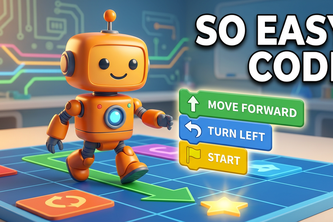
PIGGYBOT LAB, as described by its author, is a visual coding and robotics game for children, built during OpenAI Build Week. It presents children with three progressive missions on a 6×6 grid where they program a robot using four visual commands (Move, Turn left, Turn right, Pick up). The system simulates execution step-by-step, allowing children to observe cause-and-effect relationships and debug their programs without punitive feedback.
What changed
The project is presented as a new prototype contribution to the broader KidsPiggy educational platform. It introduces a visual programming experience focused on learning through experimentation and debugging, distinct from prior features like note organization or conversational learning.
Single most important open question
Is there evidence of traction, revenue, or customer adoption beyond the prototype stage? The description does not indicate any commercial activity or user base beyond the Build Week demo.
What The Product Actually Is
The description states that PiggyBot Lab is a visual coding and robotics game for children. It involves:
- A 6×6 grid-based simulation environment.
- Four visual commands: Move, Turn left, Turn right, Pick up.
- Execution modes: full run or step-by-step execution.
- Deterministic simulation engine that explains collisions, boundaries, direction changes, object collection, and mission completion.
- Three progressive missions introducing increasingly complex concepts (ordered movement, turns, obstacle avoidance, collection, state, multi-stage delivery).
- Non-punitive feedback system with hints that guide thinking without revealing answers.
- No scores, rankings, advertisements or countdowns.
The author describes it as a learning loop:
Build → Run → Observe → Debug → Understand
It is built using React, TypeScript, Vite, and integrates GPT-5.6 for design support. Codex was used to assist in engineering tasks including testing, accessibility improvements, and verification of the production build.
Inference The product appears to be a child-focused educational prototype, not yet integrated into a commercial platform or monetized offering.
Positioning & Claim Evolution
The description claims that PiggyBot Lab aims to teach children that "a mistake is information" and that programming should help them understand how instructions become actions. This positions the tool as an alternative to punitive learning models, emphasizing exploration over performance.
It also states that the goal was to not simply give children answers, but to help them understand how instructions become actions, which reflects a shift from traditional instruction-based tools toward experiential learning.
The author further claims that AI can support education without replacing thinking — specifically, that the best hint is not an answer but a question that helps a child discover the answer independently.
Inference The positioning suggests a focus on pedagogical innovation, particularly around agency and self-directed learning in early STEM education. However, this is a claim made by the author and lacks evidence of adoption or impact.
Target Customer & ICP
The description explicitly identifies the target customer as children, specifically those who are learning to code and robotics through play.
It also mentions that the tool is designed for young learners and includes features such as:
- Keyboard and screen-reader accessibility.
- Responsive mobile and desktop layouts.
- Child-friendly language and interface design.
There is no mention of teachers, parents, or institutional users beyond their potential role in future integration into KidsPiggy.app.
Inference The ICP (Ideal Customer Profile) appears to be children aged 5–12, with a focus on early STEM education. No evidence exists regarding specific age ranges, grade levels, or target demographics beyond general age brackets.
Business Model & Pricing Evidence
The description does not provide any information about pricing, monetization, or business model.
It mentions that PiggyBot Lab is part of the broader KidsPiggy platform and will be integrated into it. However, there is no indication of whether this integration implies a paid service, freemium model, or other commercial structure.
Not evidenced No evidence of revenue streams, pricing tiers, or customer acquisition costs.
Technical & Delivery Signals
The project was built using:
- React
- TypeScript
- Vite
- GPT-5.6 for product and learning design
- Codex for engineering assistance
- Lovable for interactive demonstration
Key technical elements include:
- A deterministic simulation engine, separate from the React interface.
- Support for Run and Step execution.
- Collision and boundary detection.
- Command editing and reset behavior.
- Automated tests (23/23 passing).
- Linting, production build verification, and browser compatibility checks.
- Accessibility features including keyboard navigation and screen reader support.
The author notes that the project was built during a single Build Week, and that it is currently a prototype.
Inference The technical stack suggests a modern frontend architecture with strong testing practices. However, there is no evidence of scalability, long-term maintenance plans, or production deployment beyond the prototype stage.
Traction & Maturity Signals
The description states that PiggyBot Lab is a Build Week prototype, and that it will be integrated into KidsPiggy.app in the future.
It also mentions:
- A demonstrable learning loop.
- Three progressive missions.
- Integration of AI tools (GPT-5.6, Codex) for design and engineering.
- Localisation, additional mission packs, teacher guides, and optional accessibility customizations are listed as future steps.
However, there is no evidence of:
- User engagement or usage metrics.
- Customer feedback or adoption data.
- Revenue or monetization activity.
- Any form of product-market fit or traction beyond the prototype phase.
Not evidenced No signs of real-world usage, customer base, or market validation.
Competitive Context
The description does not provide any information about competitors or existing solutions in the visual coding and robotics space for children.
It does not mention:
- Similar platforms (e.g., Scratch, Tynker, Code.org).
- Market positioning relative to other educational tools.
- Differentiation strategies or competitive advantages.
Not evidenced No competitive analysis or market context provided.
Open Questions & Risks
Several potential open questions emerge from the self-reported description:
- Prototype-only status: The project is described as a Build Week prototype, with no indication of integration into a larger product or commercial rollout.
- No traction data: There is no evidence of user engagement, adoption, or revenue generation.
- Unverified claims: Many statements about pedagogical value and AI integration are self-reported without external validation.
- Limited team size: Only one member (Kai256ai Kai) is listed as part of the team, raising questions about scalability and long-term development capacity.
- No commercialization path: No mention of monetization, distribution, or go-to-market strategy.
Inference The lack of traction, revenue, or customer data raises concerns about whether this represents a viable product or merely an experimental idea.
Questions the description leaves open
- What is the current status of integration into KidsPiggy.app? Is there a timeline for launch?
- How many children have used the prototype so far, and what feedback has been collected?
- Are there any plans to monetize or scale this product beyond its current prototype form?
- Has the team considered how to validate pedagogical outcomes (e.g., learning gains)?
- What are the key challenges in transitioning from a prototype to a scalable educational tool?
- How does the team plan to address potential scalability and maintenance issues given only one developer?
- Are there any partnerships or institutional users already engaged with the platform?
Overall Assessment
Not evidenced There is no evidence of revenue, customers, or traction beyond a prototype.
The description presents PiggyBot Lab as an experimental educational tool, built during a hackathon and intended for integration into a larger platform. It lacks commercial viability indicators such as:
- Revenue
- Customer base
- Market traction
- Product-market fit
While the concept shows promise in terms of pedagogical design and use of AI, the absence of any measurable impact or business model makes it difficult to assess its readiness for investment or partnership.
Assessment Not ready for investment or partnership at this stage. The project remains a prototype with no demonstrated traction or commercialization path. Further evidence of user engagement, product-market fit, and scalability would be needed before considering deeper due diligence.
User Stories BotA demo video on every pull request
Get a demo video on every new feature
GitHub App that watches your pull requests and records a narrated, captioned demo.
Save time on demo prep and make informed decisions faster with a video walkthrough of every new feature.
Source
Submitted to the OpenAI 2026 hackathon on Devpost. Project home on Devpost. Back to the full gallery on Devpost.
This competitive analysis was produced by top-founders.com (opens in a new tab)
Generated by a language model from this project's public Devpost page — its tagline, the author's own write-up and any built-with tags listed there — as captured in August 2026. Short quotations are the author's words. It is an opinion on the idea as a business, not on the people behind it, and it reflects the description as published then. If the project has moved on, request a correction below. The analysis is not independent research and contains no verified traction, revenue or customer data.
An independent guide by KFG International LLC — not affiliated with, endorsed by, or connected to Devpost or OpenAI.