

Archive position — measured, not model output
4 likes on Devpost
89 of the 7,850 archived projects have more likes, and 39 share exactly 4 — so this project's #114 place in the like-ranked listing is a tie-break inside that group, not a ranking.
Projects (log scale)
Likes on Devpost. ▲ marks this project's group.
Show the figures
| Likes | Projects | Share of archive |
|---|---|---|
| 0 | 5,587 | 71.2% |
| 1 | 1,758 | 22.4% |
| 2 | 284 | 3.6% |
| 3–4 | 132 | 1.7% |
| 5–9 | 75 | 1.0% |
| 10+ | 14 | 0.2% |
 User Stories BotA demo video on every pull request
Get a demo video on every new feature
GitHub App that watches your pull requests and records a narrated, captioned demo.
Save time on demo prep and make informed decisions faster with a video walkthrough of every new feature.
Executive Summary
What the company appears to be
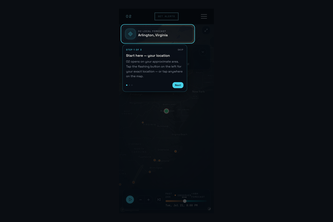
O2 by Agent9 is a wildfire-smoke and air-quality forecasting tool that provides users with information about when their local air quality will improve — not just how bad it currently is. It uses modeled data (e.g., CAMS, NWS NDGD, Canadian FireSmoke/BlueSky) to forecast air quality up to 48 hours ahead for any location in the U.S., including areas without ground monitors. The product includes a live smoke map, active wildfire tracking, spoken briefings via AI voice synthesis, and email alerts.
What changed
The author states that existing tools only report current AQI numbers ("AQI 175. Unhealthy") but do not answer the key question: when does it get better? This project aims to fill that gap by offering predictive insights based on modeled data and deterministic logic, with no hallucinated health advice.
Single most important open question
Is there a viable commercial model or path to monetization beyond personal use or hackathon demo?
What The Product Actually Is
The description states that O2 is a wildfire-smoke and air-quality companion that forecasts when the air improves — not just how bad it is now. It provides:
- Hourly air quality forecasts for up to 48 hours ahead.
- A live smoke map showing modeled drift using NWS NDGD and Canadian FireSmoke/BlueSky models.
- Active wildfire tracking from NIFC WFIGS.
- Spoken briefings generated via Deepgram Aura on Cloudflare Workers AI.
- Email alerts when air quality crosses user-defined thresholds.
- Works anywhere in the U.S. using modeled data (e.g., Open-Meteo/CAMS), even where no ground monitors exist.
The product is built with GPT-5.6 for design and Codex for implementation, using technologies like React, TypeScript, Tailwind CSS, Mapbox GL, Cloudflare Workers, D1, Turnstile, Resend, and others.
Inference O2 appears to be a single-user personal tool focused on air quality prediction during wildfire events, built as a proof-of-concept or prototype rather than a scalable SaaS offering. It is not evidenced to have customers, revenue, or commercial traction.
Positioning & Claim Evolution
The author claims O2 answers the question that numbers cannot: when does the air get better? The positioning centers on:
- Providing actionable time-based forecasts.
- Offering nationwide coverage using modeled data.
- Delivering deterministic and trustworthy information (no hallucinated health advice).
- Combining real-time smoke drift visualization with spoken briefings.
There is no evidence of prior versions or iterations, nor any indication that the product has evolved from an earlier form. The claim evolution seems to be:
- Current tools are inadequate for planning around air quality.
- O2 provides a better experience by focusing on timing and clarity.
Inference This is a self-positioned utility tool aimed at individuals concerned about wildfire smoke exposure, not a commercial product with a defined market or go-to-market strategy.
Target Customer & ICP
The description does not define a specific customer segment or ICP. The author describes the use case as being relevant to people living in areas affected by wildfire smoke — particularly those who want to know when conditions will improve to allow outdoor activities or protect children.
It is implied that users are likely concerned residents, parents, or individuals with respiratory sensitivities. However, there is no evidence of segmentation, personas, or targeting beyond general concern about air quality.
Inference The target audience appears to be a subset of the U.S. population exposed to wildfire smoke — but no data supports how large or defined this group is in terms of demographics or behavior.
Business Model & Pricing Evidence
There is no evidence provided regarding pricing, monetization strategy, or business model. The project is described as a hackathon submission and appears to be a personal tool built by one developer (Terry Richards). No mention of subscriptions, paid features, partnerships, or revenue streams.
Inference No commercial business model has been demonstrated or claimed in the description.
Technical & Delivery Signals
The product is built using:
- Frontend: TanStack Start (SSR), React 19, TypeScript, Tailwind CSS, Mapbox GL.
- Backend/Edge: Cloudflare Workers, D1 (SQLite), Cloudflare Workers AI (Deepgram Aura), Turnstile, Resend.
- Data Sources: Open-Meteo/CAMS, NIFC WFIGS, NWS NDGD, Canadian FireSmoke/BlueSky, NOAA HAZMAP, NWS API.
Key technical decisions include:
- No language model writes health advice — deterministic logic ensures consistency.
- AI is used only for voice synthesis (Deepgram Aura).
- Edge computing to deliver real-time forecasts and spoken briefings.
- Use of multiple data sources with reconciliation logic to ensure accuracy.
Inference The architecture reflects a modern, serverless edge-first approach. However, the lack of traction or user feedback suggests this is a prototype, not a production-ready service.
Traction & Maturity Signals
There is no evidence of users, customers, or adoption metrics. The project was submitted to a hackathon and is described as a one-person effort. No data on usage volume, retention, or engagement is available.
Inference No traction or maturity signals are evident beyond the author’s own description of building it in a short time frame.
Competitive Context
The description does not mention competitors or existing solutions in the air quality or wildfire smoke space. The author notes that current apps only report “useless” numbers and fail to answer the question of timing, implying a gap in the market.
Inference There is no evidence of competitive analysis or awareness of similar tools in the market.
Open Questions & Risks
- No commercial viability: The project appears to be a hackathon demo with no clear path to monetization.
- Single-person development: With only one team member, scalability and long-term maintenance are unclear.
- Dependence on external data sources: Reliance on APIs like NOAA and NIFC may introduce reliability issues.
- Limited scope: The tool works only in the U.S. and focuses on wildfire smoke; it does not address broader air quality concerns or global markets.
- No user feedback loop: No evidence of user testing, iteration, or product-market fit.
Inference The project lacks commercial viability, traction, and strategic direction beyond its initial concept.
Questions the description leaves open
- What is the intended business model for O2? Is there a plan to monetize it?
- How do you intend to scale beyond a single developer?
- Have you tested the product with real users or conducted any form of user research?
- Are there plans to expand beyond wildfire smoke into other air quality issues (e.g., pollution, seasonal changes)?
- What are your long-term goals for O2 — is it meant to be a standalone tool or part of a larger platform?
Overall Assessment
The description states that this project was submitted to the OpenAI 2026 hackathon and is self-reported by one developer, Terry Richards. There is no evidence of revenue, customers, traction, or commercial strategy.
Assessment Not evidenced as a viable investment or partnership opportunity at this stage. The product is a prototype with strong technical execution but lacks any indication of market demand, scalability, or monetization potential.
User Stories BotA demo video on every pull request
Get a demo video on every new feature
GitHub App that watches your pull requests and records a narrated, captioned demo.
Save time on demo prep and make informed decisions faster with a video walkthrough of every new feature.
Source
Submitted to the OpenAI 2026 hackathon on Devpost. Project home on Devpost. Back to the full gallery on Devpost.
This competitive analysis was produced by top-founders.com (opens in a new tab)
Generated by a language model from this project's public Devpost page — its tagline, the author's own write-up and any built-with tags listed there — as captured in August 2026. Short quotations are the author's words. It is an opinion on the idea as a business, not on the people behind it, and it reflects the description as published then. If the project has moved on, request a correction below. The analysis is not independent research and contains no verified traction, revenue or customer data.
An independent guide by KFG International LLC — not affiliated with, endorsed by, or connected to Devpost or OpenAI.