

Archive position — measured, not model output
0 likes on Devpost
2,263 of the 7,850 archived projects have more likes, and 5,587 share exactly 0 — so this project's #5,615 place in the like-ranked listing is a tie-break inside that group, not a ranking.
Projects (log scale)
Likes on Devpost. ▲ marks this project's group.
Show the figures
| Likes | Projects | Share of archive |
|---|---|---|
| 0 | 5,587 | 71.2% |
| 1 | 1,758 | 22.4% |
| 2 | 284 | 3.6% |
| 3–4 | 132 | 1.7% |
| 5–9 | 75 | 1.0% |
| 10+ | 14 | 0.2% |
 User Stories BotA demo video on every pull request
Get a demo video on every new feature
GitHub App that watches your pull requests and records a narrated, captioned demo.
Save time on demo prep and make informed decisions faster with a video walkthrough of every new feature.
Executive Summary
What the company appears to be
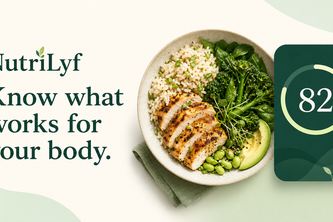
The description states that NUTRILYF is a mobile-first, AI-powered food selection engine built as a prototype for the OpenAI 2026 hackathon. It uses GPT-5.6 for visual identification of meals or food labels, and provides personalized nutritional feedback based on user preferences and dietary goals.
What changed
This project was submitted to a hackathon, indicating it is in early development or prototyping phase. There is no evidence of prior commercial activity, funding, or customer traction beyond the author's own description.
The single most important open question
Is there any evidence that NUTRILYF has moved beyond the prototype stage, and if so, what is its current business model, user base, or monetization strategy?
What The Product Actually Is
The description states that NutriLyf is a mobile-first TypeScript and React application built with Next.js. It uses GPT-5.6 for vision analysis and structured output, integrating with the OpenAI Responses API. Images are processed in the browser before being sent to the backend, which calls GPT-5.6 to identify food items, estimate nutrition, interpret ingredients, and provide personalized guidance.
The system allows users to confirm or correct dish names, clarify portion sizes, and adjust preparation details. It then delivers a tailored nutritional assessment using three outcomes: “Fits well,” “Works with changes,” or “Better occasionally.” The app also supports dietary-specific considerations such as keto, Mediterranean, and DASH diets.
Evidence
- Built with Next.js, React, TypeScript
- Uses GPT-5.6 for vision and structured output
- Server-side OpenAI API integration
- Browser-based image resizing
- Device-local storage of preferences and results
Inference The product is a prototype built for a hackathon; no evidence of production deployment or commercial use.
Positioning & Claim Evolution
The description states that NutriLyf is an “AI-powered food selection engine” that allows users to tailor their food choices in real time. It emphasizes personalization, real-time feedback, and compatibility with specific diets such as keto, Mediterranean, and DASH.
Evidence
- Tagline: "your customised AI powered food selection engine which lets you tailor your food choices in real time"
- Personalized nutritional outcomes based on user input
- Dietary-specific guidance
Inference The positioning is centered around personalization and dietary compliance. However, there is no evidence of prior market testing or customer feedback to validate this approach.
Target Customer & ICP
The description implies that NutriLyf targets individuals interested in tracking nutrition, managing diet-specific goals (e.g., keto, DASH), and making informed food choices. It supports users who want real-time feedback on meals or food labels.
Evidence
- Supports dietary-specific considerations like keto, Mediterranean, and DASH
- Users can tailor food choices in real time
- Provides macro tracking for keto users
Inference The ICP appears to be health-conscious individuals or those managing specific dietary conditions. No evidence of customer segmentation or market validation.
Business Model & Pricing Evidence
There is no evidence in the description of a business model, pricing strategy, monetization approach, or revenue streams. The project is described as a hackathon submission with no indication of commercial viability or sales.
Evidence
- No mention of pricing, subscriptions, or monetization
- No indication of B2C or B2B model
Inference The business model remains undefined and unproven. It is unclear whether the project intends to be a consumer app, enterprise tool, or part of a larger platform.
Technical & Delivery Signals
The description indicates that NutriLyf is built with modern web technologies (Next.js, React, TypeScript) and integrates with OpenAI’s GPT-5.6 API for vision and structured outputs. It uses Codex to assist in development and debugging, and the OpenAI key remains server-side.
Evidence
- Built with Next.js, React, TypeScript
- Uses GPT-5.6 vision and structured output schema
- Server-side OpenAI API integration
- Browser-based image resizing
- Device-local storage for preferences
Inference The technical stack suggests a modern, scalable architecture. However, the prototype is not deployed in production, and there is no evidence of performance or scalability testing.
Traction & Maturity Signals
There is no evidence of traction, user adoption, revenue, or customer engagement beyond the author’s own description. The project is described as a hackathon submission with no indication of prior use or market validation.
Evidence
- Submitted to OpenAI 2026 hackathon
- Prototype built for competition
Inference No evidence of product-market fit, user base, or commercial traction. The project is in early development.
Competitive Context
The description does not provide any information about competitors or the competitive landscape. It does not mention existing solutions in the nutrition tracking or AI food identification space.
Evidence
- No mention of competitors or market positioning
Inference No evidence of competitive analysis or differentiation from existing tools. The project’s place in the market is unclear.
Open Questions & Risks
- Unproven commercial viability: The product is a hackathon prototype with no evidence of revenue, customers, or monetization.
- Lack of traction: No user data, adoption metrics, or feedback to validate the concept.
- Unclear business model: No indication of how the product will generate value or income.
- Dependency on AI API: Reliance on GPT-5.6 and OpenAI’s infrastructure introduces risk if pricing or availability changes.
- No scalability evidence: Prototype is not deployed in production, so no data on performance or user load.
Questions the description leaves open
- What is the intended path from prototype to commercial product?
- Have you tested this with real users? If so, what feedback did you get?
- Is there a plan for monetization or revenue generation?
- How do you intend to scale beyond the current prototype?
- What are your plans for integrating with existing nutrition or health platforms?
Overall Assessment
The description states that NutriLyf is a hackathon submission and does not provide any evidence of commercial traction, revenue, or customer adoption. The product is in early development and lacks a defined business model or market validation.
Evidence
- Submitted to OpenAI 2026 hackathon
- Prototype built for competition
- No evidence of revenue, customers, or monetization
Inference At this stage, NutriLyf is not ready for investment or partnership consideration. It requires significant development and market validation before any commercial opportunity can be assessed.
User Stories BotA demo video on every pull request
Get a demo video on every new feature
GitHub App that watches your pull requests and records a narrated, captioned demo.
Save time on demo prep and make informed decisions faster with a video walkthrough of every new feature.
Source
Submitted to the OpenAI 2026 hackathon on Devpost. Project home on Devpost. Back to the full gallery on Devpost.
This competitive analysis was produced by top-founders.com (opens in a new tab)
Generated by a language model from this project's public Devpost page — its tagline, the author's own write-up and any built-with tags listed there — as captured in August 2026. Short quotations are the author's words. It is an opinion on the idea as a business, not on the people behind it, and it reflects the description as published then. If the project has moved on, request a correction below. The analysis is not independent research and contains no verified traction, revenue or customer data.
An independent guide by KFG International LLC — not affiliated with, endorsed by, or connected to Devpost or OpenAI.